
There’s something magical about the aroma of freshly baked bread filling the kitchen, isn’t there? Today, I’m thrilled to share my Homemade Ciabatta Bread Recipe, a quick version that comes together in under three hours, perfect for anyone who craves that artisan touch without the lengthy wait. This delightful bread not only boasts a rustic crust but also features a wonderfully airy crumb, making it an ideal choice for sandwiches or pairing it with your favorite meal. What’s more, its straightforward preparation is a fantastic way to impress your dinner guests or indulge your family with minimal effort. Are you ready to discover the simple joy of crafting your own ciabatta? Let’s dive in!
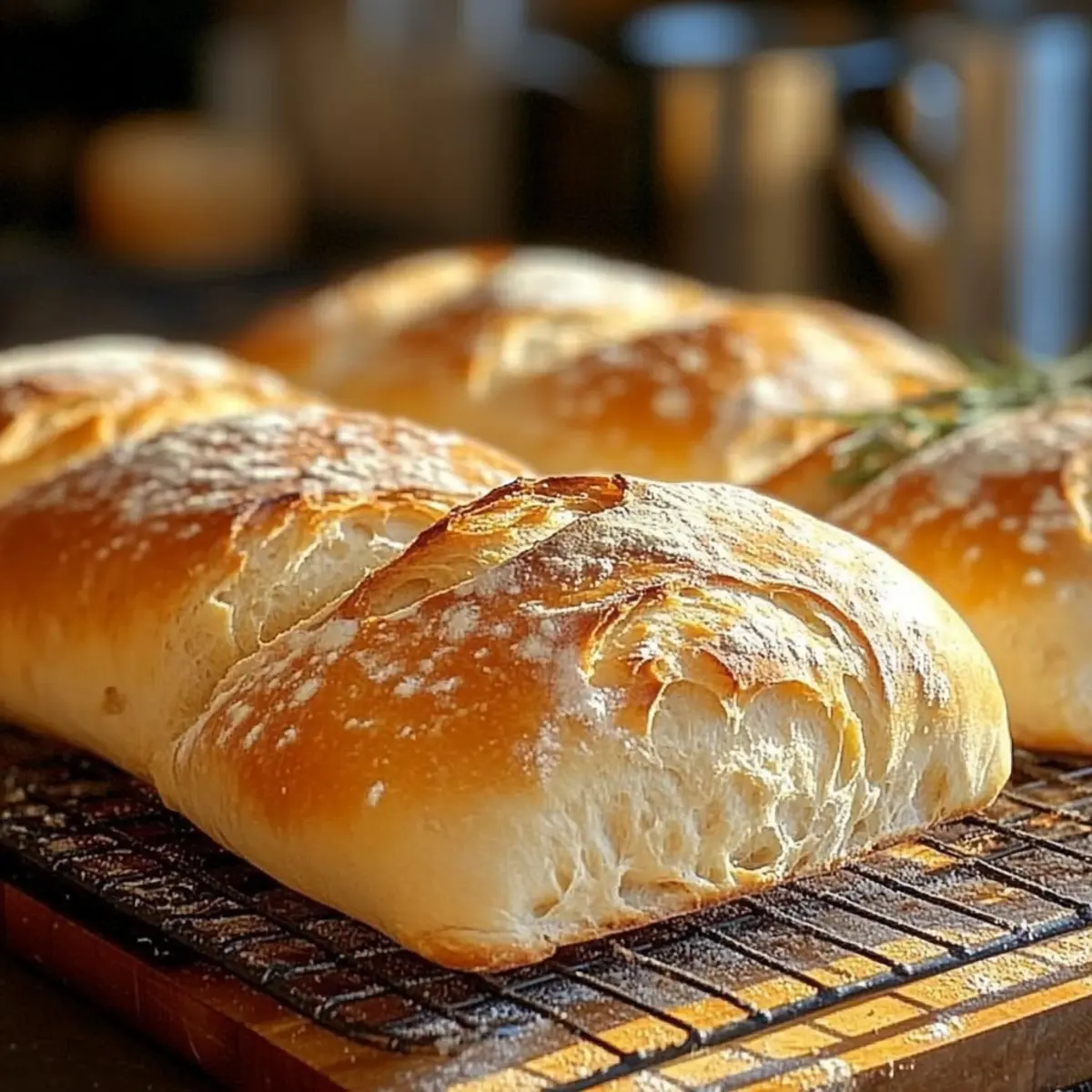
Why is Homemade Ciabatta Bread So Special?
Freshly baked, the aroma of ciabatta fills your home with warmth and comfort, creating an inviting atmosphere. Quick and easy, this recipe allows you to whip up artisan bread without an all-day commitment, making it a perfect weekend treat. Perfectly versatile, enjoy it as a side for soups or transform it into a gourmet sandwich. Nutritious and vegetarian-friendly, it carries all the goodness of homemade bread without any preservatives. Plus, if you love baking as much as I do, check out my Chewy Pumpkin Cookies for another delightful treat! Your family and friends will be raving about your baking skills in no time!
Homemade Ciabatta Bread Ingredients
• Get ready to bake the best ciabatta!
For the Dough
- All-purpose or Bread Flour – Essential for creating the bread’s structure and achieving that characteristic chewy texture.
- Salt – Enhances flavor while also strengthening the gluten structure for a better rise.
- Instant Yeast – This leavening agent ensures a quicker rise time, allowing for fast, fluffy results as a part of your homemade ciabatta bread recipe.
- Lukewarm Water – Activates the yeast and gives the dough a sticky consistency, crucial for a light crumb.
- Olive Oil – Grease your bowl or surface for easier handling of the sticky dough, preventing frustrating messes.
For Dusting
- Flour – A little extra flour for dusting the work surface helps in shaping the dough without sticking.
Ready to create a loaf that your family will adore? Let’s gather these ingredients and bring the magic of freshly baked ciabatta into your kitchen!
Step‑by‑Step Instructions for Homemade Ciabatta Bread Recipe
Step 1: Make the Dough
In a large mixing bowl, whisk together 4 cups of all-purpose or bread flour, 1.5 teaspoons of salt, and 2 teaspoons of instant yeast. Gradually add 1.5 cups of lukewarm water, stirring until a shaggy, sticky dough forms. Do not knead; simply mix until all ingredients are combined, creating a cohesive mass.
Step 2: First Rise (1 hour)
Cover the bowl tightly with a towel or plastic wrap, and let the dough rise at room temperature for about 1 hour. You’ll know it’s ready when the dough has doubled in size, with a bubbly, puffy surface, showcasing the activity of the yeast in this homemade ciabatta bread recipe.
Step 3: Fold and Rest (30 minutes)
Lightly flour your work surface and gently turn out the risen dough, being careful not to deflate it. Now, fold the dough over itself a few times, then shape it into a loose rectangle. Place the shaped dough onto a floured parchment-lined baking sheet, dust the top lightly with flour, and cover it to let it rest for 30 minutes.
Step 4: Preheat the Oven
While the dough is resting, preheat your oven to 450°F (230°C). This high temperature is key to achieving that beautifully crusty exterior on your homemade ciabatta bread. You can also place an empty pan on the bottom rack to create steam when the bread is baking.
Step 5: Bake the Ciabatta
After the resting period, carefully slide the baking sheet into the preheated oven. Bake the ciabatta for 22-25 minutes, or until it turns a lovely golden brown and sounds hollow when tapped on the bottom. Keep an eye on it; the crust should look crackly and inviting!
Step 6: Cool and Serve
Once baked, remove the ciabatta from the oven and let it cool on a wire rack for at least 30 minutes. This resting period is essential to set the crumb structure. Once cooled, slice into this beautiful loaf and serve it fresh to savor the delightful texture of your homemade ciabatta bread!
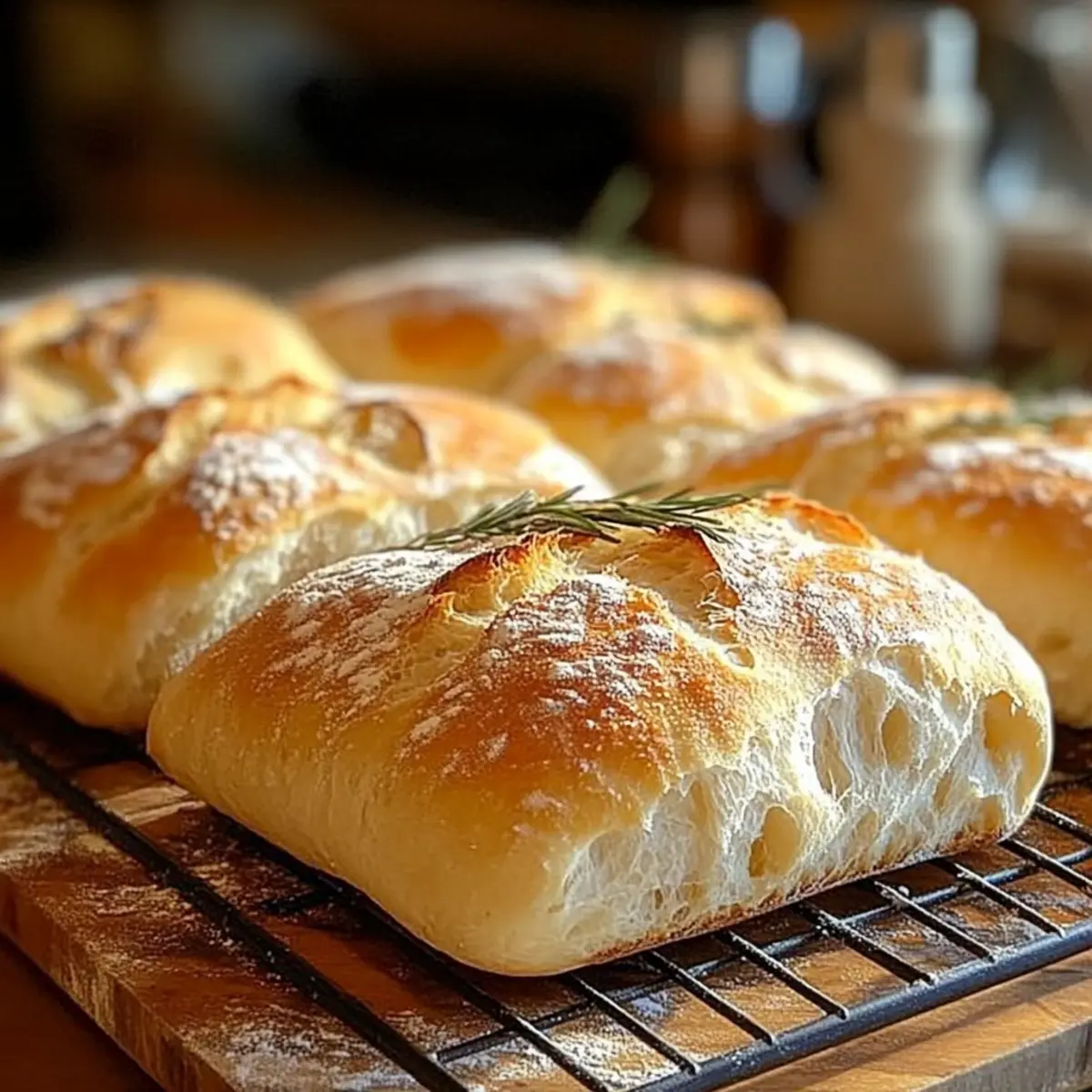
Make Ahead Options
Preparing for busy weeknights? This Homemade Ciabatta Bread Recipe is perfect for meal prep! You can mix the dough and let it rise, up to 24 hours in advance. After the first rise, cover the bowl with plastic wrap and refrigerate it to slow down fermentation, preserving its flavor. When you’re ready to bake, simply bring the dough to room temperature, allow it to rest for about 30 minutes, and then proceed with folding, baking, and cooling as outlined. This method not only saves time but allows you to enjoy a fresh, homemade loaf that’s just as delicious as if you had made it fresh that day.
Homemade Ciabatta Bread Recipe Variations
Feel free to make this ciabatta uniquely yours with a few easy modifications that will tempt your taste buds!
-
Herb-Infused: Add chopped fresh herbs like rosemary or thyme to the dough for a flavorful twist that complements soups beautifully.
-
Garlic Lovers: Mash a few cloves of roasted garlic into the dough before the first rise. The sweet, nutty flavor pairs wonderfully with olive oil for dipping.
-
Whole Wheat Twist: Substitute half of the all-purpose flour with whole wheat flour for a nutty flavor and heartier texture. It’s a great way to add nutritional value while keeping it delicious!
-
Cheese Option: Mix in shredded cheese, such as mozzarella or parmesan, during the dough mixing phase for a rich, cheesy ciabatta that’s irresistible on its own or as part of a sandwich.
-
Spicy Kick: Add a teaspoon of crushed red pepper flakes for that delightful heat that will warm you from the inside out, perfect for pairing with soups or stews.
-
Flavorful Toppings: Before the final bake, sprinkle the top with sea salt or a drizzle of flavored olive oil for an added layer of taste. A touch of balsamic glaze or a sprinkle of za’atar can elevate your ciabatta further!
-
Italian Brioche Style: Try brushing the dough with a bit of melted butter after it bakes. This creates a delightful richness that is truly decadent and perfect for special occasions.
-
Dipping Delight: Serve alongside your favorite dishes, or pair the ciabatta with a delightful dip like homemade pesto or bruschetta. This adds more flavor while using your ciabatta base creatively!
Remember, your homemade ciabatta is the perfect canvas for creativity! If you’re looking for more baking inspiration, I highly recommend trying out my Gingerbread Thumbprint Cookies for the holidays or my Gingerbread Pudding Cake if you’re in the mood for something sweet. Happy baking!
How to Store and Freeze Homemade Ciabatta Bread
Fridge: Store the ciabatta wrapped in a clean kitchen towel in the fridge for up to 3 days to maintain moisture without getting too stale.
Freezer: Slice the ciabatta and place it in zip-top bags to freeze for up to three months. You can toast the slices directly from frozen for a quick snack or side.
Reheating: To enjoy fresh-baked taste, reheat in a 350°F (175°C) oven for 5-10 minutes. This will revive the crust’s crispiness and warm the soft interior of your homemade ciabatta bread.
What to Serve with Quick Homemade Ciabatta Bread
The world of flavors awaits as you explore delightful pairings to elevate your freshly baked ciabatta!
- Hearty Soups: A comforting bowl of minestrone enhances the rustic texture while providing a warm hug on chilly evenings.
- Creamy Pasta Salad: The richness of a creamy pesto pasta salad balances the crusty bread, making for a satisfying meal.
- Savory Bruschetta: Topped with ripe tomatoes, basil, and a drizzle of balsamic glaze, this fresh appetizer amplifies the ciabatta’s airy crumb.
- Rich Stews: Pairing with a beef or vegetable stew creates a delightful contrast—dipping the bread into flavorful broths is an experience!
- Cheese Platter: Embrace a variety of cheeses, from tangy goat to sharp cheddar; the bread’s texture beautifully complements their creamy richness.
- Herbed Olive Oil: Dipping warm pieces into a mixture of olive oil and fragrant herbs presents a simple yet elegant starter.
- Roasted Vegetables: The slight sweetness of roasted veggies offers a perfect flavor contrast, creating a wholesome, colorful side dish.
- Craft Beer: Enjoy a refreshing craft beer with a malty profile that pairs effortlessly with the ciabatta’s robust crust.
- Light Salad: A fresh arugula salad with lemon vinaigrette adds a tangy note, creating a lively balance alongside the hearty ciabatta.
- Dessert Wine: End the meal with a glass of dessert wine, perfect for dipping pieces of ciabatta into sweet toppings like ricotta and honey.
Expert Tips for Homemade Ciabatta Bread
- Sticky Dough: Maintain a sticky dough; adding too much flour will result in a dense loaf. Wet hands are your best friends for easier handling.
- Gentle Folding: Be gentle when folding the dough to preserve air bubbles, which contribute to that wonderful airy crumb structure in your homemade ciabatta bread recipe.
- Temperature Check: Always use lukewarm water to activate the instant yeast properly. Too hot can kill the yeast, while cold water might hinder rising.
- Cooling Time: Let the ciabatta cool completely before slicing. Cutting too soon can lead to a gummy texture, ruining the lovely crust you’ve created.
- Crusty Finish: For extra crustiness, create steam in the oven by placing a pan with hot water in the bottom or spritzing water occasionally during baking.
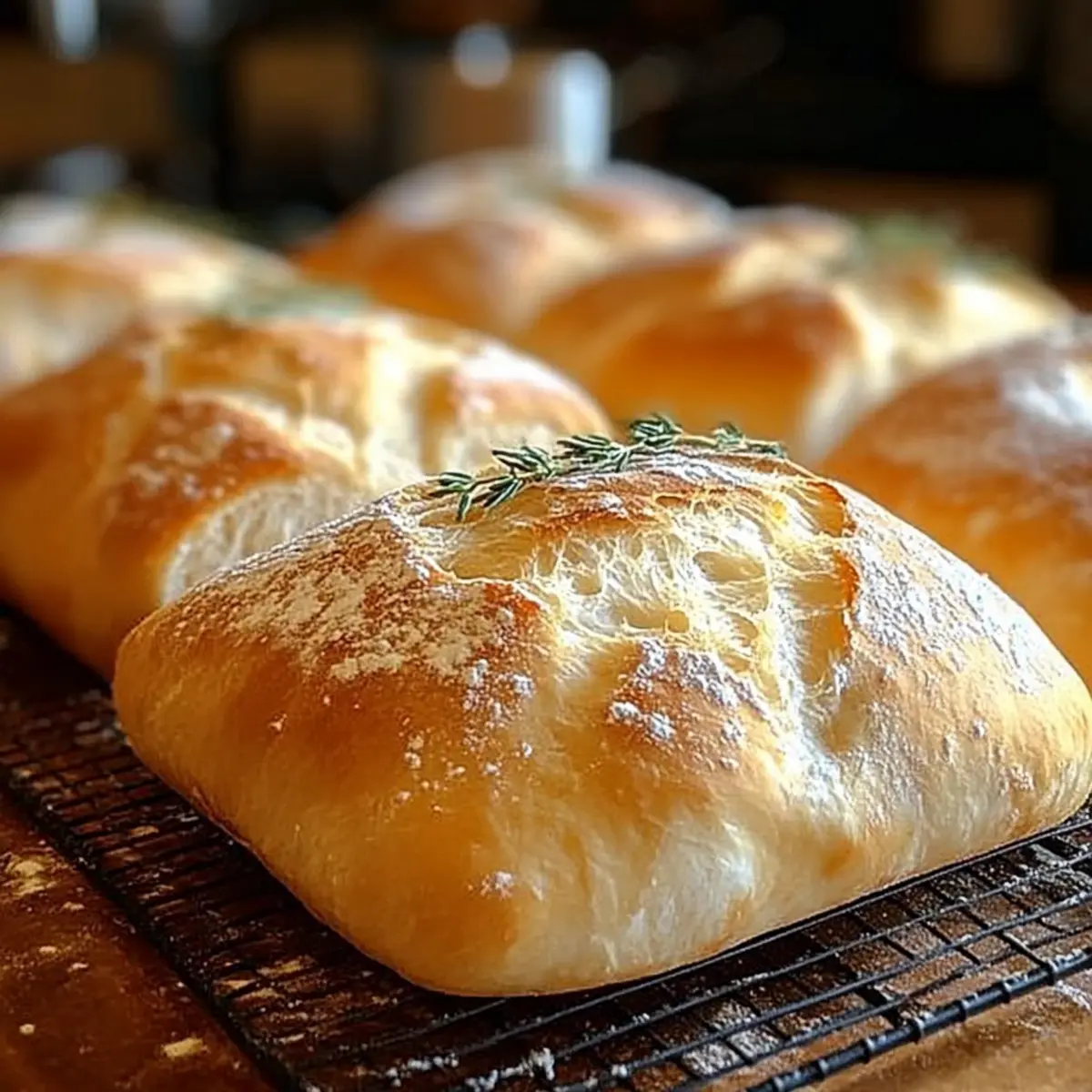
Homemade Ciabatta Bread Recipe FAQs
How do I choose the right flour for ciabatta?
Absolutely! You can use either all-purpose or bread flour for this recipe. Bread flour will yield a chewier texture due to its higher protein content, while all-purpose flour will create a milder flavor and a slightly softer texture. If you’re unsure, I recommend starting with all-purpose flour for a delightful balance!
What is the best way to store homemade ciabatta bread?
To maintain freshness without drying out, wrap your ciabatta in a clean kitchen towel and store it in the fridge for up to 3 days. This method prevents it from becoming too stale. For longer storage, consider slicing it and placing the slices in zip-top bags. Ciabatta can be frozen for up to three months!
Can I freeze ciabatta bread? How?
Yes, you can freeze ciabatta bread! Once completely cooled, slice the loaf and place the slices in zip-top freezer bags. Make sure to remove as much air as possible to prevent freezer burn. When you’re ready to enjoy, you can toast them directly from frozen—no defrosting required!
What if my ciabatta dough won’t rise?
If your dough doesn’t rise, check the temperature of your water; it should be lukewarm, around 100°F (38°C). If it’s too hot, it could kill the yeast, and if too cold, it won’t activate properly. Additionally, ensure you’re using fresh instant yeast for optimal results. Give it some more time to rise at a warmer temperature, and remember, patience is key to a lovely ciabatta!
Can my homemade ciabatta bread be given to pets?
Very! While homemade ciabatta bread is safe for dogs in small amounts, it’s crucial to avoid giving them bread with added ingredients like garlic or herbs that may harm them. Always check ingredient labels and keep portions small. For other pets, consult your veterinarian before sharing baked goods.
What should I do if my ciabatta has a gummy texture?
If your ciabatta has a gummy texture, it might be due to cutting the loaf too soon. Always allow it to cool for at least 30 minutes on a wire rack before slicing. This cooling period lets the bread finish cooking internally, preventing that unwanted gummy texture and ensuring your ciabatta has a lovely airy crumb and crust!
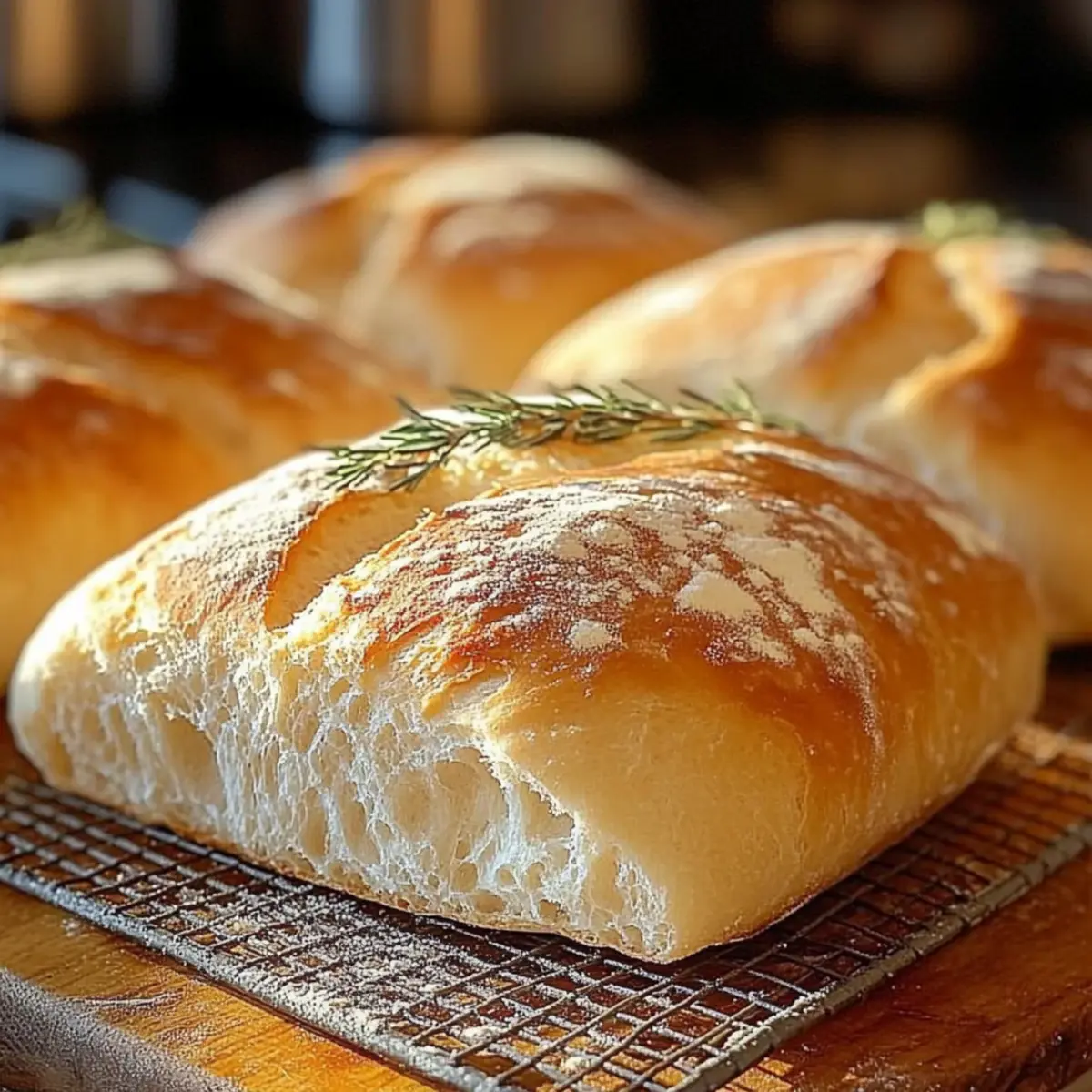
Homemade Ciabatta Bread Recipe That's Quick and Delicious
Ingredients
Equipment
Method
- In a large mixing bowl, whisk together flour, salt, and instant yeast. Gradually add lukewarm water, stirring until a shaggy, sticky dough forms.
- Cover the bowl tightly and let the dough rise at room temperature for 1 hour, until doubled in size.
- Lightly flour the work surface and gently turn out the dough. Fold it over a few times and shape it into a loose rectangle.
- Preheat your oven to 450°F (230°C) while the dough rests.
- Bake the ciabatta for 22-25 minutes, until golden brown and sounding hollow when tapped.
- Remove from the oven and cool on a wire rack for at least 30 minutes before slicing.
Leave a Reply