
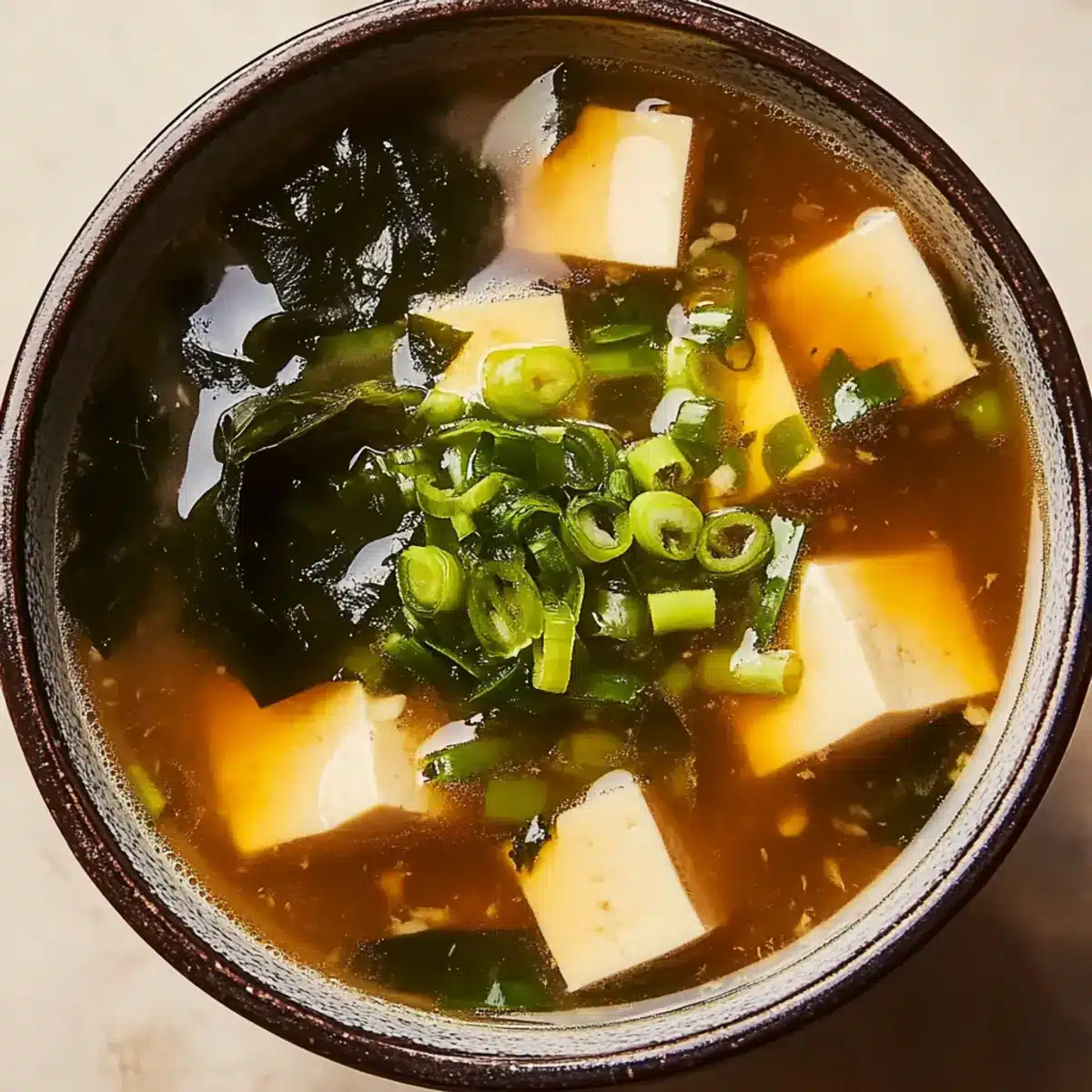
As I stood in my kitchen, the kettle simmering and faint layers of aromatic dashi wafting around me, it hit me just how grounding a simple bowl of Authentic Miso Soup can be. With its savory, golden-brown broth and delicate additions of silken tofu and wakame, this traditional Japanese gem brings both comfort and nourishment to our busy lives. What I love most about this recipe is not just how quick it is to throw together—ready in just 25 minutes—but also how effortlessly it transforms into a nourishing meal that satisfies without the guilt of takeout. Whether you’re a seasoned home chef or new to the kitchen, this soup beckons you to explore the umami flavors of Asian cuisine. Are you ready to warm your heart and soul with every sip?
Why is this miso soup special?
Authenticity, this recipe embraces traditional Japanese flavors, delivering a true taste of umami in every spoonful. Quick to prepare, you’ll have a comforting bowl of soup ready in just 25 minutes, perfect for busy weeknights. Versatile ingredients allow you to easily adapt it to your tastes—try adding vegetables or proteins for a heartier meal. Crowd-pleaser, whether served as an appetizer or a main dish, this soup will delight everyone at the table. Plus, if you’re looking for more comforting options, consider pairing it with Crockpot Chicken Soup or enjoy a sweet treat with Chewy Pumpkin Cookies.
Authentic Miso Soup Ingredients
-
For the Broth
• Water – 4 cups (960ml) is essential for creating the dashi broth; use cold, filtered water for best results.
• Dried Kombu (Kelp) – 1 piece (10g) provides umami flavor and is crucial for dashi; wipe gently with a damp cloth before use.
• Bonito Flakes (Katsuobushi) – 1 cup (15g, loosely packed) imparts a smoky aroma and contributes to the broth’s golden hue. -
For the Miso Base
• Awase Miso Paste – 3 tbsp (45g) is a blend of red and white miso that enriches the broth with a salty, slightly sweet flavor. -
For the Soup Additions
• Soft Silken Tofu – 1/2 cup (120g) cut into uniform squares adds a delicate, melt-in-your-mouth texture; use silken instead of firm tofu for best results.
• Dried Wakame Seaweed – 1 tbsp (5g) rehydrates into tender strips to enhance texture and flavor.
• Fresh Scallions – 2 stalks (30g) thinly sliced for garnish, adding vibrant color and freshness to the dish.
Feel free to embrace the magic of this Authentic Miso Soup Recipe as you prepare this comforting favorite!
Step‑by‑Step Instructions for Authentic Miso Soup Recipe
Step 1: Steep Kombu
In a medium saucepan, combine 4 cups of cold, filtered water with a piece of dried kombu (about 10g). Let the kombu soak for 10 minutes to extract its umami flavor. After soaking, gently heat the mixture over medium heat until it’s just about to boil, then swiftly remove the kombu to avoid bitterness, allowing the dashi to shine through.
Step 2: Prepare Dashi
Once the kombu is removed, bring the water to a gentle simmer on low heat. Add 1 cup of bonito flakes (approximately 15g) and let it simmer for about 60 seconds. After this brief simmering, turn off the heat, allowing the mixture to sit for 3 minutes, letting the flavors meld together. Strain the broth into a bowl using a fine mesh strainer, ensuring a clear, golden dashi broth.
Step 3: Rehydrate Wakame
While the dashi is resting, take 1 tablespoon of dried wakame seaweed and place it in a small bowl. Pour cold water over the wakame and let it soak for 5 minutes. As it rehydrates, it will transform into tender, green strips perfect for your soup. Once fully hydrated, drain the wakame and gently squeeze out any excess moisture.
Step 4: Dissolve Miso
Return the strained dashi broth to the saucepan and bring it back to a low simmer over low heat. In a separate small bowl, mix 3 tablespoons of awase miso paste (around 45g) with a few spoonfuls of the hot dashi to create a smooth slurry. Gradually stir this mixture back into the simmering broth, allowing the flavors to blend while avoiding a rolling boil, which can affect the delicate flavors.
Step 5: Combine Ingredients
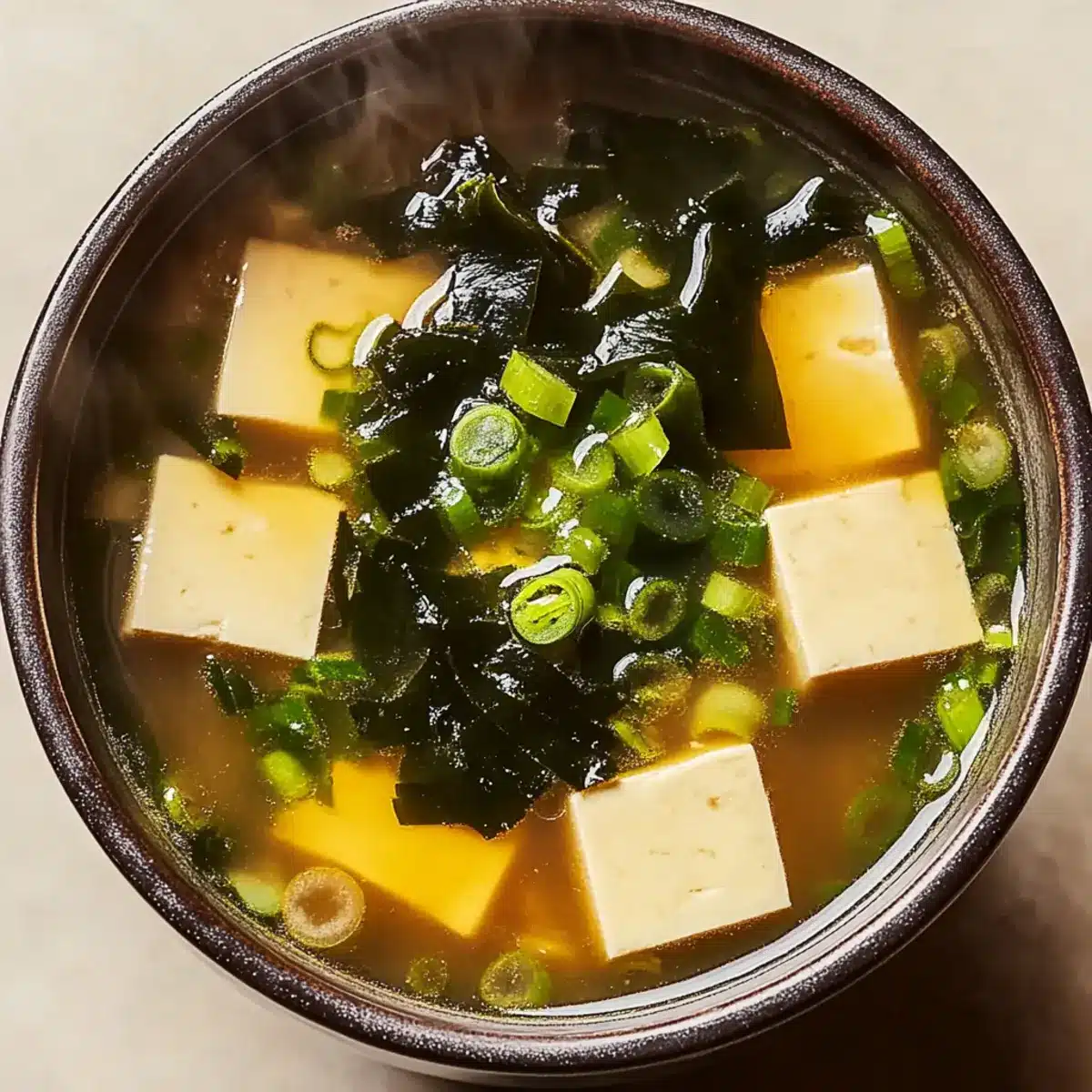
With the miso dissolved into the broth, gently add your ½ cup of cubed soft silken tofu and the rehydrated wakame. Warm the soup for an additional 1-2 minutes, shaking the pot occasionally, ensuring everything is heated through but not boiling. Finally, ladle your delicious Authentic Miso Soup into bowls, garnishing each serving with a sprinkle of thinly sliced fresh scallions for a pop of color and freshness.
Authentic Miso Soup Recipe Variations
Feel free to explore different flavors and textures as you craft your own perfect bowl of miso soup!
- Vegan Delight: Replace bonito flakes with shiitake mushrooms for a rich, earthy umami flavor without animal products.
- Firm Tofu: Swap silken tofu for firm to add more bite, making the soup heartier.
- Extra Vegetables: Toss in chopped bok choy or thinly sliced carrots for added nutrition and crunch.
- Spicy Kick: Include a few drops of chili oil or a sprinkle of red pepper flakes to heat things up.
- Coconut Twist: For a tropical twist, stir in a splash of coconut milk before serving for a creamy texture.
- Fishy Flavor Boost: Add a few drops of fish sauce to enhance the umami punch in your brothy bowl.
- Noodle Surprise: For a filling variation, add cooked soba or udon noodles right before serving to make it a heartier meal.
- Seafood Touch: If you love seafood, gently fold in some cooked shrimp or scallops for an elegant upgrade.
These delightful variations allow you to customize your experience, inviting you to create a new family favorite. For even more inspired meals, consider serving your soup alongside a delicious Shrimp Dirty Rice, which offers a savory balance. Enjoy the adventure of flavors!
What to Serve with Authentic Miso Soup
Imagine the comforting warmth of a hearty Japanese meal that harmonizes textures and flavors to elevate your dining experience.
-
Shrimp Rice Bowl: Juicy shrimp nestled atop a bowl of rice adds a touch of protein that beautifully complements the soup’s umami richness.
-
Edamame Salad: A refreshing mix of tender edamame, cucumber, and sesame dressing adds a burst of color and crunch, balancing the soup’s warmth.
-
Fried Enoki Mushrooms: Lightly fried, these delicate mushrooms offer a crispy texture that contrasts delightfully with the soft tofu in your miso soup.
-
Steamed Bok Choy: Tender bok choy drizzled with a hint of soy sauce gives a fresh flavor and vibrant green color, enhancing your meal’s visual appeal.
-
Japanese Pickles (Tsukemono): A small side of tangy pickles cuts through the soup’s richness, providing a refreshing palate cleanser.
-
Green Tea: A warm cup of green tea pairs beautifully, adding a light yet aromatic element that enhances the meal’s overall experience.
-
Mochi Dessert: Soft mochi filled with sweet red bean paste creates a delightful end to your meal, rounding off the savory elements of the miso soup.
Make Ahead Options
These Authentic Miso Soup preparations are fantastic for busy home cooks looking to save time! You can prepare the dashi broth and refrigerate it for up to 3 days. Simply follow the first two steps—soaking the kombu and adding bonito flakes—then strain and cool the broth before storing it in an airtight container. The dried wakame can also be rehydrated in advance and kept in the fridge for up to 24 hours. When you’re ready to serve, just warm the dashi back on low heat, dissolve the miso, and add the tofu and wakame, ensuring it’s just heated through for that perfect bowl of comforting Authentic Miso Soup. Enjoy a delicious homemade meal with minimal last-minute effort!
Expert Tips for Authentic Miso Soup Recipe
-
Timing is Key: Ensure you don’t boil the soup after adding the miso paste. This prevents flavor loss and keeps your soup smooth and rich.
-
Sodium Savvy: If you’re watching your sodium intake, start with 2 tablespoons of miso. You can always add more to taste if needed.
-
Clear Broth: Use a fine mesh strainer when straining the dashi to eliminate floating bits. This step ensures a beautifully clear broth for your Authentic Miso Soup.
-
Kombu Care: When preparing the kombu, simply wipe it with a damp cloth instead of rinsing. This keeps the umami flavor intact while avoiding bitterness.
-
Adapt to Taste: Feel free to adjust the ingredients by adding fresh veggies or proteins like sliced mushrooms or fresh greens for a heartier meal.
How to Store and Freeze Authentic Miso Soup
Fridge: Store leftovers in an airtight container and refrigerate for up to 3 days. This helps maintain the flavor and freshness of your Authentic Miso Soup.
Freezer: For longer storage, freeze the dashi broth in an airtight container for up to 2 months. Avoid freezing miso and tofu together, as they don’t freeze well.
Reheating: When ready to enjoy, thaw overnight in the fridge and reheat gently on the stove over low heat. Avoid boiling to keep the tofu’s texture smooth and creamy.
Authentic Miso Soup Recipe FAQs
What is the best way to select ripe ingredients for Authentic Miso Soup?
Absolutely! When choosing your ingredients, especially the dried kombu and bonito flakes, look for quality products from reputable brands. The kombu should appear dark and slightly glossy without any visible mold, while bonito flakes should be aromatic and not clumped together. For the tofu, choose soft silken tofu that is smooth and has an even texture. Fresh scallions should be vibrant green, firm, and free of any wilting or dark spots.
How should I store leftover Authentic Miso Soup?
Very good question! Refrigerate your leftovers in an airtight container for up to 3 days. Ensure the soup has cooled down before sealing it to preserve its flavor and quality. When you’re ready to enjoy it again, be sure to reheat gently on the stove over low heat, avoiding high temperatures to maintain the silky texture of the tofu.
Can I freeze Authentic Miso Soup?
It’s best to freeze just the dashi broth. Pour the cooled broth into an airtight container and store it in the freezer for up to 2 months. Avoid freezing the miso paste and tofu together, as they don’t hold their texture well when frozen. When you want to enjoy it, thaw the broth overnight in the fridge, and upon reheating, mix in fresh tofu and miso to keep that comforting experience intact.
What if my miso soup turns out too salty?
The more the merrier when it comes to adjustments! If you find your soup is too salty, you can dilute it by adding more water or low-sodium broth. Another great option is to add additional ingredients like cubed tofu or more wakame to balance out the flavors and create a heartier soup. Always adjust seasonings gradually for the best results.
Are there any dietary considerations for pets or allergies with the ingredients used in Authentic Miso Soup?
Yes, be mindful! While the soup is delicious for humans, be cautious with your pets. Ingredients like miso and tofu are not recommended for dogs and cats. If serving to someone with allergies, always check for allergies related to soy (present in miso and tofu) or seafood (from bonito). You can create a nut-free, gluten-free version of this soup by sourcing gluten-free miso and skipping any allergens in additional toppings.
Authentic Miso Soup Recipe: A Warm Hug in a Bowl
Ingredients
Equipment
Method
- In a medium saucepan, combine 4 cups of cold, filtered water with a piece of dried kombu. Let the kombu soak for 10 minutes. Heat until just about to boil, then remove the kombu.
- Bring the water to a gentle simmer. Add 1 cup of bonito flakes and let it simmer for about 60 seconds. Turn off the heat, letting it sit for 3 minutes. Strain the broth into a bowl.
- While the dashi is resting, rehydrate 1 tablespoon of dried wakame seaweed in a bowl with cold water for 5 minutes. Drain and squeeze out excess moisture.
- Return the strained dashi broth to the saucepan. Mix 3 tablespoons of awase miso paste with a few spoonfuls of hot dashi to create a slurry. Gradually stir it into the broth.
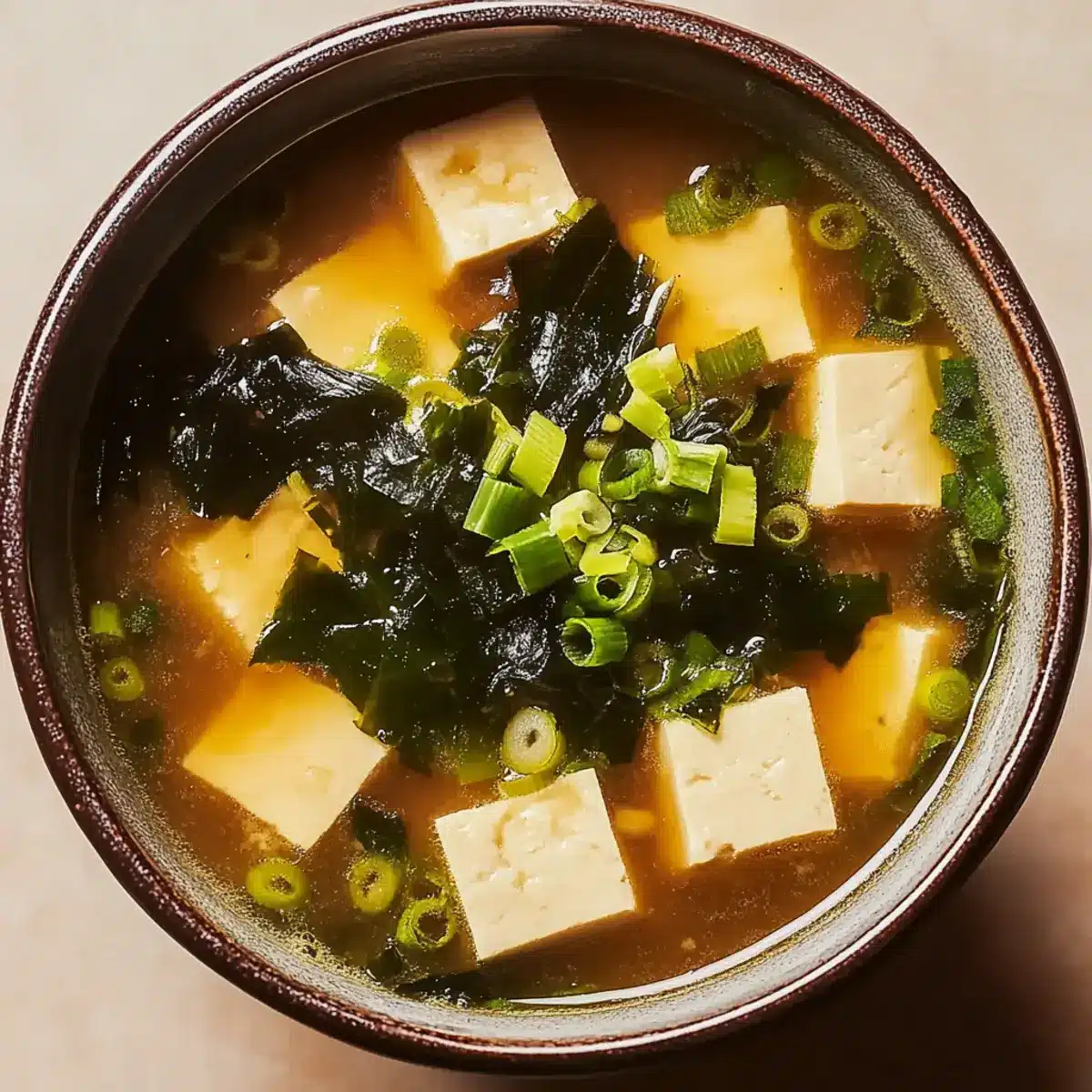
- Add cubed soft silken tofu and the rehydrated wakame to the broth. Warm the soup for an additional 1-2 minutes without boiling. Ladle into bowls and garnish with fresh scallions.
Leave a Reply