
The aroma of sizzling pancakes wafts through the air, instantly transporting me to a bustling street market in Japan. Today, I’m excited to share my quick and easy recipe for Okonomiyaki – Japanese Cabbage Pancakes. These savory delights are not only a fantastic way to use up leftover vegetables, but they also come together in under 30 minutes, making them a perfect option for busy weeknights or relaxed weekend brunches. With a crispy exterior and a fluffy, veggie-packed interior, Okonomiyaki is both a nourishing and satisfying dish that pleases the whole family. Ready to whip up something delicious and healthy? Let’s dive into creating your very own version of these mouthwatering cabbage pancakes!
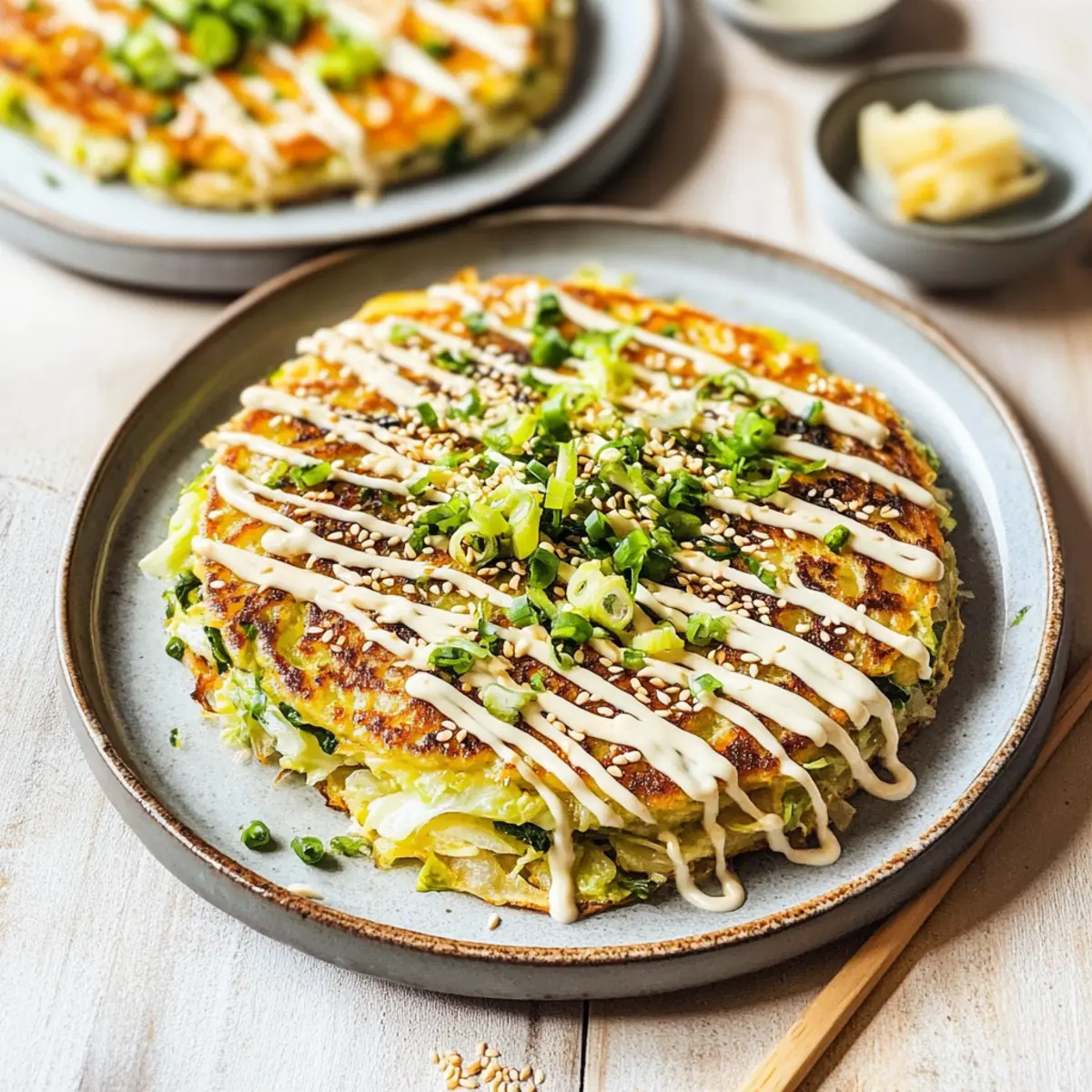
Why try this easy Okonomiyaki recipe?
Quick Preparation: Whip up these delightful pancakes in under 30 minutes, making them an ideal solution for busy weeknights.
Healthy Ingredients: Packed with vibrant vegetables, each bite is rich in nutrients, making it a guilt-free meal option.
Versatile Recipe: Customize your Okonomiyaki by experimenting with additional veggies or seasonings. Need ideas? Check out my take on vegetarian meals.
Crowd-Pleasing Flavor: The savory notes from soy sauce and sesame oil give a mouthwatering umami kick that your family will surely enjoy.
Easy Cleanup: Using a single skillet means minimal dishes and hassle after cooking—a real win for home chefs!
Texture Contrast: Experience the perfect balance of crispy edges and a light, fluffy interior, unlike any standard pancake. Pair these pancakes with a side salad for a refreshing complete meal!
Okonomiyaki Ingredients
• Get ready to enjoy this delicious mix of flavors and textures!
For the Pancakes
- Cabbage – Provides volume and texture; a key component that can be switched out for other shredded veggies like kale.
- Carrot – Adds sweetness and vibrant color; grate it for easier incorporation into the batter.
- Onion – Brings aromatic qualities to the dish; scallions can be used for a milder flavor profile.
- Fine-Gran Salt – Draws out moisture for enhanced flavor and tenderness; use it sparingly to suit your taste.
- Eggs – Acts as a binder for structure; essential for achieving that fluffy pancake texture, or swap with an egg replacer for vegan Okonomiyaki.
- Light Soy Sauce – Elevates the umami flavor; tamari works as a great gluten-free substitute.
- Toasted Sesame Oil – Lends a nutty flavor that beautifully complements the pancakes; if you’re out, any neutral oil can be used for frying.
- All-Purpose Flour – Provides the necessary structure; gluten-free flour can be a suitable alternative too.
- Oil for Frying – Essential for cooking; ensure you’re using a non-stick skillet to avoid sticking.
For Toppings
- Japanese Mayonnaise – Adds a creamy finishing touch that contrasts wonderfully with the savory pancakes.
- Pickled Ginger – Offers a zesty kick that brightens up the flavors.
- Scallions – Finely chopped for an additional burst of freshness and color.
- Sesame Seeds – Sprinkle for crunch and a rich, nutty undertone.
Now that you have all the essential Okonomiyaki ingredients, gather them up and let’s get cooking! You’re just moments away from savoring these delightful Japanese cabbage pancakes.
Step‑by‑Step Instructions for Okonomiyaki – Japanese Cabbage Pancake
Step 1: Prepare the Vegetables
Start by shredding your cabbage, carrot, and onion. Place them in a colander, sprinkle with fine-gran salt, and let sit for about 10 minutes. This process draws out excess moisture, ensuring a perfectly crisp texture for your Okonomiyaki. You’ll know they’re ready when the vegetables are slightly wilted.
Step 2: Whisk the Batter
In a mixing bowl, crack in two eggs and whisk them until frothy. Add in the light soy sauce and toasted sesame oil, mixing until well combined. Gradually incorporate the all-purpose flour, stirring until you achieve a smooth, lump-free batter. This base will bind everything together for your delicious pancakes.
Step 3: Combine Vegetables and Batter
Gently fold the prepared vegetables into the batter, ensuring each piece is well-coated. Be careful not to overmix, as you want to maintain some of the structure and crunch of the vegetables in your Okonomiyaki. Once combined, set aside for a moment while you heat up your skillet.
Step 4: Heat the Skillet
Set a non-stick skillet over medium-high heat and add a drizzle of oil. Wait for the oil to shimmer slightly, indicating it’s hot enough for cooking. This step is crucial for achieving that desirable crispy exterior on your Okonomiyaki.
Step 5: Cook the Pancakes
Pour all of the batter mixture into the skillet to form a large Okonomiyaki or use half for two medium pancakes. Cook undisturbed for about 5 minutes, or until the bottom is golden brown. When the edges start to lift and show color, it’s time to flip. Carefully turn the pancake and cook the other side for another 4-5 minutes until it’s golden and cooked through.
Step 6: Serve and Garnish
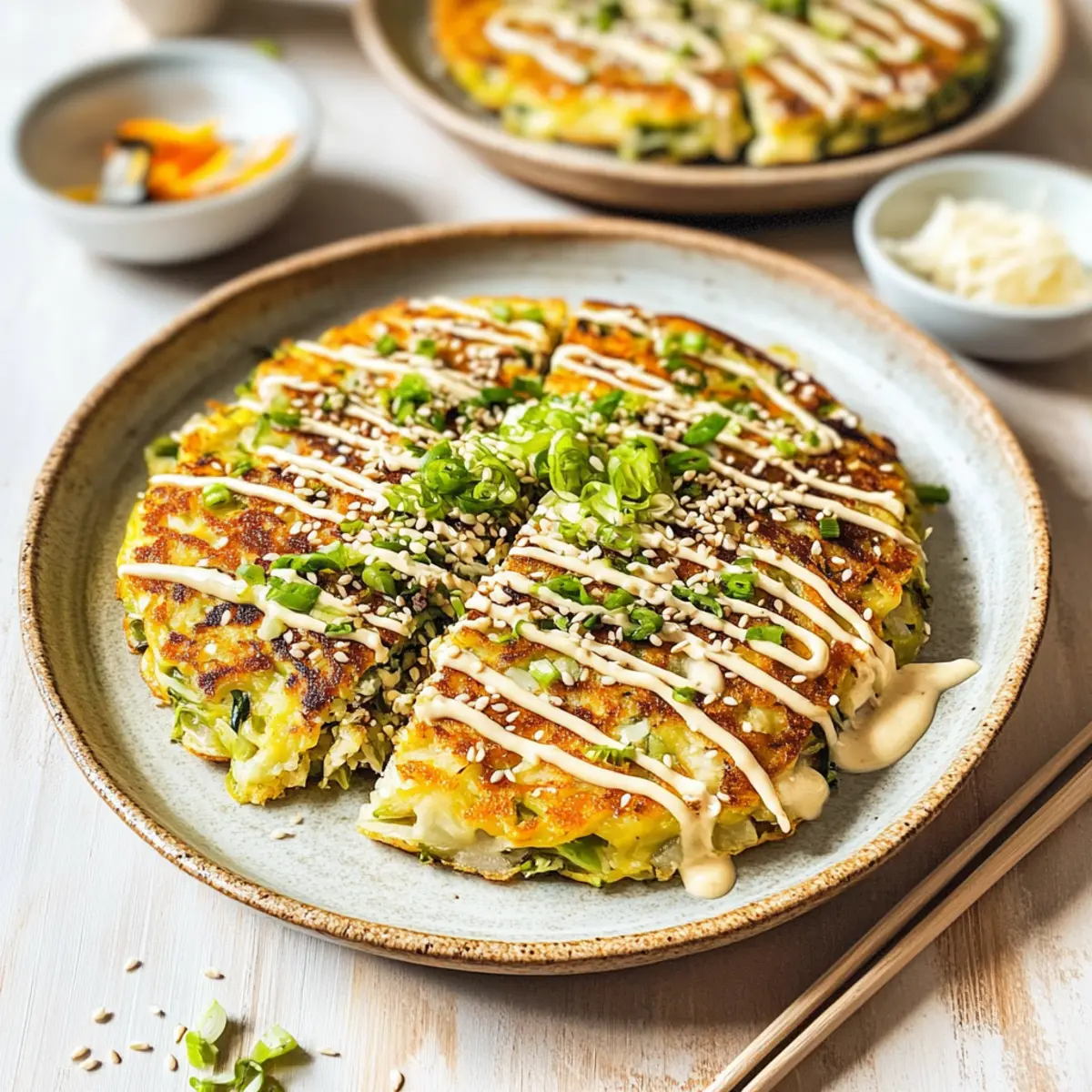
Once cooked, transfer the Okonomiyaki to a cutting board and let it rest for a couple of minutes before slicing into wedges. For a delicious finish, top with Japanese mayonnaise, pickled ginger, chopped scallions, and a sprinkle of sesame seeds. The vibrant colors and textures will make this dish irresistible!
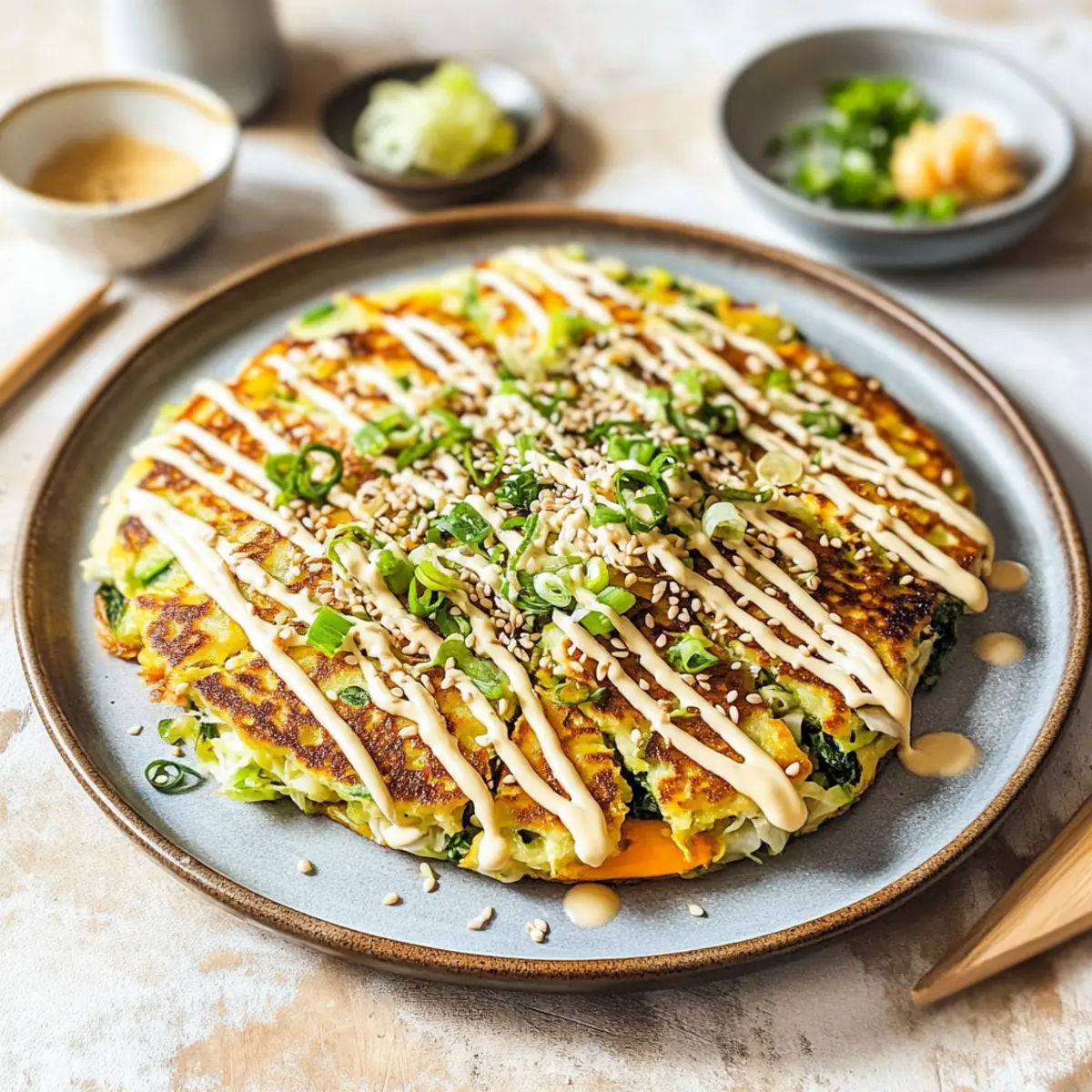
What to Serve with Quick & Easy Vegetarian Okonomiyaki?
Enhance your meal experience with delightful side dishes that elevate the flavors of these crispy, veggie-packed pancakes.
-
Crispy Salad: A refreshing mix of greens with a sesame dressing adds crunch and balance, complementing the savory pancakes beautifully.
-
Miso Soup: The warm umami flavors of miso soup create a comforting duo with Okonomiyaki, deepening the overall Japanese dining experience.
-
Grilled Vegetables: Charred zucchini, bell peppers, and asparagus provide a smoky contrast, harmonizing with the pancake’s fresh, herbaceous notes.
-
Pickled Vegetables: Adding a tangy element, quick-pickled cucumbers or radishes brighten each bite of the rich pancakes and cleanse the palate.
-
Chili Soy Sauce: A drizzle of spicy soy sauce unleashes a zingy kick and adds layers of flavor, perfect for those who enjoy a bit of heat.
-
Fresh Fruit: A side of sliced melons or citrus fruits brings a sweet and juicy quality, balancing out the savory aspects of the dish.
-
Ice-cold Sake: This traditional Japanese drink enhances the meal with its delicate flavors and fragrant aromas, making it the perfect pairing for Okonomiyaki.
-
Green Tea: A warm cup of green tea offers a refreshing cleanse and complements the umami flavors, enhancing the overall dining experience.
Storage Tips for Okonomiyaki
Fridge: Store leftover Okonomiyaki in an airtight container for up to 3 days. This ensures they stay fresh and delicious for your next meal.
Freezer: If you’d like to keep them longer, freeze the pancakes in a single layer, then transfer to a zip-top bag for up to 1 month. Thaw in the fridge before reheating.
Reheating: For the best texture, reheat Okonomiyaki in a skillet over medium heat to restore their crispiness, or warm them gently in the microwave for a quick meal. Enjoy this delightful Japanese cabbage pancake again!
Wrapping: Wrap individual pancakes in plastic wrap or parchment paper before freezing to prevent them from sticking together.
Expert Tips for Okonomiyaki
• Hot Oil: Ensure the skillet is hot enough before adding the batter to achieve a crispy texture; low heat can lead to soggy pancakes.
• Gentle Mixing: When combining vegetables with the batter, fold gently to keep their structure and prevent mushiness in your Okonomiyaki.
• Timing Matters: Avoid flipping too early to ensure your pancakes are fully cooked inside. Golden brown on both sides is key!
• Prep Ahead: Consider shredding vegetables in advance to save time during busy mealtime prep.
• Customization: Feel free to experiment with additional vegetables or seasonings, like chili flakes or miso, to elevate the flavor of your Okonomiyaki!
Okonomiyaki Variations & Substitutions
Feel free to get creative and customize your Okonomiyaki with these exciting variations!
-
Add More Greens: Incorporate spinach or kale for a nutrient boost and delightful flavor.
-
Mushroom Medley: Amp up umami by folding in shiitake or button mushrooms; they add a lovely earthy richness.
-
Spice It Up: Add chili flakes or sriracha sauce to the batter for a zesty kick that will awaken your taste buds. Just a little heat can transform the experience.
-
Cheesy Touch: Mix in some shredded cheese like mozzarella for extra creaminess. It’ll create pockets of deliciousness in every bite!
-
Gluten-Free: Swap regular flour for gluten-free flour blend, so everyone can enjoy this savory dish! You’ll still get that wonderful pancake texture.
-
Vegan Delight: Replace eggs with an egg replacer or flaxseed meal mixed with water for a vegan version that still binds beautifully.
-
Sweet Twist: Try adding a touch of finely chopped sweet bell peppers for a refreshing sweetness, offering a delightful contrast to the savory batter.
-
Savory Miso: Incorporate a spoonful of miso paste for an extra depth of flavor. It enhances that mouthwatering umami profile perfectly!
With these variations, your Okonomiyaki will never be boring! Don’t forget to check out my ideas on vegan meal options or discover more about healthy cooking for even more inspiration. Enjoy creating your unique flavors!
Make Ahead Options
These delicious Okonomiyaki are perfect for busy home cooks looking to save time during meal prep! You can prepare the vegetable mixture up to 24 hours in advance; simply shred your cabbage, carrot, and onion, then sprinkle with salt and let them wilt for about 10 minutes. Store the mixture in an airtight container in the refrigerator to keep it fresh and prevent browning. You can also whisk the batter (eggs, soy sauce, sesame oil, and flour) ahead of time, allowing you to whip up these pancakes quickly when it’s time to cook. When ready to serve, just combine the veggies with the batter, cook, and enjoy restaurant-quality Okonomiyaki without the hassle!
Okonomiyaki – Japanese Cabbage Pancakes Recipe FAQs
What type of cabbage should I use?
Absolutely! While traditional okonomiyaki uses green cabbage, feel free to experiment. Savoy cabbage or napa cabbage work beautifully in terms of flavor and texture. Look for heads that are firm, with crisp leaves and without dark spots for the best results.
How should I store leftover Okonomiyaki?
For optimal freshness, store your leftover okonomiyaki in an airtight container in the refrigerator. They will stay good for 3 to 4 days. Ensure they are completely cooled before sealing the container, as this prevents moisture buildup that could make them soggy.
Can I freeze Okonomiyaki?
Very! To freeze your okonomiyaki, first ensure they are fully cooled. Then, lay them out in a single layer on a baking sheet for about an hour. Once frozen, transfer them to zip-top freezer bags or wrap individually in plastic wrap. They can be stored in the freezer for up to 3 months. For serving, thaw in the fridge overnight before reheating.
Why are my Okonomiyaki soggy?
If your pancakes turn out soggy, it’s often due to excess moisture from the vegetables. Be sure to let the salted veggies sit for about 10 minutes, then lightly squeeze out any excess water before mixing them into the batter. Additionally, ensuring your oil is hot enough before cooking will help achieve that desired crispy texture.
Is this recipe suitable for a gluten-free diet?
Definitely! To make gluten-free okonomiyaki, simply substitute the all-purpose flour with a gluten-free flour blend. Look for one that includes a binding agent, and your pancakes will still have that wonderful structure. Just make sure your soy sauce is gluten-free or use tamari for a safe alternative!
Can I add other vegetables to my Okonomiyaki?
The more, the merrier! You can customize your okonomiyaki by adding various vegetables like shredded bell peppers, mushrooms, or even corn. Just remember to keep the total volume of vegetables similar to what the recipe calls for, so the batter holds everything together nicely. Happy cooking!
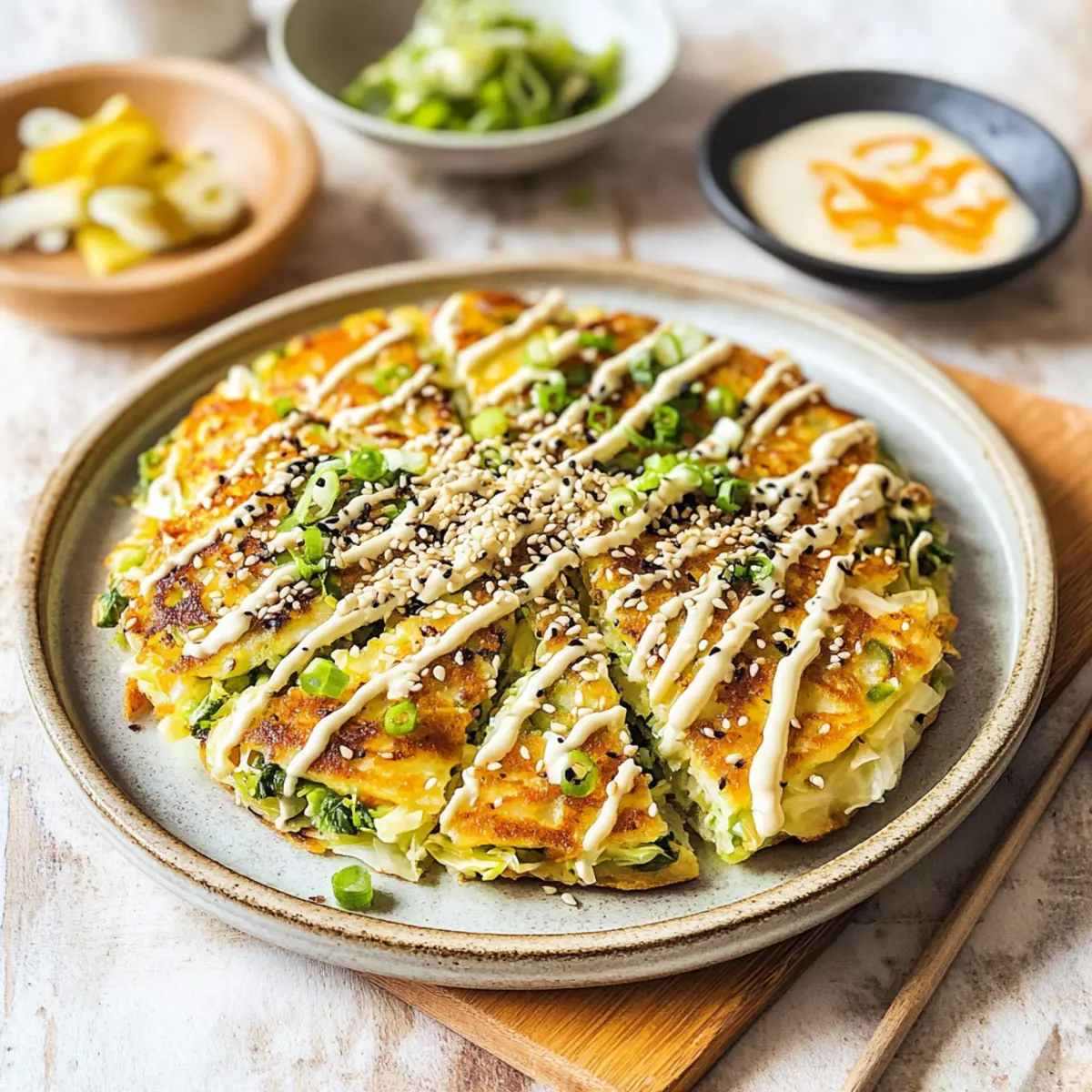
Deliciously Easy Okonomiyaki - Japanese Cabbage Pancake Delight
Ingredients
Equipment
Method
- Prepare the vegetables by shredding cabbage, grating carrot, and chopping onion. Sprinkle with fine-gran salt and let sit for about 10 minutes.
- Whisk the eggs in a mixing bowl until frothy. Add light soy sauce and toasted sesame oil, mixing until well combined. Gradually incorporate all-purpose flour.
- Fold the prepared vegetables into the batter, ensuring each piece is well-coated without overmixing.
- Heat a non-stick skillet over medium-high heat and drizzle with oil until shimmering.
- Pour the batter mixture into the skillet to form one large pancake or two medium pancakes. Cook for about 5 minutes or until golden brown.
- Flip the pancake carefully and cook for another 4-5 minutes until golden and cooked through. Transfer to a cutting board to rest.
- Slice into wedges and garnish with Japanese mayonnaise, pickled ginger, chopped scallions, and sesame seeds before serving.
Leave a Reply