
As the aroma of coconut and spices perfumes the air, I can’t help but feel a wave of excitement for dinner. Enter my Thai Coconut Shrimp Curry—a dish that’s perfect for a quick weeknight meal yet fancy enough to impress at gatherings. Packed with juicy shrimp and vibrant bell peppers, this creamy delight strikes a harmonious balance between comforting and exotic. One of the best perks? It comes together in just under 30 minutes, catering to busy schedules without sacrificing flavor. Plus, you can customize it with your favorite veggies, making it a versatile recipe that suits any palate. Ready to dive into this delightful world of Thai-inspired cuisine? Let’s get to cooking!
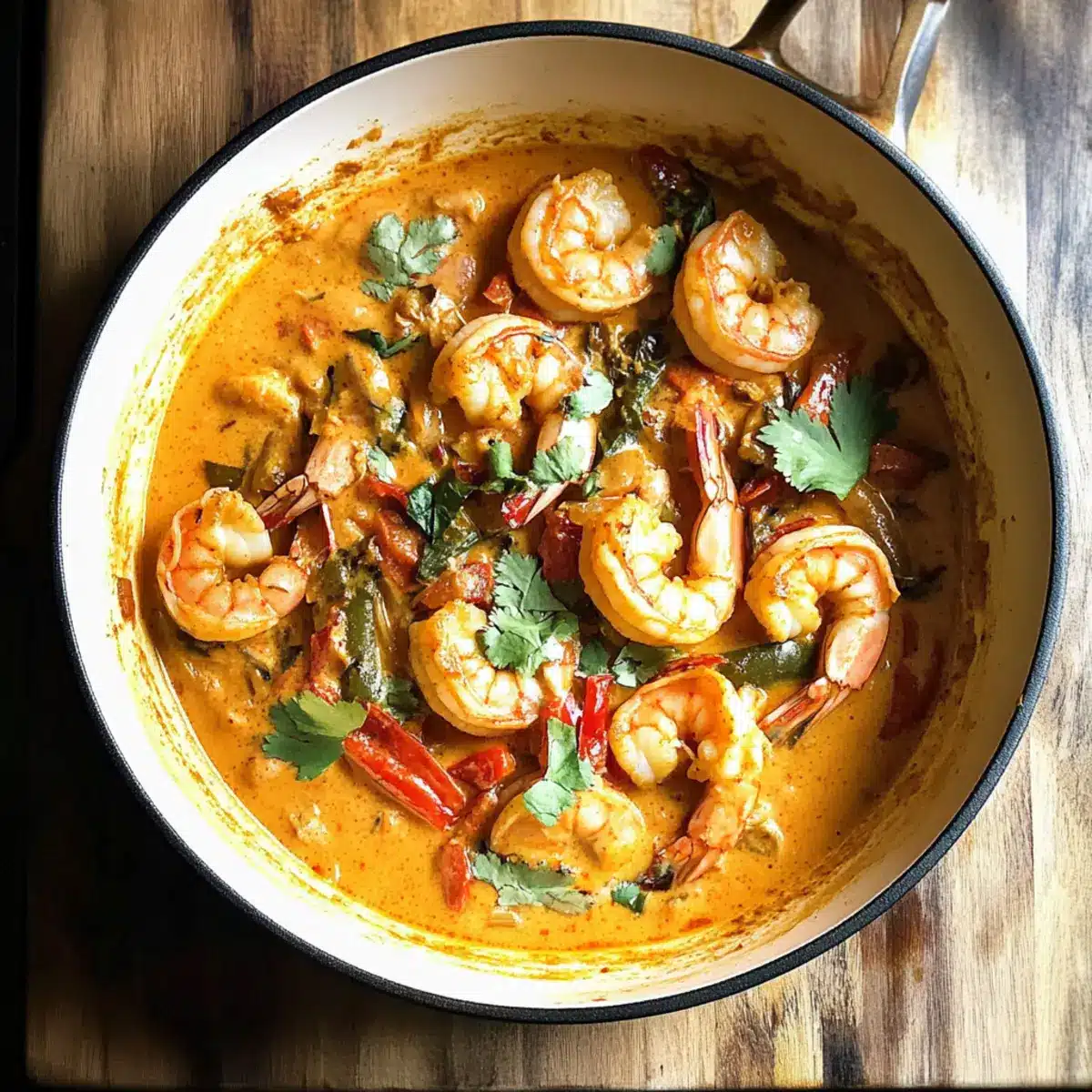
Why is this curry a must-try?
Quick and Easy: This Thai Coconut Shrimp Curry can be whipped up in under 30 minutes, making it ideal for busy weeknights or spontaneous dinner parties.
Flavor Explosion: With the melding of coconut milk, Thai red curry paste, and fresh herbs, each bite delivers a delightful burst of flavor that’s both comforting and exotic.
Customizable: Feel free to substitute proteins or vegetables according to your preference—whether you opt for chicken, tofu, or seasonal veggies, it always shines!
Diet-Friendly Options: The recipe easily adapts to gluten-free diets, ensuring everyone can indulge without worry. Plus, with its rich, creamy texture, it’s sure to please even the pickiest eaters.
Serving Perfection: Pair it beautifully with jasmine rice or a chilled cucumber salad for a refreshing complement. You’ll be amazed at how this simple dish can elevate your dinner table!
Thai Coconut Shrimp Curry Ingredients
For the Shrimp
• Shrimp – Use 1 pound of peeled and deveined shrimp for a quick protein source.
For the Sauce
• Low Sodium Soy Sauce – For seasoning; substitute with gluten-free soy sauce if needed.
• Thai Red Curry Paste – This is the main flavor base; adjust according to your spice tolerance.
• Brown Sugar – Balances flavors with a hint of sweetness; can substitute with honey or maple syrup.
• Coconut Milk – Provides creaminess; use full-fat for richness or light coconut milk for a lighter option.
For the Veggies
• Bell Pepper – Adds crunch and sweetness; easily substitutable with zucchini or bok choy.
• Garlic & Ginger – Fresh versions enhance flavor; powder can work in a pinch.
• Shallot – For a mild onion flavor; replace with finely chopped onion if needed.
For Seasoning
• Red Pepper Flakes – Adjust according to your preference for heat.
• Turmeric – Adds color and earthy flavor; no direct substitute, but curry powder can enhance flavor.
• White Pepper – For mild heat; black pepper is a suitable alternative.
For Cooking
• Vegetable Oil & Unsalted Butter – Used for sautéing shrimp and vegetables; can swap with olive oil.
For Topping
• Thai Basil – Adds freshness; substitute with regular basil if unavailable.
• Sriracha – Optional for extra heat; adjust according to taste.
• Toppings (Scallions, Fried Onions, Cilantro, Chili Pepper) – Personalize these for added flavor and texture.
With these ingredients for the Thai Coconut Shrimp Curry, you’ll find culinary joy is just a few steps away!
Step‑by‑Step Instructions for Thai Coconut Shrimp Curry
Step 1: Prep Shrimp
In a mixing bowl, combine 1 pound of peeled and deveined shrimp with low sodium soy sauce, red pepper flakes, turmeric, garlic powder, and white pepper. Toss everything well to evenly coat the shrimp. Set aside for about 10 minutes to allow the flavors to meld while you prep the veggies.
Step 2: Prep Veggies
Grate 2 cloves of garlic and 1 inch of ginger for maximum flavor, then finely chop 1 shallot. Slice one bell pepper into thin strips, as this will add a vibrant crunch to your Thai Coconut Shrimp Curry. Having all your ingredients prepped will make the cooking process more efficient and enjoyable.
Step 3: Sear Shrimp
Heat 2 tablespoons of vegetable oil and 1 tablespoon of unsalted butter in a large skillet over medium-high heat. Once the oil is hot and shimmering, add the shrimp in a single layer, making sure not to overcrowd the pan. Sear for 1 minute on each side until they turn pink and opaque, then remove the shrimp from the skillet and set them aside.
Step 4: Sauté Bell Pepper
In the same skillet, add the sliced bell pepper and sauté for about 5 minutes until it softens and starts to caramelize slightly, stirring occasionally to prevent sticking. This adds a depth of flavor to your Thai Coconut Shrimp Curry while keeping the vegetables beautifully tender yet crisp.
Step 5: Cook Aromatics
Add the grated garlic and ginger along with the chopped shallot to the pan, stirring constantly for about 2 minutes until they become soft and fragrant. This step infuses the oil with aromatic flavors that will elevate your curry and create a delicious base for the sauce.
Step 6: Deglaze
Pour in 1 cup of chicken or vegetable broth and use a wooden spoon to scrape up any flavorful browned bits stuck to the bottom of the skillet. Let the mixture come to a gentle simmer for about 2 minutes, allowing the broth to reduce slightly and concentrate the flavor before adding the curry paste.
Step 7: Mix Curry Paste
Stir in 2 tablespoons of Thai red curry paste along with 1 tablespoon of brown sugar, 1 teaspoon of turmeric, 1 teaspoon of white pepper, and a dash of soy sauce. Cook for 1 minute, mixing well to combine the flavors, creating a rich and fragrant mixture that serves as the heart of this Thai Coconut Shrimp Curry.
Step 8: Incorporate Coconut Milk
Add 1 can of coconut milk to the skillet, stirring to combine it with the other ingredients. Bring the mixture to a gentle boil, then reduce the heat to a simmer. Continue cooking for about 5 minutes until the sauce thickens slightly and becomes creamy and luxurious.
Step 9: Finish
Remove the skillet from heat and stir in the juice of one lime, a swirl of sriracha for extra heat, and a handful of fresh Thai basil before returning the seared shrimp to the skillet. Gently stir everything together and let it cook for an additional minute to heat through, allowing the shrimp to soak up the delicious flavors.
Step 10: Serve
Spoon your Thai Coconut Shrimp Curry over a bed of jasmine rice, garnished with cilantro, fried onions, and sliced scallions. For a refreshing contrast, serve alongside a chilled cucumber salad, and enjoy the comforting and mouthwatering layers of flavors in this delightful dish!
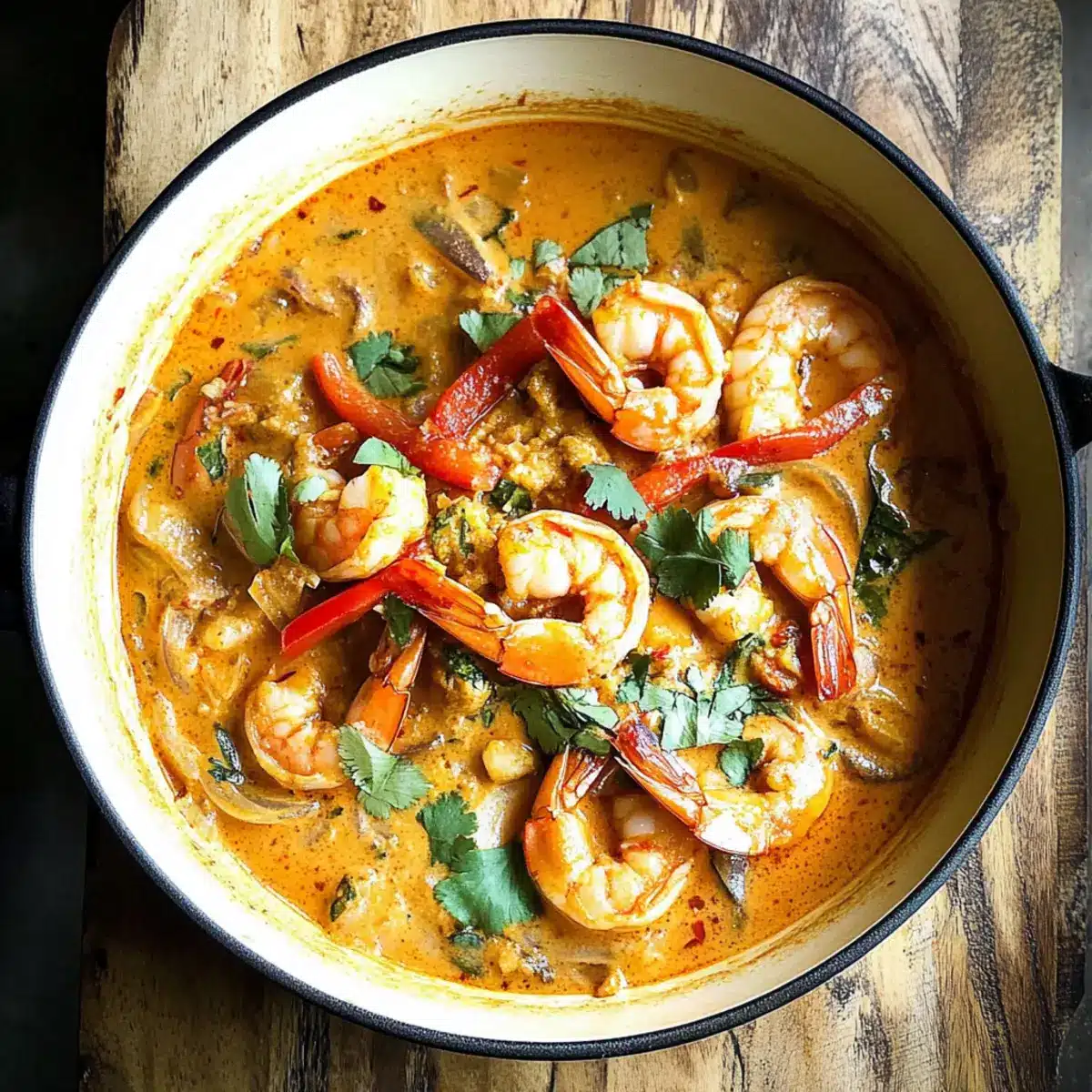
How to Store and Freeze Thai Coconut Shrimp Curry
Fridge: Store leftovers in an airtight container for up to 3 days. This keeps your Thai Coconut Shrimp Curry fresh and flavorful, ready for a quick reheat.
Freezer: For longer storage, freeze your curry in a freezer-safe container for up to 3 months. Make sure to leave some space for expansion as the sauce freezes.
Reheating: When ready to eat, thaw in the refrigerator overnight before reheating gently on the stovetop. Add a splash of broth to restore creaminess if the sauce thickens.
Room Temperature: Avoid leaving your Thai Coconut Shrimp Curry at room temperature for more than 2 hours to ensure food safety. Enjoy every delectable bite!
What to Serve with Thai Coconut Shrimp Curry
As you prepare this creamy delight, think about the sides that will complement its vibrant flavors for a truly satisfying meal.
-
Jasmine Rice: Fluffy and fragrant, jasmine rice soaks up the delectable curry sauce, creating an irresistible combination that’s comforting and filling.
-
Crunchy Cucumber Salad: A refreshing cucumber salad with a tangy dressing offers a crisp contrast to the rich curry, balancing the meal while adding a burst of freshness.
-
Steamed Broccoli: Tender and vibrant, steamed broccoli adds a lovely texture and a subtle earthy flavor that pairs beautifully with the sweet notes of coconut.
-
Garlic Naan: Soft and warm garlic naan is perfect for scooping up the curry, making each bite a delightful experience while adding a hint of luscious garlic flavor.
-
Thai Spring Rolls: Light and crispy, these spring rolls filled with fresh veggies and herbs provide a fun, crunchy appetizer that leads perfectly into the hearty main dish.
-
Chilled Coconut Water: A refreshing drink that enhances the tropical vibe of your meal, coconut water rejuvenates the palate and adds to the overall experience.
Thai Coconut Shrimp Curry Variations
Feel free to tailor this recipe to suit your taste buds and dietary preferences!
- Dairy-Free: Swap coconut milk for unsweetened almond or oat milk for a lighter option that still brings creaminess.
- Vegetarian: Use tofu or tempeh instead of shrimp, allowing them to soak up the flavorful sauce beautifully.
- Spicy Kick: Add sliced Thai chilis for an extra layer of heat that complements the curry’s bold flavors. Your taste buds will sing!
- Crunchy Texture: Toss in some snap peas or broccoli for a satisfying crunch that also adds a vibrant color to the dish.
- Nutty Flavor: Incorporate a tablespoon of peanut butter into the sauce for a rich, nutty twist that will make your curry sing with flavor!
- Citrusy Brightness: Squeeze in some orange juice along with lime for a fun citrus twist that brightens up the curry.
- Garlicky Goodness: Swap garlic powder for freshly minced garlic for a more intense aroma and flavor—perfect for garlic lovers!
- Alternative Proteins: Experiment by substituting the shrimp with chicken or even chickpeas for a vegan version; the sauce will embrace them just as well.
With these variations, your Thai Coconut Shrimp Curry can be a unique culinary creation each time you make it. And if you’re looking for more delicious dishes, you might enjoy pairing it with a side of Garlic Shrimp Over or a refreshing Thai Quinoa Crunch.
Expert Tips for Thai Coconut Shrimp Curry
-
Prep Ahead: Make sure to prep all your ingredients before starting. This ensures a smooth cooking process and helps the Thai Coconut Shrimp Curry come together quickly.
-
Spice Sensitivity: Adjust the heat by modifying the amount of Thai red curry paste. If unsure, start with less and add more to taste.
-
Don’t Overcrowd: When searing shrimp, work in batches if necessary. Overcrowding can lead to steaming instead of searing, resulting in less flavorful shrimp.
-
Thickening Trick: If you desire an even thicker sauce, mix a tablespoon of cornstarch with water to create a slurry and stir it into the simmering sauce.
-
Veggie Variability: Swap out bell peppers for your favorite vegetables like zucchini or bok choy; the adaptability makes your Thai Coconut Shrimp Curry even more enjoyable!
Make Ahead Options
These Thai Coconut Shrimp Curry preparations are a wonderful time-saver for busy weeknights! You can marinate the shrimp in the soy sauce and spices (red pepper flakes, turmeric, garlic powder, and white pepper) up to 24 hours in advance to infuse maximum flavor. Additionally, chop the vegetables and store them in an airtight container in the refrigerator for up to 3 days. To finish, simply sauté the vegetables, include the broth, mix in the curry paste, and add the coconut milk as per the instructions. This way, despite prepping ahead, your Thai Coconut Shrimp Curry will maintain its vibrant flavors and textures, ensuring delicious results with minimal effort when it’s time to cook!
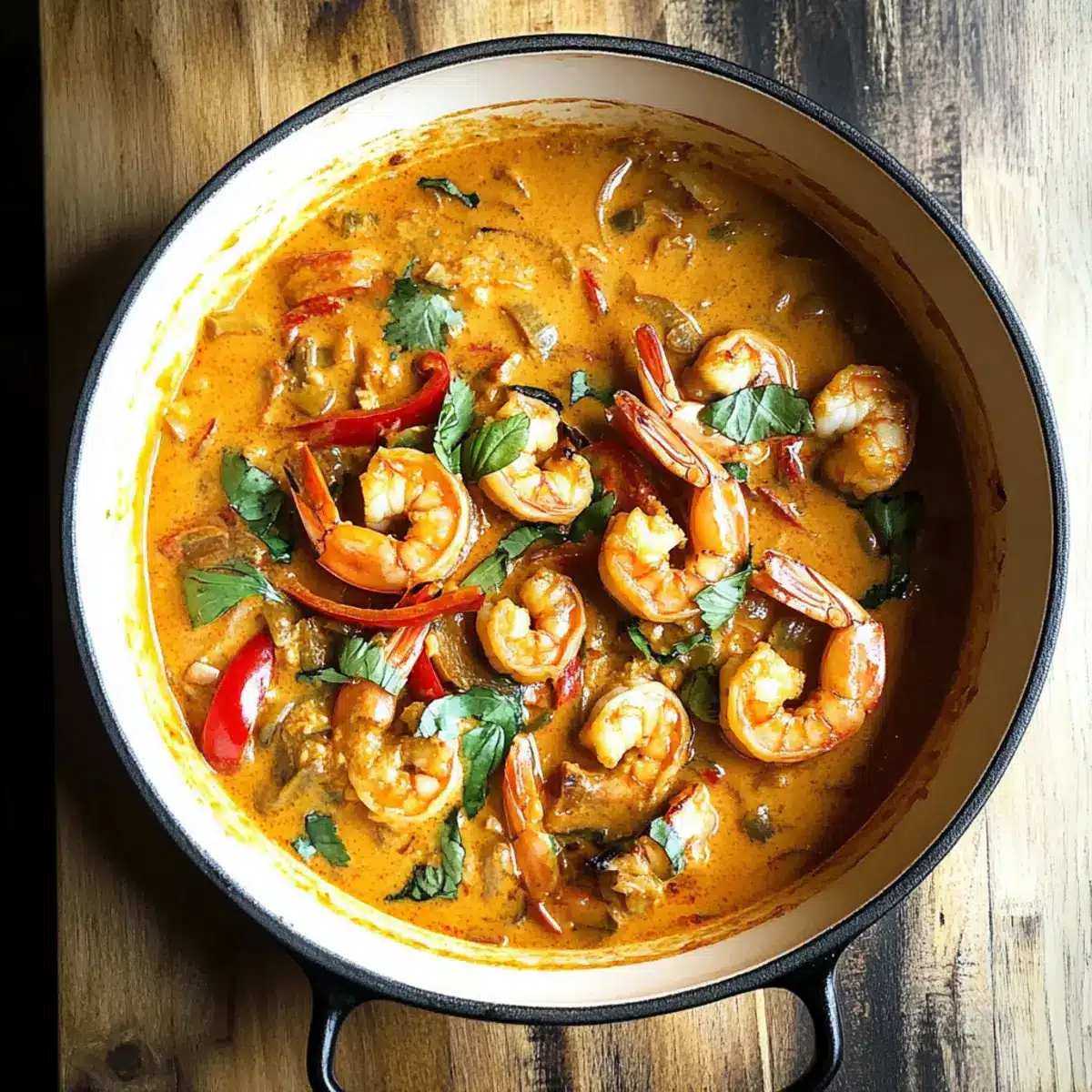
Thai Coconut Shrimp Curry Recipe FAQs
What shrimp should I use for this recipe?
Absolutely! For the best flavor and texture, use 1 pound of peeled and deveined shrimp. Fresh can be delicious, but frozen shrimp works just as well—just make sure to thaw them properly before cooking!
How should I store leftovers of Thai Coconut Shrimp Curry?
Store your leftover Thai Coconut Shrimp Curry in an airtight container in the fridge for up to 3 days. Make sure it’s cooled to room temperature first, and label the container with the date to keep track of freshness!
Can I freeze Thai Coconut Shrimp Curry?
Yes! You can freeze it for up to 3 months in a freezer-safe container. Be sure to leave some space for expansion, as the sauce may thicken when frozen. When you’re ready to enjoy it again, thaw it in the fridge overnight before gently reheating on the stovetop. Adding a splash of broth can help restore its creamy texture.
How can I customize the spices if I prefer a milder curry?
Very easily! If you find that Thai red curry paste is too spicy for your palate, I recommend starting with just one tablespoon and adding more gradually. Taste as you go—this way, you can adjust to your desired heat level without overwhelming your dish.
Are there any allergens I should be aware of for this recipe?
Definitely! This Thai Coconut Shrimp Curry includes soy sauce, which contains gluten unless you choose a gluten-free variety. Additionally, if you have shellfish allergies, opt for chicken or tofu instead. It’s always best to check labels, especially if you’re preparing food for someone with dietary restrictions.
What vegetables can I substitute in this recipe?
The more the merrier! While bell peppers add a wonderful crunch, you can easily swap them for other vegetables like zucchini, bok choy, or even snap peas. Just make sure to adjust cooking times slightly depending on the vegetables you choose. The key is to keep the flavors vibrant!
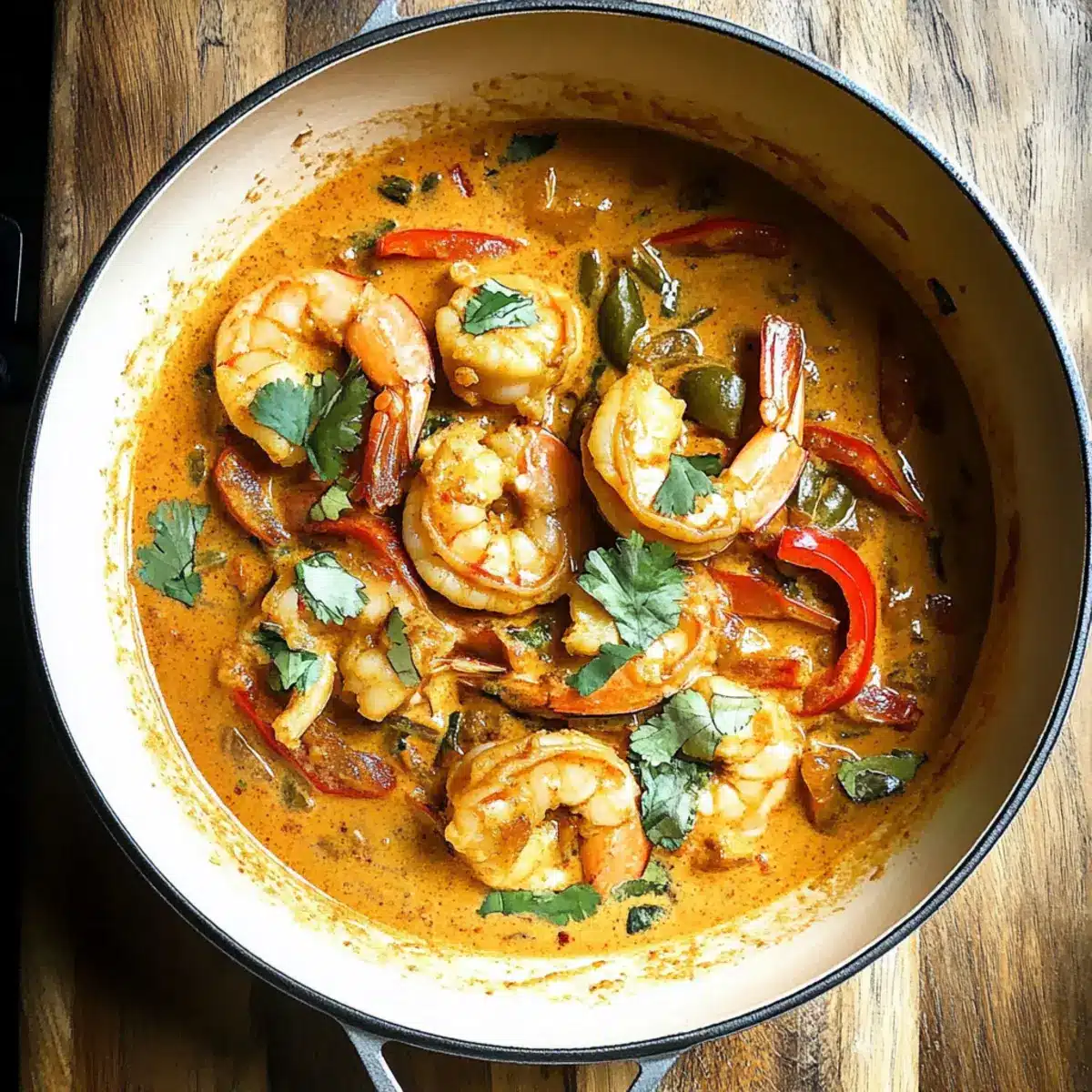
Thai Coconut Shrimp Curry: Creamy Comfort in Every Bite
Ingredients
Equipment
Method
- In a mixing bowl, combine shrimp with low sodium soy sauce, red pepper flakes, turmeric, garlic, and white pepper. Toss well and set aside for 10 minutes.
- Grate garlic and ginger, and finely chop shallot. Slice bell pepper into strips.
- Heat vegetable oil and butter in a skillet. Sear the shrimp for 1 minute on each side and set them aside.
- Sauté sliced bell pepper in the same skillet for about 5 minutes until softened.
- Add garlic, ginger, and shallot to the pan, stirring for 2 minutes until fragrant.
- Pour in broth and deglaze the pan, simmering for about 2 minutes.
- Stir in curry paste, brown sugar, turmeric, white pepper, and a dash of soy sauce. Cook for 1 minute.
- Add coconut milk to the skillet, bring to a gentle boil, then simmer for 5 minutes until thickened.
- Remove from heat, stir in lime juice, sriracha, and Thai basil before adding the shrimp back to the skillet. Cook for 1 additional minute.
- Spoon curry over jasmine rice, garnished with cilantro, fried onions, and scallions, and serve with cucumber salad.
Leave a Reply