
As I stirred the pot, the rich, savory scent of my Korean Beef Bulgogi Stew wafted through the kitchen, instantly transporting me to a bustling street market in Seoul. This comforting dish, crafted from leftover beef bulgogi, marries tender marinated meat with chewy glass noodles and an aromatic broth, creating a quick yet delightful meal. Perfect for those busy weeknights, this recipe takes less than 30 minutes to prepare and brings a taste of Korea right to your table. Whether you’re looking to impress family or simply indulge in a cozy solo dinner, this stew is a true crowd-pleaser. Who wouldn’t want to dive into a bowl of warmth and flavor after a long day? Ready to transform your leftovers into something magical? Let’s get cooking!
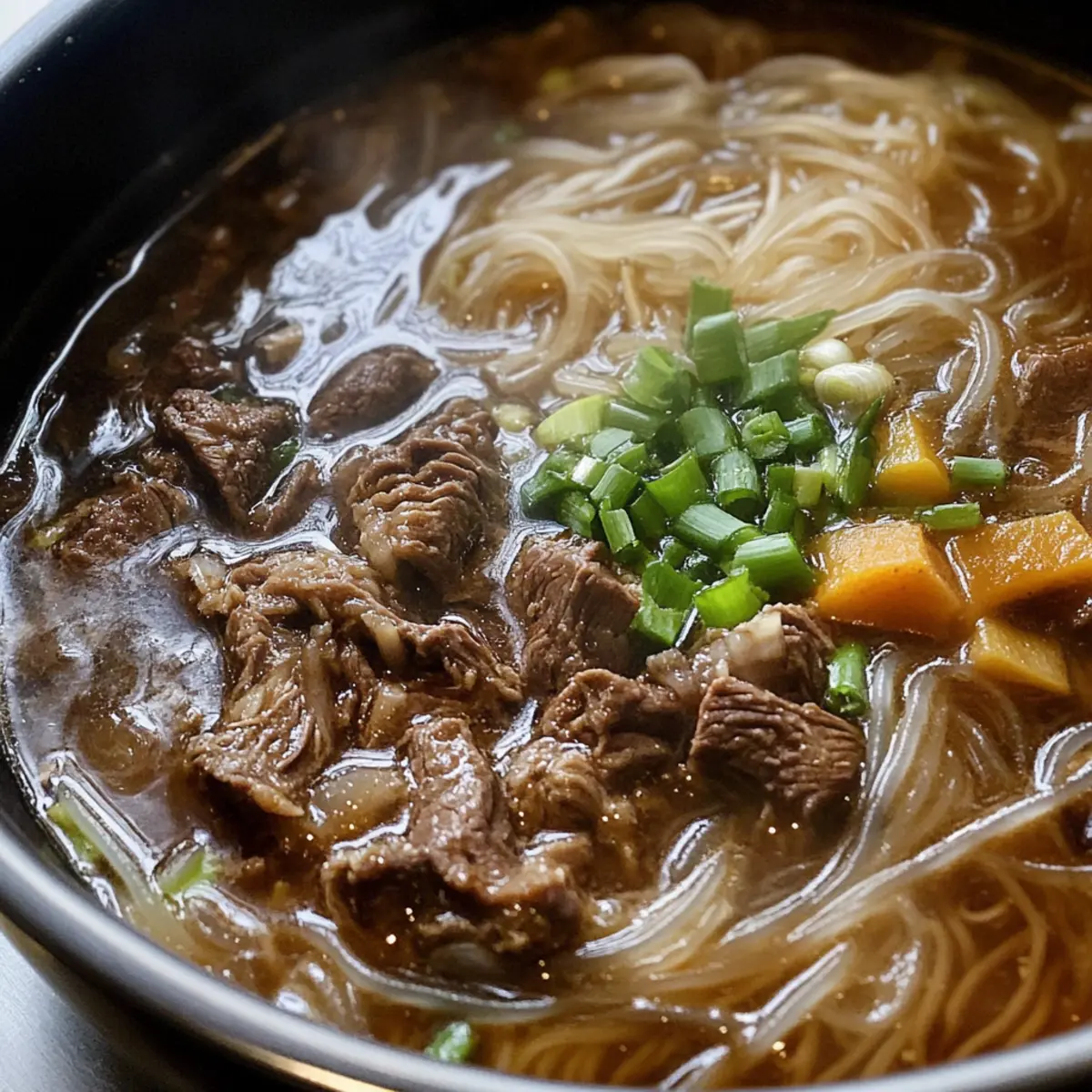
Why is This Stew a Must-Try?
Quick and Easy: In just 15 minutes, you can create a hearty meal that makes the most out of your leftover beef bulgogi.
Bursting with Flavor: The savory broth, combined with the sweetness of marinated beef and nutty sesame oil, delivers a symphony of tastes in each spoonful.
Versatile Ingredients: Feel free to customize with your favorite vegetables or noodles. If you enjoy creative twists, check out our Garlic Butter Beef or Thai Basil Beef for more delicious ideas!
Comforting Texture: The chewy glass noodles absorb the broth beautifully, while tender beef and crisp mushrooms provide a satisfying bite.
Perfect for Meal Prep: This stew stores well in the fridge, making it a great option for quick lunches or dinners throughout the week.
Korean Beef Bulgogi Stew Ingredients
For the Stew
- Beef Bulgogi – A sweet-savory, marinated beef that adds richness to the stew. Can substitute with freshly marinated beef if leftovers are unavailable.
- Sweet Potato Glass Noodles (Dangmyeon) – Chewy noodles that absorb the broth, providing texture and heartiness. Substitute with rice noodles or udon if necessary.
- Enoki Mushrooms – Provides earthiness and a tender-crisp texture. Replace with shiitake or button mushrooms if desired.
- Green Onion – Adds freshness and color. Use chives or regular onions as a substitute.
- Water – Base for the broth to merge flavors. Substituting with beef stock enhances the flavor.
- Sesame Oil – Imparts a nutty depth to the broth. Olive oil can be used in a pinch, though flavor will differ.
- Dark Soy Sauce – Adds umami, saltiness, and a hint of sweetness. Regular soy sauce can be used but may lighten the flavor a bit.
Step‑by‑Step Instructions for Korean Beef Bulgogi Stew
Step 1: Soak the Noodles
Begin by soaking the sweet potato glass noodles in warm water for about 10 minutes, allowing them to soften. Stir occasionally to ensure they’re fully submerged. After soaking, drain and set them aside. This step is essential for ensuring the noodles will cook evenly in the Korean Beef Bulgogi Stew.
Step 2: Heat the Bulgogi
In a medium pot, place the leftover beef bulgogi and warm it over medium heat for 2-3 minutes, stirring gently until heated through. You’ll know it’s ready when the beef is steaming and aromatic. This quick reheating enhances the flavors of the marinated beef before adding the other ingredients.
Step 3: Add Flavorful Sauces
Stir in the dark soy sauce and sesame oil into the pot with the warmed bulgogi, mixing thoroughly for an even distribution. Cook for another minute, allowing the rich umami flavors to blend beautifully. The glossy appearance of the beef will signal it’s ready for the next step in the Korean Beef Bulgogi Stew.
Step 4: Pour in the Liquid
Now, add 4 cups of water or beef stock to the pot, bringing the mixture to a boil over high heat. This should take about 3-5 minutes. Watch closely for the first bubbles, as this will create a delicious base for the stew, infusing all flavors together beautifully.
Step 5: Cook the Noodles and Mushrooms
Once boiling, carefully add the soaked glass noodles and enoki mushrooms to the bubbling broth. Reduce the heat to medium and cook for 3-4 minutes, stirring gently until the noodles are tender yet chewy. The broth will thicken slightly, and the mushrooms will become tender, making the stew even more inviting.
Step 6: Garnish and Serve
Remove the pot from heat and ladle the Korean Beef Bulgogi Stew into bowls. Top each serving with a generous handful of chopped green onions for a fresh, vibrant finish. Serve immediately while hot, and enjoy this comforting dish that celebrates the flavors of Korea!
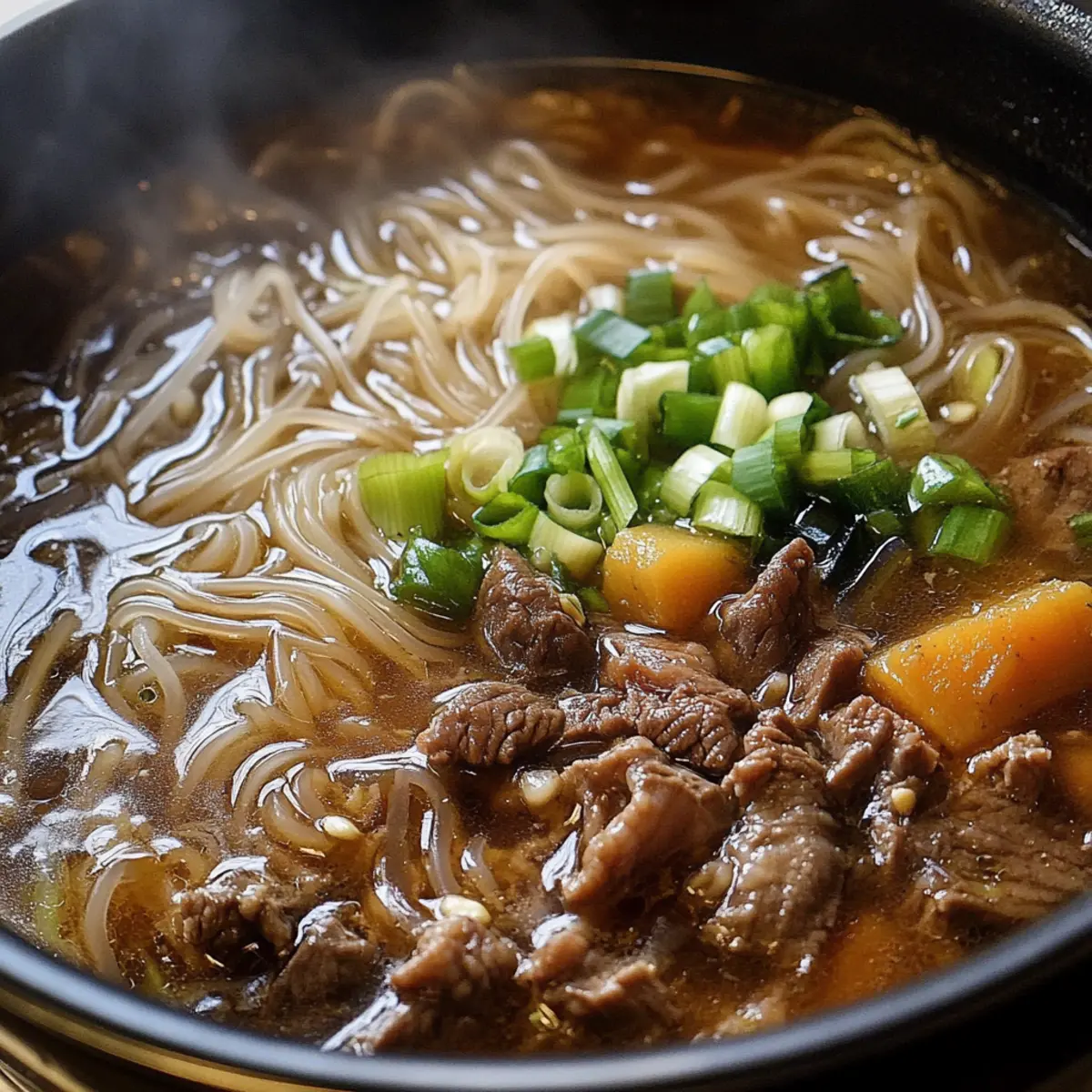
Expert Tips for Korean Beef Bulgogi Stew
- Marinated Beef Choice: Use well-marinated bulgogi for the best flavor. If cooking fresh, ensure it’s sliced thinly and marinated adequately.
- Noodle Timing: Check glass noodles closely while cooking; overcooking can lead to mushiness. Aim for a tender yet chewy texture in your Korean Beef Bulgogi Stew.
- Veggie Customization: Don’t hesitate to add your favorite seasonal vegetables! Bok choy or zucchini can enhance nutrition while providing varied textures.
- Umami Boost: For a deeper flavor, incorporate a splash of fish sauce or extra mushrooms. This ensures each bowl of stew is rich and savory.
- Storage Tips: Store leftovers in an airtight container for up to three days. Reheat gently to preserve the delightful textures of the noodles and beef.
What to Serve with Quick Korean Beef Bulgogi Stew
Elevate your meal with delightful pairings that enhance the comforting flavors of this savory stew.
-
Steamed Rice: A classic companion that absorbs the rich broth, making every bite hearty and satisfying. For an extra touch, drizzle a bit of sesame oil over the rice before serving.
-
Kimchi: This tangy, fermented cabbage adds a crunchy contrast and spicy kick that complements the umami-rich stew beautifully.
-
Pickled Radishes: These crisp, refreshing bites cleanse the palate and balance the savory notes of the bulgogi stew, creating a vibrant meal experience.
-
Seasoned Spinach: Lightly sautéed with sesame oil and garlic, this dish adds a nutritious element and a wonderful earthy contrast to the stew’s flavors.
-
Garlic Bread: The warm, buttery crunch of a garlic baguette provides a delightful change in texture, perfect for dipping into the flavorful broth.
-
Herbal Tea: A steaming cup of green or barley tea offers a soothing finish to your meal, helping to digest the rich, delicious stew.
-
Fruit Sorbet: For dessert, a refreshing fruit sorbet provides a light, sweet contrast, cleansing the palate with vibrant flavors that harmonize with the meal.
Make Ahead Options
This Korean Beef Bulgogi Stew is perfect for meal prep! You can prepare the beef bulgogi up to 24 hours in advance by marinating it and storing it in the refrigerator, ensuring it stays flavorful. Additionally, soak the sweet potato glass noodles ahead of time and keep them in a sealed container (just be sure to refrigerate them if soaking more than a few hours). Before serving, simply reheat the bulgogi, add the broth ingredients, and toss in the noodles and mushrooms for a quick finish. This way, you’ll have a delicious, comforting stew ready in no time, perfect for those busy weeknights!
Korean Beef Bulgogi Stew Variations
Feel free to let your creativity shine and personalize this delicious stew!
- Veggie Boost: Add bok choy, napa cabbage, or zucchini for extra nutrition and color, making each bowl even more delightful.
- Spicy Kick: Sprinkle in some gochugaru (Korean chili flakes) if you’re craving a bit of heat. The gentle spiciness enhances the depth of flavors.
- Noodle Swap: Substitute sweet potato glass noodles with rice noodles or udon for a different texture. Each option offers its own unique charm!
- Mushroom Medley: Replace enoki mushrooms with shiitake or button mushrooms for an earthy twist. Each mushroom variety brings a special flavor to the stew’s depth.
- Herb & Seasoning: Add fresh cilantro or basil just before serving for a burst of freshness. It brightens the dish and adds visual appeal!
- Stock Enhancement: Replace water with beef stock or broth for an even richer taste. This simple swap takes the flavor over the top.
- Protein Options: Use leftover chicken or tofu if you’re looking for a different protein. Both alternatives will pair wonderfully with the savory broth.
- Umami Intensification: Add a dash of fish sauce or miso to elevate the umami factor in your stew. These ingredients will deepen the savory flavor experience.
For more delicious ideas, don’t miss our recipes for Korean BBQ Meatballs or French Onion Beef Sloppy Joes. Enjoy every flavorful bite!
How to Store and Freeze Korean Beef Bulgogi Stew
Fridge: Store leftover Korean Beef Bulgogi Stew in an airtight container in the refrigerator for up to 3 days. Always allow it to cool before sealing to preserve its quality.
Freezer: You can freeze the stew for up to 2 months. Make sure to use freezer-safe containers, leaving some space for expansion when it freezes.
Reheating: To reheat, thaw overnight in the fridge, then warm on the stovetop over low heat. Add a splash of water to maintain the broth’s consistency.
Portioning: Consider portioning the stew before freezing for convenient, quick meals later. Perfect for busy nights when you crave comfort food in a hurry!
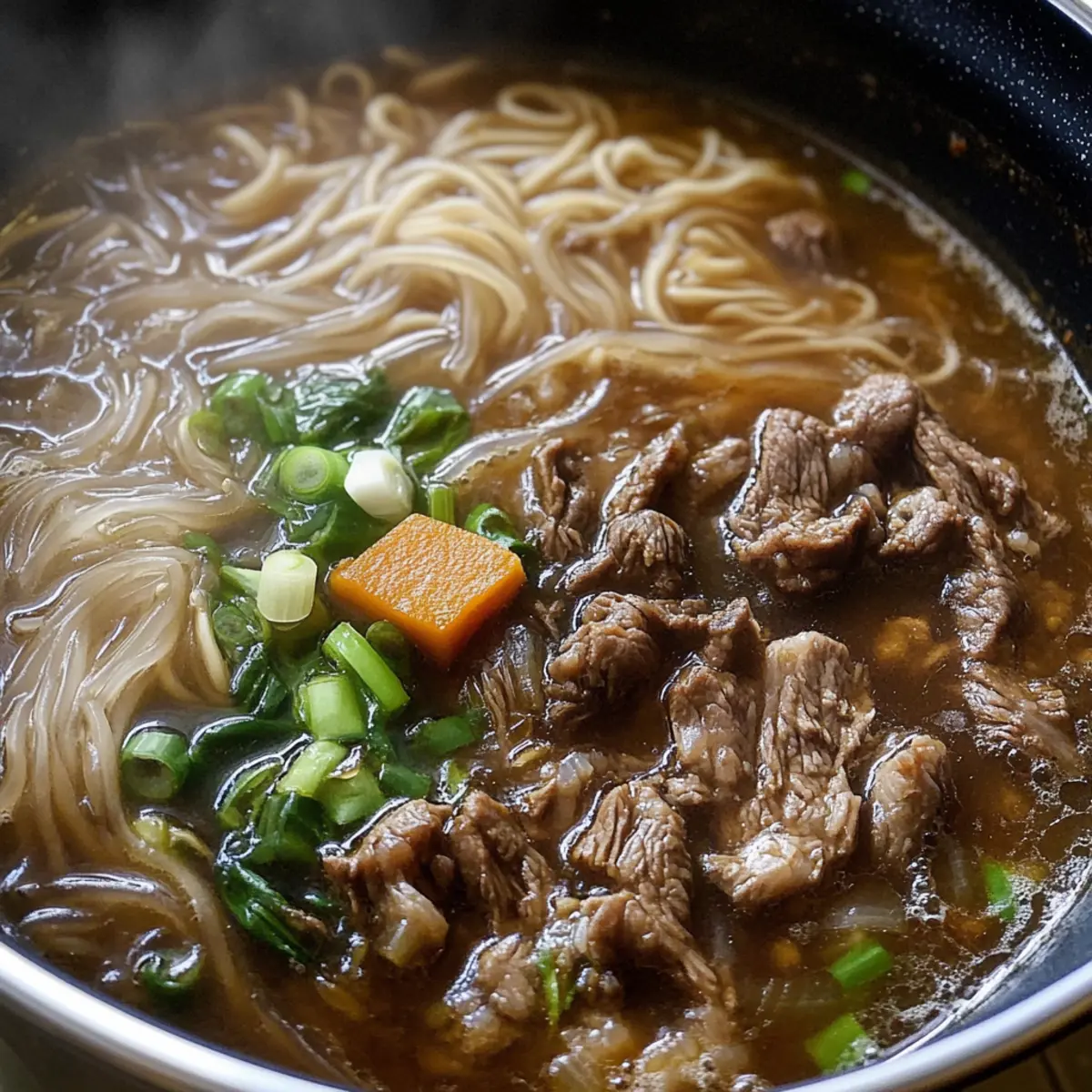
Korean Beef Bulgogi Stew Recipe FAQs
How do I select the best beef bulgogi for this stew?
Absolutely! The best beef bulgogi should be well-marinated, ideally with a good balance of sweet and savory flavors. If using fresh beef, ensure it is thinly sliced and marinated for at least 30 minutes before cooking. This marination enhances the flavor of your stew significantly, creating a rich and satisfying dish.
How long can I store leftover Korean Beef Bulgogi Stew?
You can store your Korean Beef Bulgogi Stew in an airtight container in the refrigerator for up to 3 days. It’s best to allow the stew to cool completely before sealing it. This will help preserve the texture of the noodles and the tenderness of the beef.
Can I freeze Korean Beef Bulgogi Stew?
Yes, you can freeze the stew for up to 2 months! To do this, transfer the cooled stew to freezer-safe containers, leaving some space for expansion. When you’re ready to enjoy it, thaw it overnight in the fridge and reheat it on the stovetop over low heat, adding a splash of water if necessary to loosen the broth.
What should I do if my glass noodles become mushy?
If your glass noodles turn mushy, it’s usually due to overcooking. To prevent this, monitor their cooking time closely and aim for a tender yet chewy texture, cooking them only 3-4 minutes in the broth. If you notice they are overcooked, unfortunately, there is not much to salvage, but you can try adding fresh or uncooked noodles to absorb excess broth in future batches.
Is this stew safe for pets or those with allergies?
While this stew is delicious for humans, it’s important to keep pets away, especially due to ingredients like sesame oil and soy sauce. For allergy considerations, ensure you check the labels if using store-bought bulgogi or soy sauce—common allergens include soy and gluten. You can substitute with gluten-free soy sauce if needed.
Can I customize the ingredients in the stew?
Very much! Feel free to customize the stew with seasonal vegetables like bok choy, zucchini, or even spinach. You can also incorporate different types of mushrooms or swap glass noodles for rice noodles or udon for a varied texture. The more, the merrier!
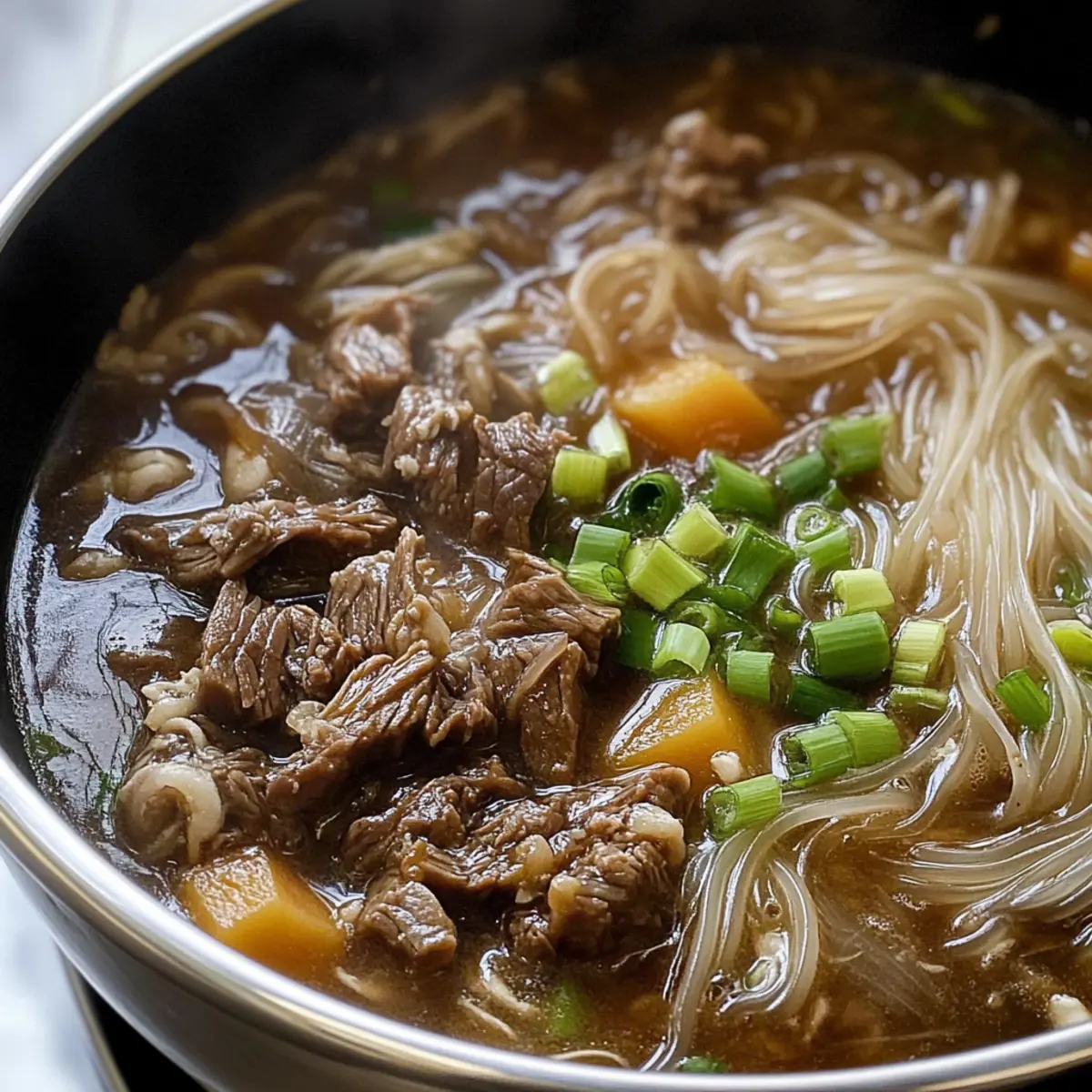
Comforting Korean Beef Bulgogi Stew in Just 15 Minutes
Ingredients
Equipment
Method
- Soak the sweet potato glass noodles in warm water for about 10 minutes, then drain and set aside.
- Heat the leftover beef bulgogi in a medium pot over medium heat for 2-3 minutes until heated through.
- Stir in dark soy sauce and sesame oil into the pot and cook for another minute.
- Add 4 cups of water or beef stock, bringing to a boil over high heat for 3-5 minutes.
- Carefully add soaked glass noodles and enoki mushrooms, reduce heat, and cook for 3-4 minutes.
- Remove from heat and garnish with chopped green onions before serving.
Leave a Reply