
As the winter chill seeps through the cracks of our cozy homes, there’s nothing quite like a steaming bowl of Hearty Korean Winter Soup to warm the soul. This deliciously comforting dish boasts tender beef brisket simmered with crisp napa cabbage and silky tofu, enveloped in a rich, spicy broth that awakens the senses. Not only does it come together in one pot, making cleanup a breeze, but it also delivers a punch of flavor that outshines any takeout option. Packed with nourishing ingredients, this soup is an ideal way to celebrate the season while gathering loved ones around the table. Ready to discover how easy it is to make this winter delight? Let’s dive into the recipe!
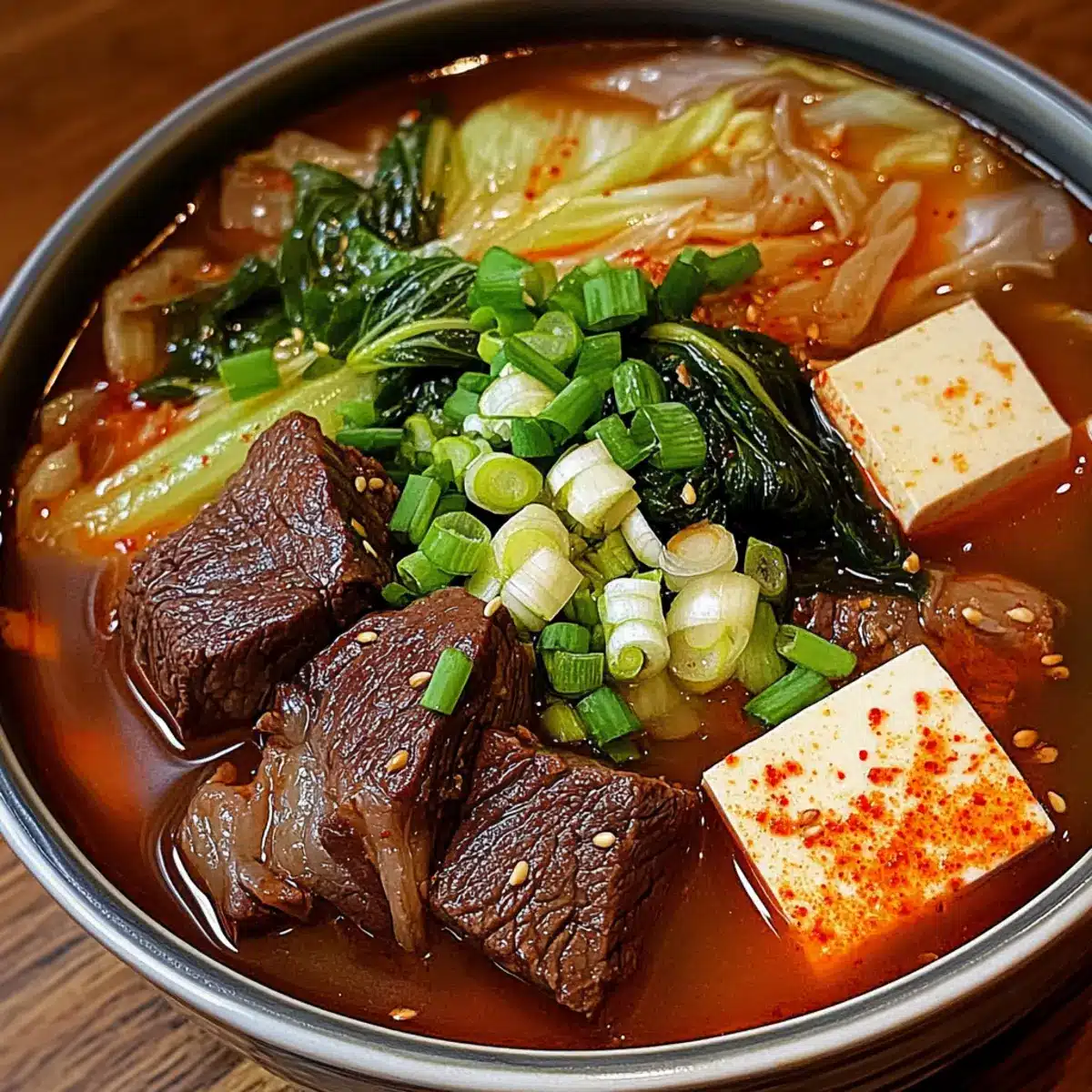
Why is This Soup a Must-Try?
Comforting Warmth: This Korean Winter Soup is a hug in a bowl, perfect for warming you up on chilly nights.
Flavor Explosion: The rich, spicy broth and tender beef brisket will tantalize your taste buds, making it a standout dish.
One-Pot Wonder: Minimal cleanup is required, allowing you to enjoy your meal without the hassle.
Versatile Ingredients: With simple substitutions, you can cater to various dietary needs, whether you prefer beef, chicken, or vegetarian options.
Family-Friendly: It’s an easy recipe to gather the family around—everyone will love the nourishing flavors.
Enjoy pairing it with a side of crispy kimchi for an added crunch, or check out my Turkey Meatball Soup for another comforting option!
Korean Winter Soup Ingredients
For the Soup
- Beef Brisket – Adds a robust, meaty essence; for alternative flavor and tenderness, try using chuck roast or short ribs.
- Water – Creates the broth base; ensure there’s enough to cover all ingredients well.
- Soy Sauce – Infuses umami depth into the soup; substitute with tamari for a gluten-free option.
- Gochujang (Korean red pepper paste) – Delivers a signature spicy-sweet kick; mix miso paste with chili powder as an alternative (flavor will differ).
- Gochugaru (Korean red pepper powder) – Provides a smoky heat; crushed red pepper flakes can be a substitute (adjust based on desired spice level).
- Garlic – Introduces aromatic punch; use fresh, minced garlic for optimal flavor.
- Onion – Sweetens and enriches the broth; opt for chopped onion for the best results.
- Napa Cabbage – Adds mild flavor and crunchy texture; bok choy or green cabbage can also work well.
- Firm Tofu – Offers creaminess and protein; make sure to press it before using to maintain shape.
- Daikon Radish – Contributes gentle sweetness; white radish or turnips are good alternatives.
- Sesame Oil – Enhances the nutty aroma of the soup; use it as a finishing oil after sautéing for maximum flavor.
- Green Onions – Brings freshness and visual appeal; slice and use them as a garnish.
- Salt and Pepper – Essential for seasoning; adjust to taste for flavor balancing.
- Cooked White Rice – Serve on the side to complement the savory soup.
Warm up your winter with this delightful Korean Winter Soup that brings both comfort and flavor to your table!
Step‑by‑Step Instructions for Korean Winter Soup
Step 1: Prep the Beef and Water
In a large pot, combine the beef brisket with enough water to cover it completely. Bring the mixture to a vigorous boil over medium-high heat, then reduce the heat to low and let it simmer gently for about 30 minutes. You’ll notice the beef turning tender and aromatic, creating a lovely broth base for your Korean Winter Soup.
Step 2: Skim the Surface
As the soup simmers, carefully skim any impurities or foam from the surface using a fine-mesh skimmer or spoon. This step helps achieve a clearer broth that enhances the overall presentation of your Korean Winter Soup. Continue simmering for another few minutes until the surface is clear and the beef is nice and tender.
Step 3: Add the Flavorings
Stir in the soy sauce, gochujang, gochugaru, and minced garlic into the pot. Mix thoroughly until the ingredients are fully combined, letting the rich, spicy aroma fill your kitchen. Continue to simmer for about 5 minutes to allow the flavors to meld beautifully, offering a delightful depth to your Korean Winter Soup.
Step 4: Incorporate the Vegetables and Tofu
Next, add the chopped onion, napa cabbage, cubed tofu, and sliced daikon radish to the pot. Stir gently to combine, then let the soup simmer for an additional 20 minutes over low heat. Watch as the vegetables become tender while retaining some crunch, adding freshness and texture to your hearty soup.
Step 5: Sauté the Green Onions
In a small pan, heat the sesame oil over medium heat. Add the sliced green onions and sauté for about 2-3 minutes until they become fragrant and slightly softened. This quick step brings out their flavor, making them the perfect finishing touch for your Korean Winter Soup when added to the pot.
Step 6: Season and Serve
Taste the soup and season with salt and pepper according to your preference, adjusting flavors for a balanced broth. Once seasoned, serve your Korean Winter Soup hot, paired with bowls of steamed white rice on the side. The comforting combination is sure to warm you up on any chilly evening!
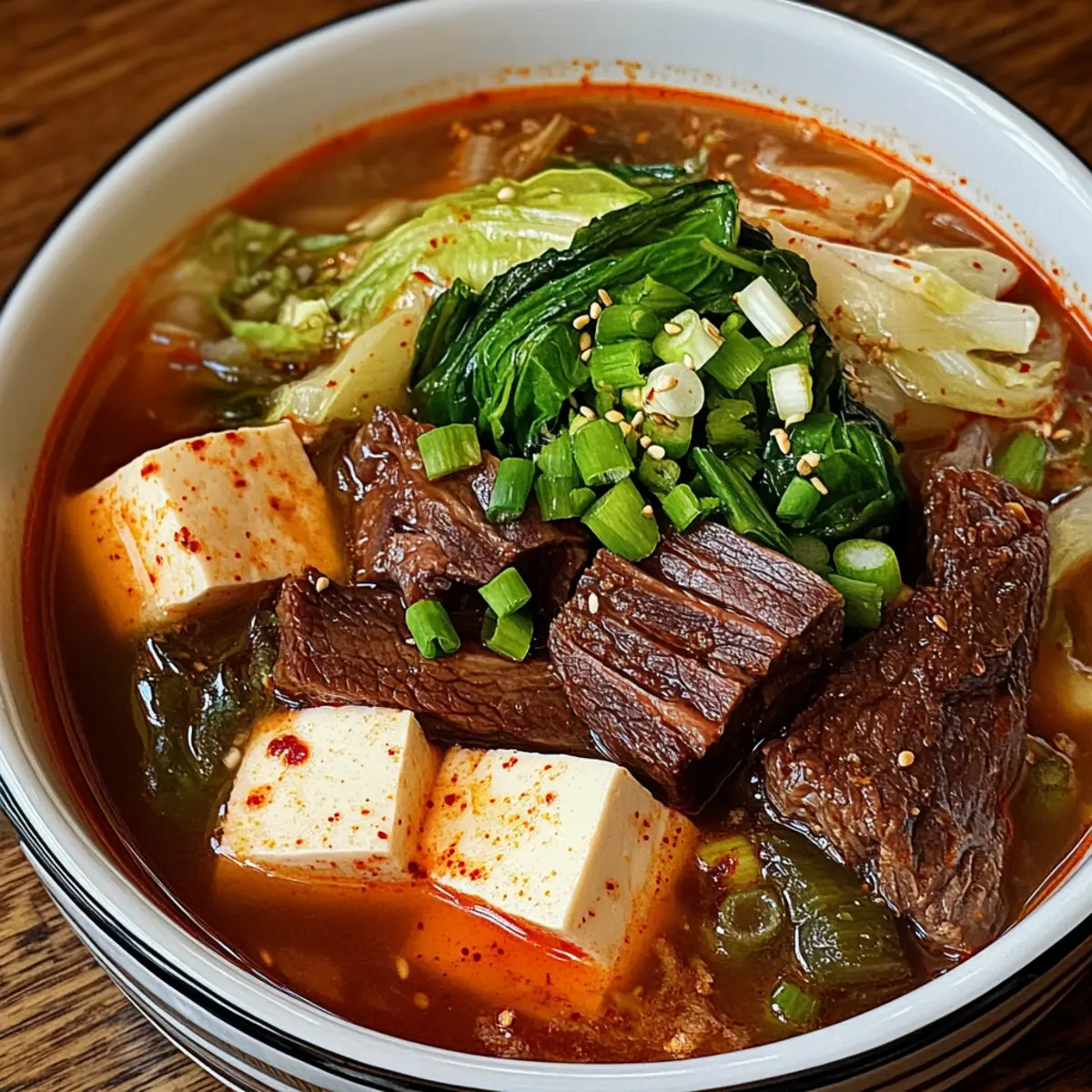
Storage Tips for Korean Winter Soup
- Fridge: Store leftovers in an airtight container in the fridge for up to 3 days. Make sure the soup is cooled before sealing to preserve its flavors.
- Freezer: If you want to keep it longer, freeze your Korean Winter Soup in suitable containers or freezer bags. It will stay fresh for up to 2 months.
- Reheating: When ready to enjoy, reheat the soup on the stove over medium heat, stirring occasionally until warmed through. Add a splash of water if it thickens too much.
- Serving Freshness: For the best experience, it’s ideal to enjoy the soup fresh, but frozen portions are a great option for quick, hearty meals on busy nights.
Expert Tips for Korean Winter Soup
-
Clear Broth: Always skim impurities from the surface as it simmers. This keeps your Korean Winter Soup visually appealing and enhances the flavor.
-
Chunky Beef: Cut beef brisket into large pieces for even cooking. Smaller pieces can overcook and disintegrate, affecting the soup’s texture.
-
Adjust Spice: Start with a smaller amount of gochujang and gochugaru. You can always add more later to suit your heat preference!
-
Taste Testing: Always adjust seasoning towards the end of cooking. A little salt and pepper can make a significant difference in the overall flavor of your Korean Winter Soup.
-
Vegetable Variations: Feel free to substitute with seasonal vegetables such as carrots or mushrooms. This allows for a custom touch while keeping the dish hearty and satisfying.
Make Ahead Options
This Hearty Korean Winter Soup is perfect for busy home cooks looking to save time without sacrificing flavor! You can prepare the broth and simmer the beef brisket up to 24 hours in advance; just refrigerate it after cooking. Additionally, chop the vegetables and cube the tofu, storing them in airtight containers for freshness up to 3 days before you plan to serve. To maintain quality, add the vegetables to the simmering broth only when you’re ready to finish the dish. When it’s time to enjoy your Korean Winter Soup, simply reheat the broth, incorporate the vegetables and tofu, and simmer until heated through. Enjoy a delicious, homemade meal with minimal effort!
Korean Winter Soup Variations & Substitutions
Feel free to personalize this delicious recipe to suit your tastes and dietary preferences!
-
Chicken Alternative: Swap beef brisket with chicken thighs for a lighter yet equally flavorful soup. Chicken provides a different but delightful tender texture.
-
Mushroom Medley: Stir in shiitake or button mushrooms for an earthy flavor and added nutrition. They soak up the broth beautifully, enhancing each spoonful.
-
Creamy Spinach: Add fresh spinach leaves in the last few minutes of cooking for a vibrant color and a fresh, mild taste. This adds a lovely nutritional boost and visual appeal.
-
Spicy Kick: Increase the amount of gochugaru for those who crave a fiery experience. For an extra zing, consider adding some sliced fresh chilies while cooking.
-
Vegetarian Delight: Replace brisket with cubed eggplant and add hearty beans like chickpeas. It creates a filling, plant-based alternative that’s just as comforting.
-
Rustic Root Veggies: Incorporate diced carrots or sweet potatoes for a touch of sweetness and added texture. These veggies are perfect for winter and create a wholesome feel.
-
Rice or Noodles: Instead of serving with white rice, try adding cooked udon noodles directly into the soup for a heartier meal. It transforms your dish into a cozy noodle soup!
-
Herb Infusion: Finish with a sprinkle of fresh herbs like cilantro or parsley. It adds a burst of freshness that contrasts beautifully with the rich broth.
For more comforting recipes, you might want to try my Crockpot Chicken Soup for an easy weeknight dish or delight your taste buds with Turkey Meatball Soup that warms you from the inside out!
What to Serve with Hearty Korean Winter Soup?
Warm your heart and elevate your meal experience with delightful side dishes that perfectly complement this soothing bowl of goodness.
- Steamed Rice: Provides the perfect base to soak up the rich broth, creating a satisfying depth of flavor with every bite.
- Crunchy Kimchi: Adds a spicy, tangy crunch that excites the palate and balances the soup’s warmth beautifully.
- Garlic Bread: A crispy, buttery companion that offers a wonderful contrast to the soup—perfect for dipping and savoring every morsel.
- Pickled Vegetables: These tangy bites add a refreshing contrast, making each spoonful of soup feel lively and invigorating.
- Stir-Fried Greens: Lightly sautéed bok choy or spinach bring a nutritious and vibrant element, enhancing both texture and flavor.
- Korean Pancakes (Jeon): Their savory, crispy nature pairs perfectly for a delightful textural contrast and adds a touch of comfort to your meal.
- Fruit Salad: A refreshing mix of seasonal fruits adds a sweet and light finish, cleansing the palate after rich flavors.
- Hot Mulled Apple Cider: Sipping on this warm, spiced drink as you enjoy your soup invites a cozy ambiance, perfect for winter evenings.
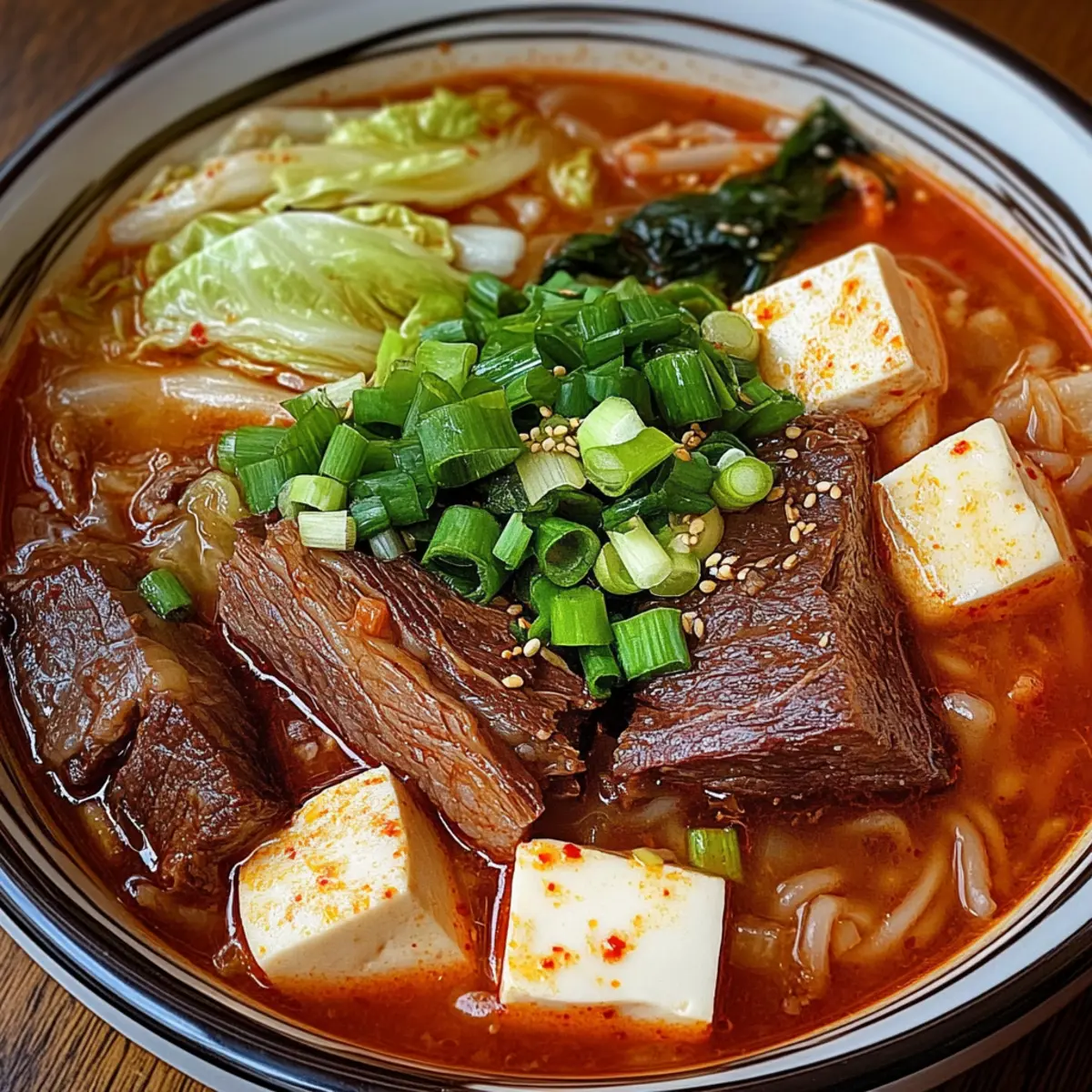
Korean Winter Soup Recipe FAQs
How do I choose the right beef brisket for this soup?
Absolutely! When selecting beef brisket, look for pieces that are well-marbled with fat, as this will enhance the flavor and tenderness of your soup. Aim for a brisket that has a bright red color and avoid any that have dark spots or a slimy texture. If you’re open to variations, chuck roast or short ribs are great substitutes and can offer a different depth of flavor.
What is the best way to store leftovers from this soup?
Very simple! Store any leftover Korean Winter Soup in an airtight container in the fridge. It will keep for about 3 to 4 days. Be sure to let the soup cool completely before sealing it. For longer storage, you can freeze the soup in freezer-safe containers or bags for up to 3 months. Just remember to leave a little space at the top of the container, as the soup will expand when frozen!
Can I freeze my Korean Winter Soup? How should I do it?
Yes, you can! To freeze your Korean Winter Soup, first, let it cool down to room temperature. Then, pour it into freezer-safe containers or heavy-duty freezer bags, ensuring they’re sealed tightly. Label the containers with the date, and try to consume the soup within 2 months for the best quality. To reheat, simply thaw overnight in the fridge and warm it up on the stove over medium heat, stirring occasionally.
What should I do if my soup becomes too thick during cooking?
If your soup turns out thicker than you’d like, no worries! Just add a splash of water or broth to the pot while stirring to reach your desired consistency. This is a great way to enhance the flavors as well. Remember, it’s all about the balance of tastes that makes your Korean Winter Soup comforting and delicious!
Is this soup suitable for those with gluten allergies?
Certainly! To ensure your Korean Winter Soup is gluten-free, use tamari instead of soy sauce. Additionally, check that your gochujang and gochugaru are gluten-free, as some brands may include gluten-containing ingredients. With these substitutions, everyone can enjoy this hearty dish!
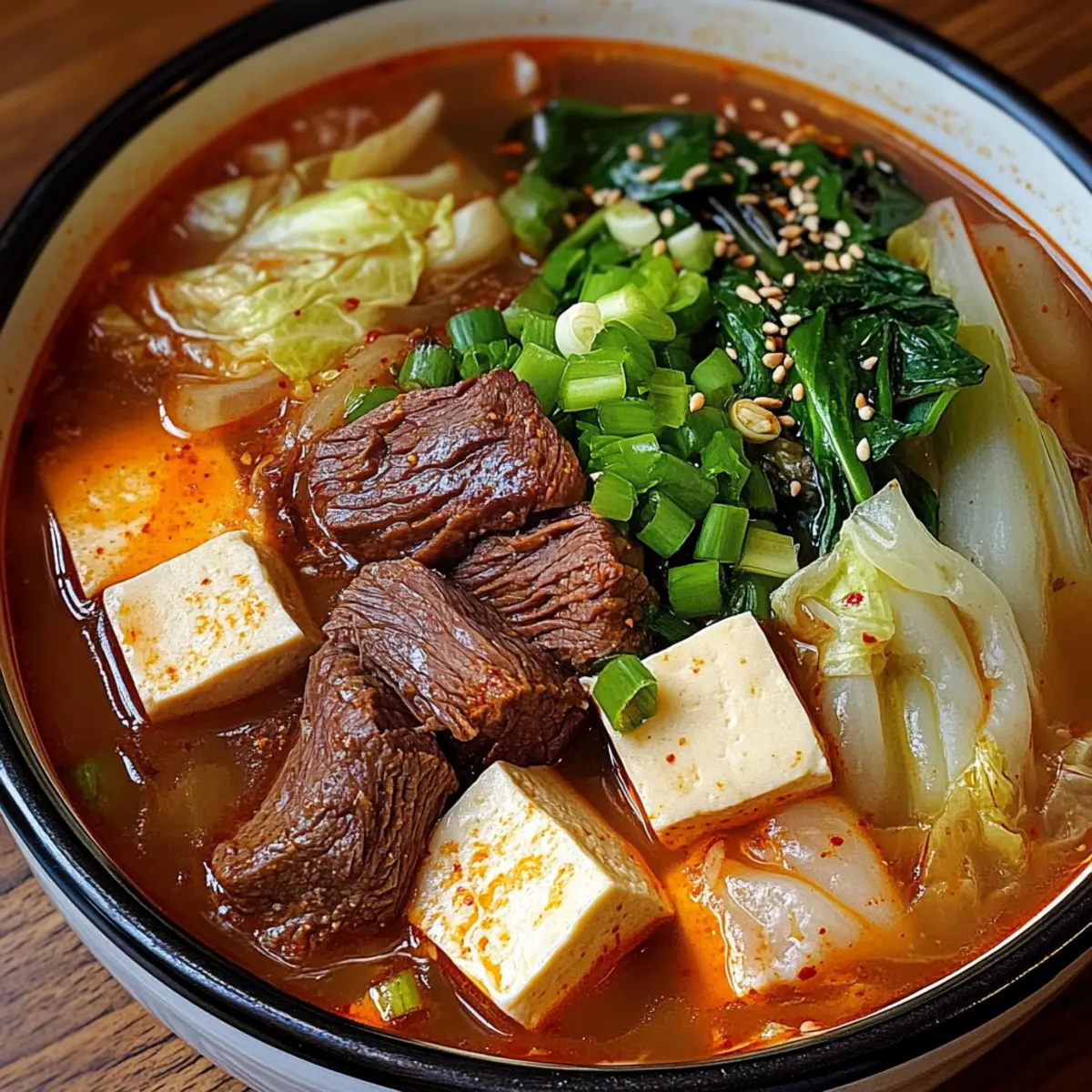
Savory Korean Winter Soup: Heart-Warming Comfort in a Bowl
Ingredients
Equipment
Method
- In a large pot, combine the beef brisket with enough water to cover it completely. Bring to a vigorous boil, then reduce to low and simmer gently for about 30 minutes.
- Skim any impurities or foam from the surface using a fine-mesh skimmer or spoon.
- Stir in the soy sauce, gochujang, gochugaru, and minced garlic into the pot. Mix thoroughly and continue to simmer for about 5 minutes.
- Add the chopped onion, napa cabbage, cubed tofu, and sliced daikon radish to the pot. Stir gently and let simmer for an additional 20 minutes.
- In a small pan, heat the sesame oil over medium heat. Add the sliced green onions and sauté for 2-3 minutes until fragrant.
- Taste the soup and season with salt and pepper according to your preference, then serve hot with bowls of steamed rice.
Leave a Reply