
As I stood in my kitchen, the aroma of sizzling vegetables filled the air, transporting me straight to Korea. Japchae, the beloved Korean stir-fried glass noodles, never fails to amaze with its delightful combination of chewy sweet potato noodles and vibrant veggies. This versatile dish is perfect for anyone looking to elevate their homemade meals—it’s not only quick to prepare but also a great way to use up leftovers. With endless customization options from protein choices like beef, chicken, or tofu to the spice of gochujang, every bowl can be a unique creation. Whether you’re feeding a crowd or embracing a cozy night in, this Japchae recipe brings a comforting and nutritious flair to your table. Ready to try this deliciously satisfying dish with your personal twist?
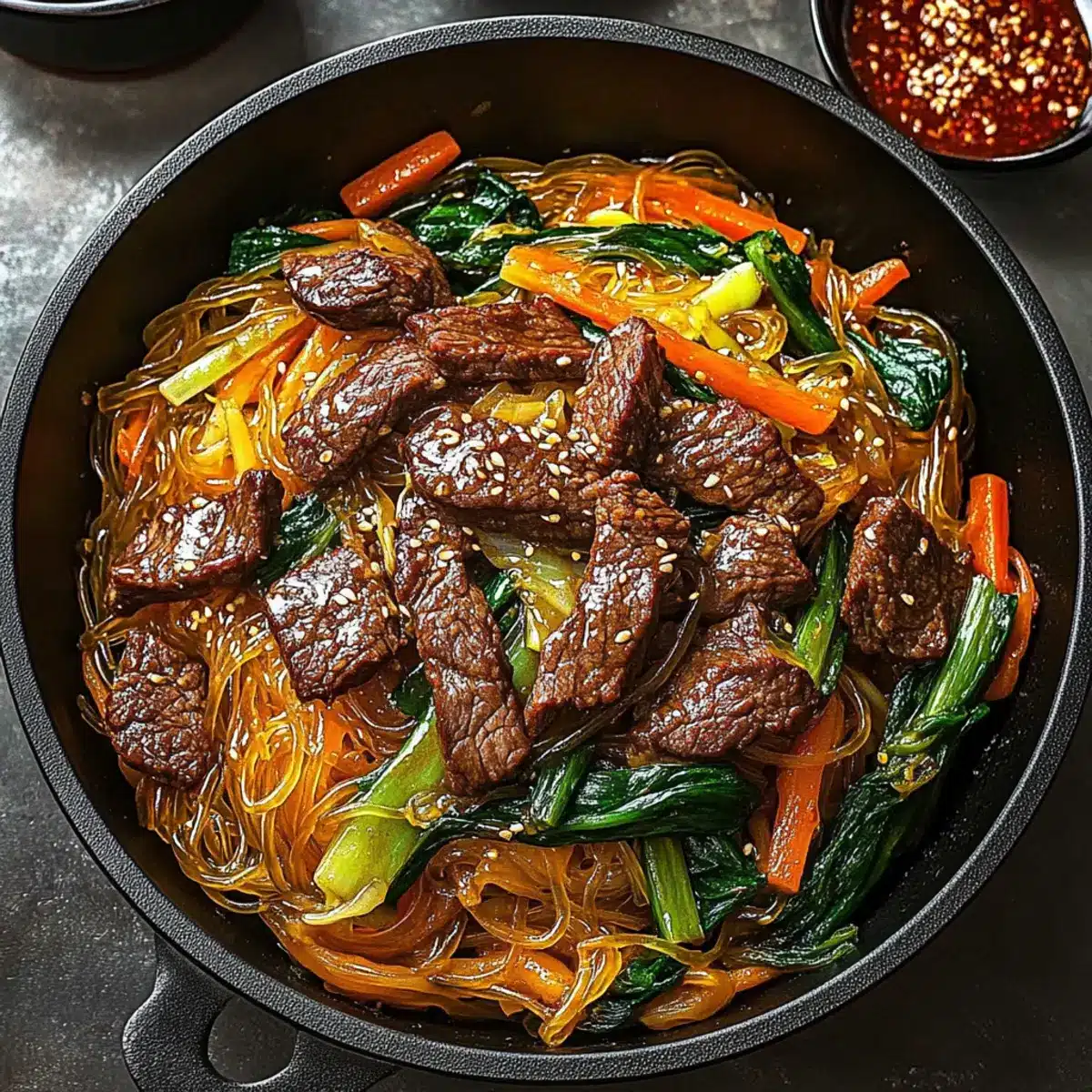
Why is Japchae a Must-Try Recipe?
Versatility: Japchae can easily adapt to your taste! Mix and match proteins like beef, chicken, or tofu, and explore various spices, including a kick of gochujang.
Quick Preparation: With minimal cooking time, you can whip up this meal in under 30 minutes, perfect for busy weeknights or last-minute gatherings.
Health Benefits: Packed with colorful vegetables and gluten-free sweet potato noodles, this dish is not just delicious but also nutritious.
Crowd-Pleasing Appeal: Whether hosting or enjoying a quiet dinner, everyone loves the rich flavors and delightful textures of Japchae.
Leftover Love: This dish is a fantastic way to use up leftover veggies or proteins, making it both economical and sustainable! Dive into this flavorful journey and impress your family and friends with your homemade Japchae.
Japchae Ingredients
• For the Noodles
- Sweet Potato Glass Noodles – Adds that signature chewy texture; choose ‘dangmyeon’ for authenticity.
• For the Protein
- Beef – Provides rich savory flavors; opt for thinly sliced cuts for faster cooking.
- Chicken – A lighter protein option; grill or stir-fry to keep it tender.
- Tofu – Great for a vegan-friendly twist; use firm tofu for better texture.
• For the Vegetables
- Bell Peppers – Colorful and crunchy; try different colors for an eye-catching dish.
- Carrots – Adds sweetness and crunch; slice into thin matchsticks for even cooking.
- Spinach – Packs a nutritional punch; toss in just before serving for vibrant flavor.
• For Flavoring
- Soy Sauce – Offers essential umami and saltiness; switch to tamari for a gluten-free option.
- Sesame Oil – Imparts a delicious nutty aroma; it’s key to authentic Japchae flavor!
• For Garnishing
- Green Onions – Provides a fresh bite; sprinkle generously over the finished dish for color and flavor.
Step‑by‑Step Instructions for Japchae
Step 1: Prep Noodles
Begin by soaking sweet potato glass noodles in a large bowl of hot water for about 30 minutes until they soften and become chewy. After soaking, drain and rinse the noodles under cold water to stop the cooking process and maintain their texture. Set aside while you prepare the other ingredients, ensuring they are well-hydrated.
Step 2: Cook Beef
In a large skillet or wok, heat a tablespoon of oil over medium-high heat. Add thinly sliced beef and stir-fry for about 3-4 minutes until browned and cooked through. Remove the beef from the skillet and set aside on a plate. This step ensures that the meat stays juicy and flavorful, creating a rich base for your Japchae.
Step 3: Sauté Vegetables
Using the same skillet, add a splash more oil if needed, then toss in your chopped vegetables. Stir-fry on high heat for 3-5 minutes until the bell peppers and carrots are just tender but still vibrant and crisp. Add in the spinach towards the end, stirring until wilted. This colorful medley will enhance the flavors and textures of your Japchae.
Step 4: Combine Ingredients
Return the cooked beef to the skillet with the sautéed vegetables. Gently add the soaked sweet potato noodles, followed by soy sauce and sesame oil. Toss everything together for about 2-3 minutes, ensuring the noodles are well-coated and heated through. The aromas will fill your kitchen, making your Japchae irresistibly tempting.
Step 5: Final Touches
Continue to cook the Japchae for another minute, stirring constantly to prevent sticking and to allow the flavors to meld. Once everything is well combined and heated, remove from heat. Garnish with freshly chopped green onions for an added burst of freshness. Your Japchae is now ready to be served, beautifully colorful and full of flavor!
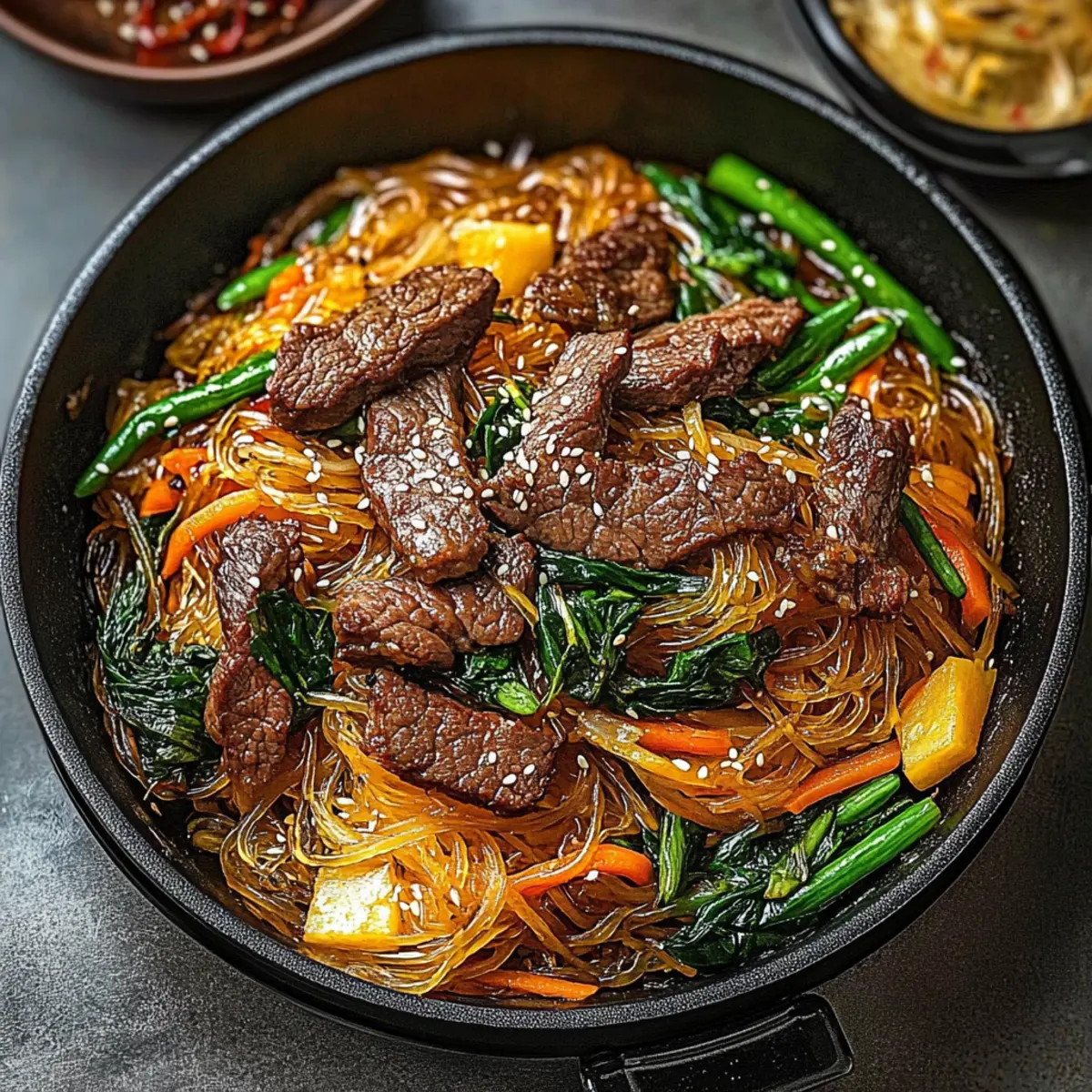
How to Store and Freeze Japchae
Fridge: Store leftover Japchae in an airtight container in the refrigerator for up to 3 days. To maintain its texture, reheat gently with a splash of water or broth.
Freezer: You can freeze Japchae for up to 2 months. Portion it into airtight containers or freezer bags, removing as much air as possible to prevent freezer burn.
Reheating: When ready to enjoy, thaw in the refrigerator overnight, then reheat in a skillet over medium heat with a little water or broth, stirring until warmed through.
Freshness Tip: For the best results, consume frozen Japchae within the recommended timeframe to enjoy its delightful flavors and textures.
Expert Tips for Perfect Japchae
-
Watch the Noodles: Don’t over-soak or cook the sweet potato glass noodles; they should remain chewy. Rinse them well after soaking to maintain that texture.
-
Prep Ingredients First: Have all your ingredients prepped and ready before you start cooking. This ensures a smooth and quick stir-fry process, preventing overcooking.
-
Adjust Seasoning: Always taste your Japchae before serving. You can add more soy sauce or sesame oil based on your preference for depth of flavor.
-
Customize Proteins: If using chicken or tofu, ensure they’re cooked separately first to enhance their distinct flavors before combining with the noodles and veggies.
-
Add More Veggies: Feel free to toss in seasonal vegetables to your Japchae. This not only increases the nutritional value but also makes the dish even more vibrant and delicious!
Make Ahead Options
Preparing Japchae in advance is a fantastic way to save time during busy weeknights! You can soak the sweet potato glass noodles and store them in the refrigerator for up to 24 hours before cooking. Additionally, pre-cook your vegetables and beef — just sauté them until tender and set them aside. When you’re ready to serve, simply combine the prepped ingredients with the soaked noodles, add soy sauce and sesame oil, and stir-fry everything together for about 2-3 minutes until heated through. To maintain the noodles’ perfect texture, avoid over-soaking them and store all components separately until just before serving. This way, your Japchae will be just as delicious as if freshly made!
What to Serve with Deliciously Versatile Japchae?
Pairing a delightful array of sides can elevate your meal experience and showcase the wonderful flavors of this Korean favorite.
-
Steamed Broccoli: Adds a crisp and healthy component, balancing the chewy noodles with lightness and nutrition.
-
Korean Fried Tofu: Pairing crispy tofu beside your Japchae offers a satisfying crunch, enhancing the dish’s rich flavors.
-
Kimchi: This fermented side dish introduces tangy and spicy notes, bringing a traditional touch to your meal while aiding digestion.
-
Cucumber Salad: A refreshing mix of cucumbers and vinaigrette cuts through the savory depth of the Japchae, offering a crisp texture contrast.
-
Sesame Spinach Side: Lightly seasoned spinach provides a nutrient boost and complements the sesame oil in the main dish.
-
Miso Soup: A warm bowl of miso soup creates a comforting pairing, introducing umami and richness to your dining experience.
-
Rice Wine: Enjoying a glass of chilled sake can elevate the flavors of your Japchae, making it an ideal accompaniment for a special dinner.
-
Mochi for Dessert: End your meal on a sweet note; this chewy treat pairs well with the flavors of your Japanese-inspired feast.
Japchae Variations & Substitutions
Feel free to get creative with your Japchae! The delightful flavors of this dish can easily be tweaked to suit your cravings or dietary needs.
- Protein Options: Swap beef for grilled chicken, tofu, or even shrimp. Each protein brings its unique flavor and texture, allowing you to personalize your dish.
- Spicy Kick: Add gochujang for a fiery twist. Just a spoonful can elevate the entire dish, adding layers of sweet-spicy depth!
- Vegetable Medley: Incorporate seasonal vegetables like zucchini, snap peas, or broccoli for extra color and texture. Fresh or frozen, these additions will enhance nutrition without compromising flavor.
- Noodle Alternative: For a gluten-free twist, replace sweet potato noodles with zucchini noodles or rice noodles. Each option provides a delightful chew while catering to dietary preferences.
- Nutty Flavor Boost: Mix in chopped cashews or walnuts for crunch. This adds a lovely texture contrast while providing healthy fats!
- Asian Flair: Drizzle with a touch of fish sauce or add oyster sauce for deeper umami flavors. These elements can run alongside soy sauce for a more complex taste profile.
- Increase Depth: Add mushrooms, such as shiitake or portobello, to enrich the umami experience. Their earthy tones beautifully complement the savory elements of the dish.
- Sweet Surprise: For a hint of sweetness, toss in some caramelized onions or julienned carrots. Their natural sugars will balance the flavors perfectly without overpowering the dish.
With these variations, your Japchae can continuously transform into something exciting each time you prepare it! If you’re curious about exploring more flavorful combinations, check out my post on quick and easy stir-fry recipes for excellent pairing ideas.
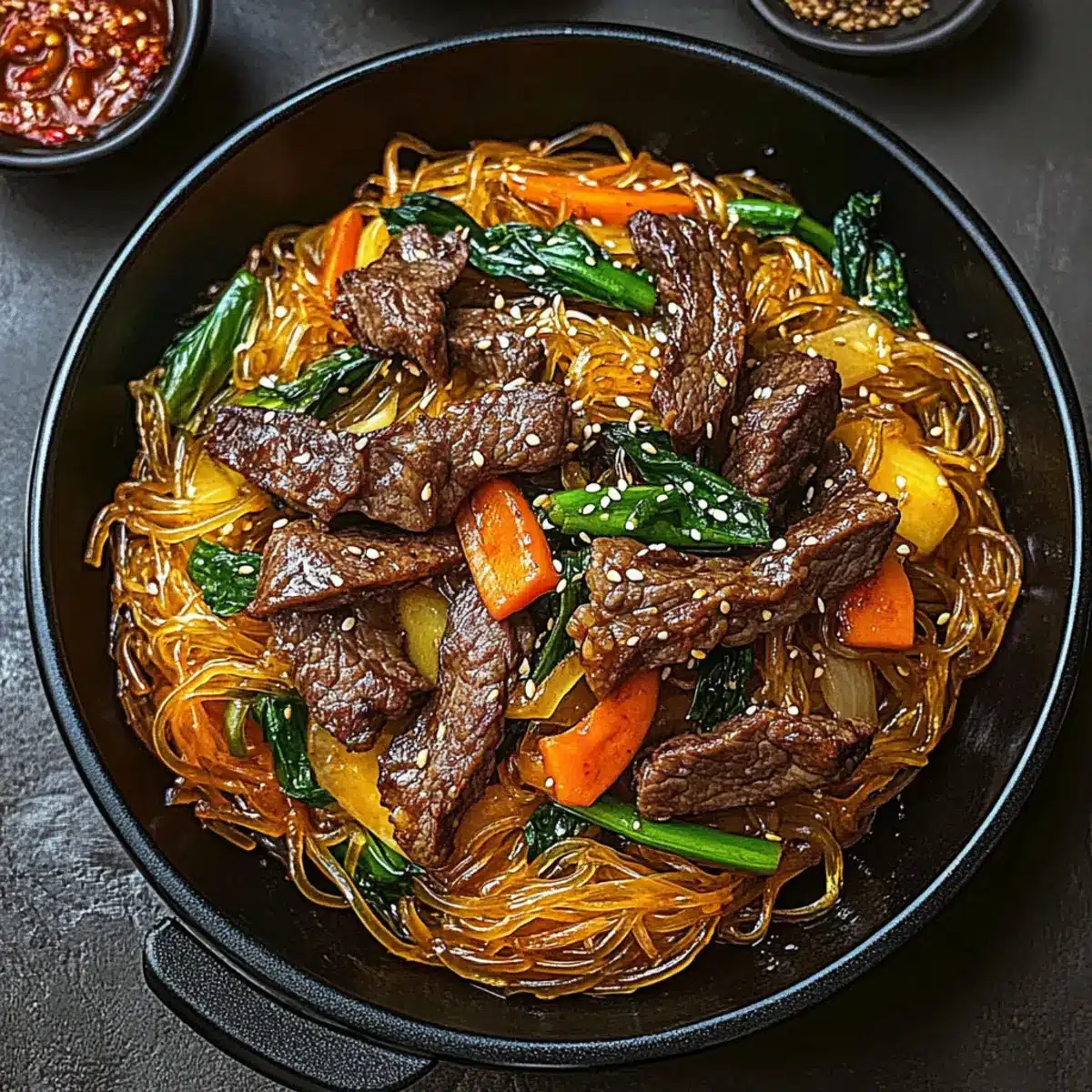
Japchae Recipe FAQs
How do I choose ripe vegetables for my Japchae?
Absolutely! When selecting fresh vegetables, look for crisp bell peppers, firm carrots, and vibrant spinach. Make sure the bell peppers are free from blemishes, and choose spinach that is deep green and perky rather than wilted. This ensures the best flavor and nutritional content in your dish.
What’s the best way to store leftover Japchae?
Very! To keep your delicious Japchae fresh, transfer it to an airtight container and refrigerate it for up to 3 days. When you’re ready to reheat, add a splash of water or broth while warming on the stovetop to prevent the noodles from becoming too firm.
Can I freeze Japchae, and how do I do it?
Absolutely! You can freeze your cooked Japchae for up to 2 months. Allow the dish to cool completely, then portion it into airtight containers or freezer bags, squeezing out any excess air. When you’re ready to eat, thaw it in the fridge overnight and reheat gently in a skillet with a splash of water or broth for the best texture.
What should I do if my noodles become mushy?
Oh no! If your sweet potato glass noodles turn mushy, it may be due to over-soaking or cooking. For next time, remember to soak them for just 30 minutes without exceeding that time. When stir-frying, ensure to maintain the heat and stir constantly; this helps achieve that perfect chewy texture.
Is Japchae suitable for everyone with dietary restrictions?
Very much! Japchae can be tailored to fit various dietary needs. For gluten-free options, use tamari instead of regular soy sauce. If you’re looking for a vegan dish, simply substitute the beef with plant-based proteins like tofu or mushrooms. Always check labels for allergens, particularly with soy sauce or other condiments.
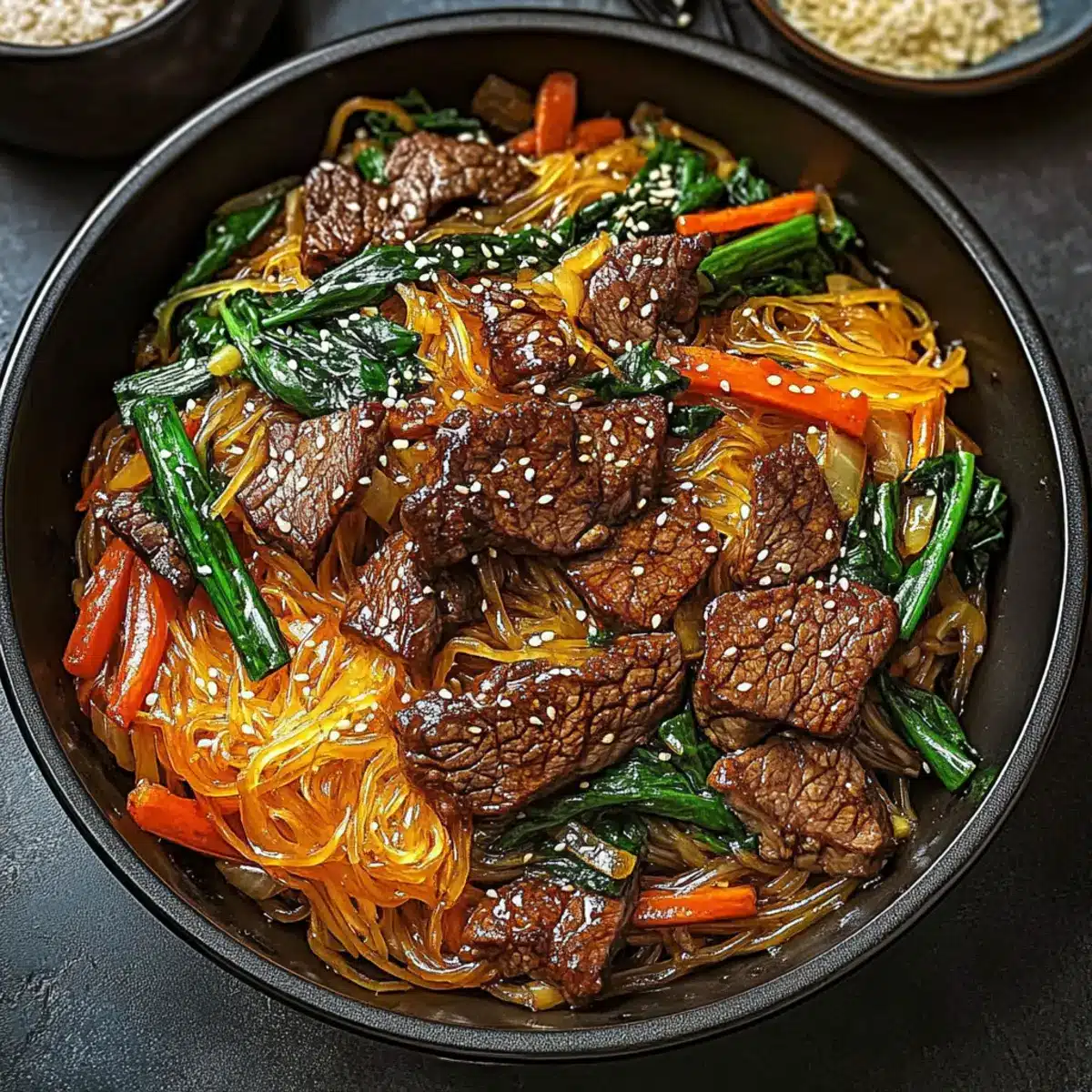
Irresistible Japchae: A Flavor-Packed Stir-Fry Adventure
Ingredients
Equipment
Method
- Soak sweet potato glass noodles in hot water for about 30 minutes until chewy. Drain and rinse under cold water.
- Heat oil in a skillet. Add sliced beef and stir-fry for 3-4 minutes until browned. Remove and set aside.
- In the same skillet, stir-fry chopped vegetables for 3-5 minutes. Add spinach towards the end.
- Return beef to skillet, add noodles, soy sauce, and sesame oil. Toss for 2-3 minutes until well-combined.
- Cook for another minute, stir constantly to meld flavors, then add green onions for garnish.
Leave a Reply