
As the aroma of simmering radish fills my kitchen, I can’t help but feel transported to a cozy Korean bistro, where every bowl of soup is like a warm embrace. This Vegan Korean Radish Soup, or Mu Guk, beautifully balances nourishing elements with a burst of umami, carving out a space on your table that’s perfect for chilly nights. In just 30 minutes, you can whip up this gluten-free delight, making it an ideal solution for anyone looking to embrace plant-based meals without sacrificing comfort. Packed with fresh ingredients and rich flavors, it’s all about simple, wholesome nourishment that warms the soul. Ready to dive into this delightful recipe and discover how easily you can elevate your homemade meals?
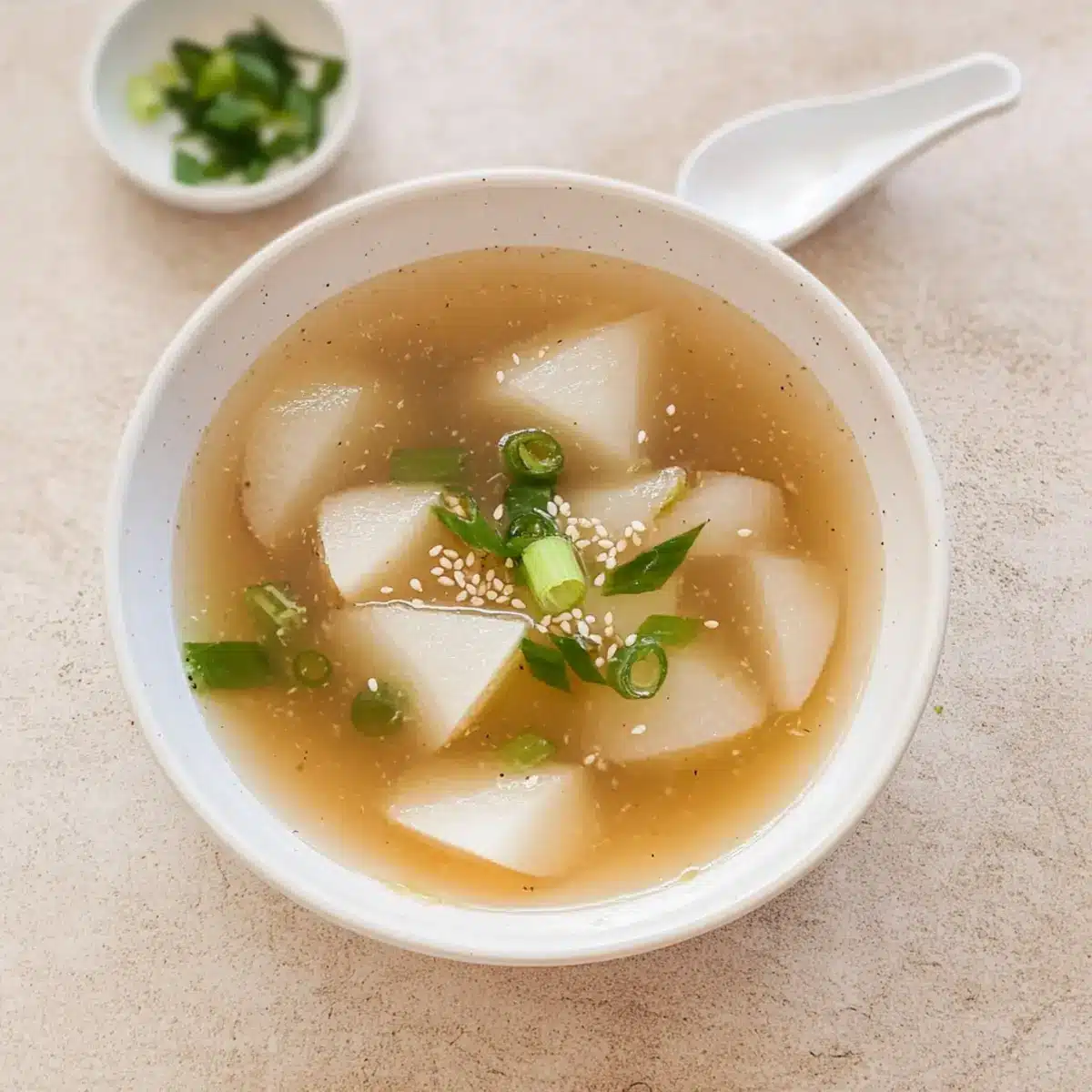
Why is Korean Radish Soup So Nourishing?
Comforting Warmth: This Vegan Korean Radish Soup is the ultimate cozy dish, offering a warm hug in a bowl that’s perfect for chilly evenings.
Simple Ingredients: Made with everyday pantry staples, you can whip up this gluten-free soup without a fuss. The use of daikon radish ensures a naturally sweet flavor and a satisfying texture!
Quick Preparation: Ready in just 30 minutes, it’s a fantastic meal for busy weeknights when you’re craving something comforting yet nutritious.
Versatile Options: Customize it to your taste by adding tofu or other veggies like bok choy. It’s a canvas for creativity!
Healthy & Nourishing: Packed with antioxidants from garlic and essential vitamins from radish, you’re not just treating your palate but nourishing your body too.
Meal Prep Friendly: Perfect for meal prep! Enjoy it right away or store it in the fridge for up to 4 days, making it a convenient option for wholesome, easy meals.
Try pairing it with some Crockpot Chicken Soup for additional comfort or a delightful contrast!
Korean Radish Soup Ingredients
• Discover the key components for a nourishing bowl of warmth!
For the Soup Base
- Korean radish (daikon) – The main ingredient providing natural sweetness and bulk; opt for a large, sweet variety for the best flavor.
- Sesame oil – Adds a nutty aroma and richness; perfect for sautéing.
- Water or vegetable broth – The base liquid; using vegetable broth enhances the flavor depth.
- Kelp/dashi kombu – Infuses umami flavor and depth to the broth.
- Dried shiitake mushroom – Adds additional umami; rehydrate the mushrooms in the broth for extra flavor.
- Garlic – Essential for depth of flavor and contributes to the comforting aroma; don’t skimp on this!
For Seasoning & Garnish
- Gluten-free soy sauce or coconut aminos – Adds that needed saltiness and flavor; choose coconut aminos for a sweeter note.
- Salt – Necessary to enhance all flavors; adjust according to taste.
- White pepper (optional) – Adds a mild heat without altering the soup’s color.
- Vegan “beef” alternative (optional) – Provides a protein boost while maintaining a vegan profile; sauté with the radish if using.
For Presentation
- Sesame seeds for garnish – Adds texture and visual appeal, making your bowl inviting.
- Fresh green onions for garnish – Enhances presentation with freshness and vibrant color.
Enjoy crafting your delicious Korean Radish Soup with these simple ingredients!
Step‑by‑Step Instructions for Korean Radish Soup
Step 1: Prepare the Radish
Begin by peeling the Korean radish (daikon) and slicing it into triangle shapes, about half an inch thick for even cooking. Heat 2 tablespoons of sesame oil in a large pot over medium-high heat. Once hot, add the radish slices and sauté for 2–3 minutes, until they become slightly translucent and fragrant.
Step 2: Sauté Aromatics
Next, add sliced green onions to the pot with the radish. Stir and cook for an additional 2–3 minutes, allowing them to soften and release their aroma. The onions should turn bright green and fragrant, blending beautifully with the sautéed radish. This aromatic base is key for your hearty Korean Radish Soup.
Step 3: Build Broth
Now, it’s time to build the flavorful broth. Pour in 6 cups of water or vegetable broth and add 2 pieces of kombu, along with 2 dried shiitake mushrooms and 4 minced garlic cloves. Stir to combine and bring this mixture to a boil over high heat. Visualize the bubbling broth as it starts to infuse with rich umami flavors.
Step 4: Simmer
Once boiling, reduce the heat to low and let the soup simmer uncovered for 12–15 minutes. During this time, the radish should become tender, easily pierced by a fork, while the broth will deepen in flavor. Keep an eye on it, enjoying the savory aroma filling your kitchen as the soup develops.
Step 5: Season
After the radish has reached the desired tenderness, stir in 3–4 tablespoons of gluten-free soy sauce and a pinch of salt to taste. Allow the soup to simmer for an additional 3 minutes, giving all the flavors a chance to marry together. Taste and adjust the seasoning if necessary, ensuring a well-balanced Korean Radish Soup.
Step 6: Garnish
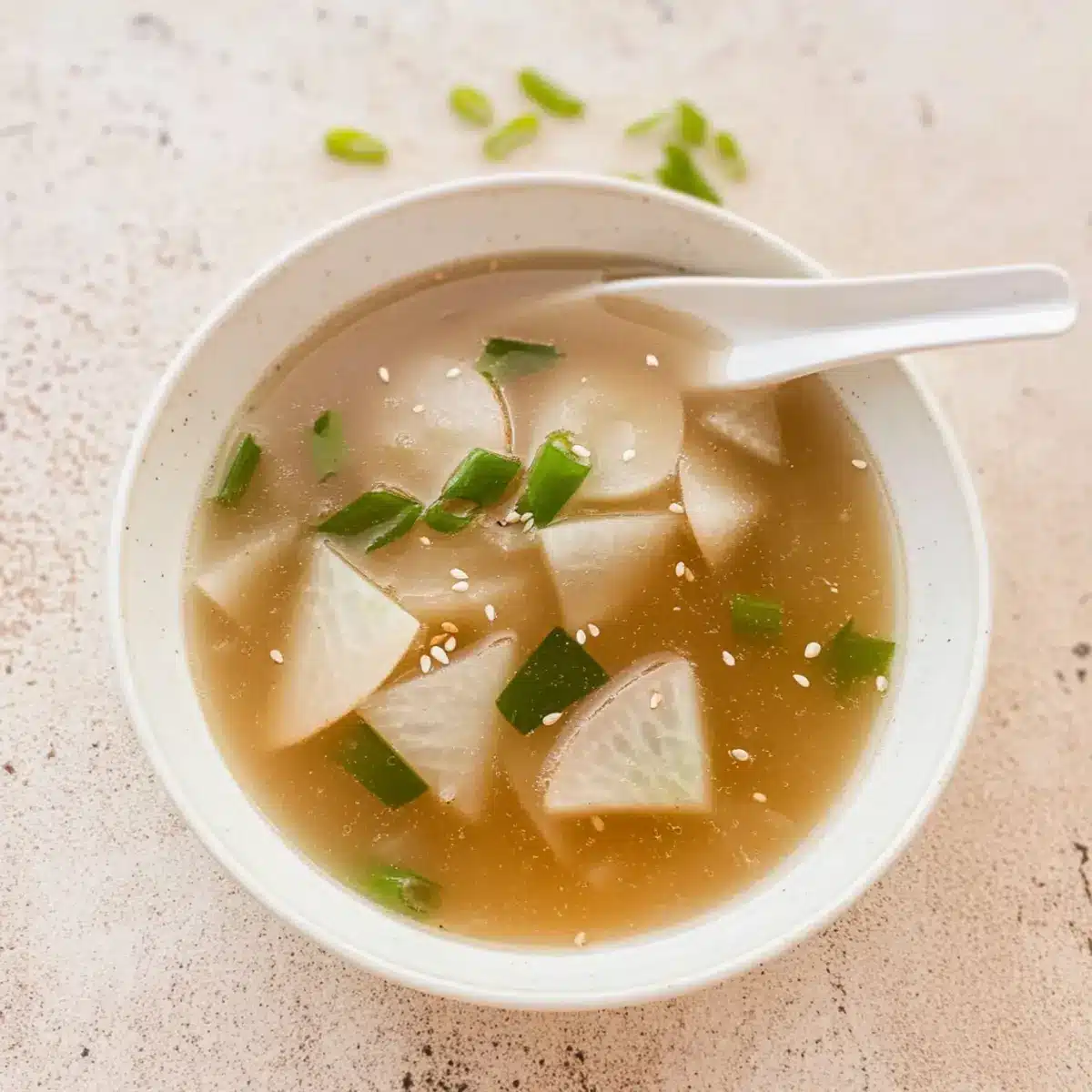
Finally, serve your warm Korean Radish Soup hot. Ladle it into bowls and garnish with a sprinkle of sesame seeds and finely chopped fresh green onions for added texture and color. This finishing touch not only enhances presentation but also elevates the fresh flavors of the soup.
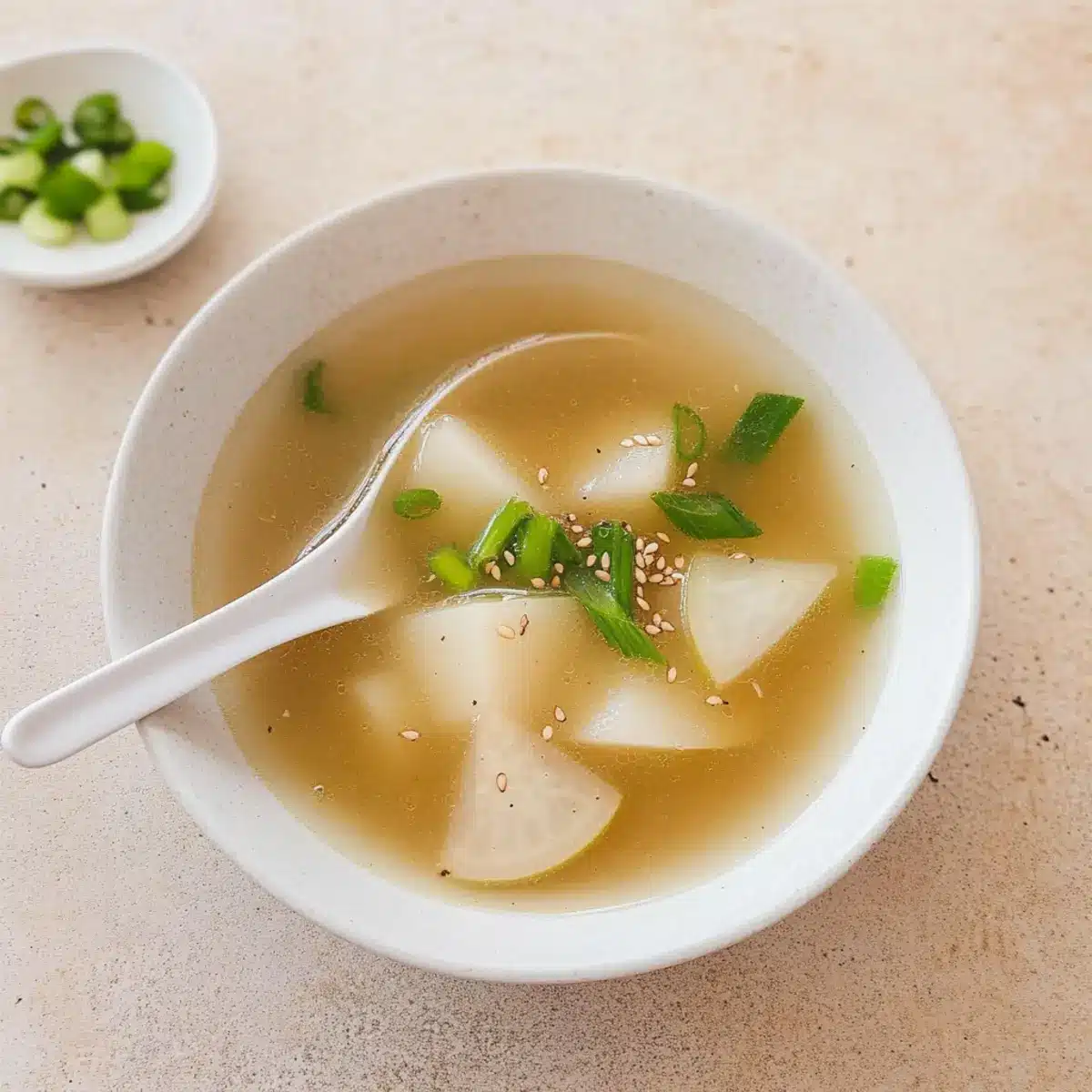
Korean Radish Soup Variations & Substitutions
Dive into the world of customization and make this nourishing Korean Radish Soup uniquely yours with these delightful swaps and twists!
-
Vegan Protein: Add cubed tofu or seitan for a satisfying protein boost while keeping the dish entirely plant-based.
-
Colorful Greens: Incorporate fresh spinach or bok choy during the simmering step for extra nutrition and a vibrant pop of color.
-
Protein-Rich Veggies: Toss in chopped mushrooms or a medley of bell peppers for a hearty, textured bite that enhances flavor.
-
Spicy Kick: Sprinkle in some gochugaru (Korean red pepper flakes) while simmering for an extra layer of warmth and flavor flair.
-
Creamy Comfort: Whisk in a splash of coconut milk at the end for a lush, creamy touch that pairs beautifully with the radish’s natural sweetness.
-
Herb Twist: Add fresh cilantro or parsley just before serving to brighten the dish and add an aromatic finish that tantalizes the taste buds.
-
Richer Broth: Replace water with a homemade vegetable stock for an even deeper umami experience, elevating the soup to new heights.
-
Garnish Ideas: Experiment with different garnishes like roasted sesame oil drizzle, crushed peanuts, or even a hint of lime juice to lend brightness and crunch.
With these variations, you can enjoy your Vegan Korean Radish Soup in multiple ways. And if you’re craving a contrasting side, try serving it alongside some Korean Bbq Meatballs for a deliciously satisfying meal!
Expert Tips for Korean Radish Soup
-
Choose the Right Radish: Opt for a large, sweet Korean radish (daikon) to ensure the best flavor. Avoid smaller, spicy varieties that can alter the soup’s taste.
-
Broth Matters: For deeper flavor, use vegetable broth instead of water. It enriches the umami profile of your Korean Radish Soup.
-
Enhance Umami: Rehydrate dried shiitake mushrooms in the broth to intensify umami flavors. They add a delightful richness that complements the radish beautifully.
-
Adjust Seasoning Gradually: When adding soy sauce, start with a smaller amount and taste before adding more. This ensures the right balance while keeping your soup gluten-free.
-
Great for Meal Prep: This soup stores well! Keep it in airtight containers in the fridge for up to 4 days or freeze for up to three months. Perfect for quick meals!
-
Garnish for Flavor: Don’t skip the garnish! Fresh green onions and sesame seeds not only enhance presentation but add a fresh flavor kick to the final dish.
What to Serve with Vegan Korean Radish Soup
There’s nothing quite like a nourishing bowl that warms both the heart and the belly, making mealtime feel special.
-
Steamed Jasmine Rice: This fluffy rice absorbs the rich flavors of the soup, creating a delightful contrast that’s both filling and comforting.
-
Korean Pickled Radish (Danmuji): These sweet, tangy pickles add a crunchy texture, balancing the warm, soft soup with their refreshing bite.
-
Kimchi: A side of spicy kimchi introduces a burst of acidity and heat, enhancing the umami flavor while bringing a delightful zing to every spoonful.
-
Sesame Spinach Salad: Lightly dressed with sesame oil, this crunchy salad offers a fresh, vibrant element alongside the warm soup, brightening the meal beautifully.
-
Garlic Bread: The crispy, buttery goodness of garlic bread adds a savory crunch that contrasts wonderfully with the soup, inviting each bite to be even more indulgent.
-
Ginger Tea: A warm cup of ginger tea refreshes the palate and calms the senses, making it a cozy companion for your comforting bowl of vegan Korean radish soup.
Imagine enjoying your meal surrounded by loved ones, each bite sparking joy and connection through the flavors of home-cooked nourishment.
Make Ahead Options
These Vegan Korean Radish Soup preparations are perfect for busy home cooks! You can slice and sauté the Korean radish, green onions, and garlic up to 24 hours in advance; simply store them in an airtight container in the refrigerator to maintain freshness. Additionally, you can prepare the broth (without seasoning) and refrigerate it for up to 3 days before cooking. To enjoy your soup, combine the prepped ingredients with water or vegetable broth when ready to serve, bringing it to a boil and simmering for 12-15 minutes before seasoning and garnishing. This make-ahead strategy allows you to create a nutritious, comforting meal with minimal effort while ensuring the flavors remain just as delicious!
How to Store and Freeze Korean Radish Soup
Fridge: Keep your Korean Radish Soup in airtight containers for up to 4 days. Reheat gently on low heat on the stove or in the microwave until warmed through.
Freezer: For longer storage, freeze the soup in freezer-safe containers, leaving some space for expansion. It stays fresh for up to 3 months.
Thawing: For best results, thaw in the refrigerator overnight before reheating. This helps maintain the soup’s texture and flavor.
Reheating: When ready to enjoy, reheat on the stove over low heat or in the microwave. Stir occasionally to ensure even heating and add a splash of water or broth if needed for consistency.
Korean Radish Soup Recipe FAQs
How do I select the best Korean radish for soup?
Absolutely! When choosing a Korean radish (daikon), look for a large, heavy radish with a firm texture and smooth, unblemished skin. It should feel solid and not have any dark spots or cracks. The sweeter varieties are the most flavorful and ideal for creating a delicious soup!
How long can I store Korean Radish Soup in the fridge?
You can store your Korean Radish Soup in airtight containers for up to 4 days in the fridge. Make sure to let it cool down before sealing to maintain freshness. Reheat gently on low heat, stirring frequently, until it’s warmed through.
Can I freeze Korean Radish Soup?
Yes, you can freeze your soup! Pour it into freezer-safe containers, leaving a little room at the top for expansion. It can stay fresh for up to 3 months. For best results, thaw the soup in the refrigerator overnight before reheating.
What should I do if my soup is too salty?
If your soup turns out too salty, don’t panic! You can add more water or vegetable broth to dilute it, and simmer for a few additional minutes. Adding a peeled potato to the pot can help absorb some saltiness; just remember to remove it before serving!
Is this soup safe for my vegan friend with gluten intolerance?
Definitely! This Korean Radish Soup is naturally vegan and gluten-free, especially if you choose gluten-free soy sauce or coconut aminos. Always check ingredient labels to ensure they meet your dietary needs, and feel free to customize as desired for additional allergies.
Can I add more vegetables to my soup?
Very! Feel free to mix in other vegetables such as bok choy, spinach, or even carrots for extra flavor and nutrition. Just make sure to adjust the cooking time accordingly so all veggies are tender but not overcooked. Enjoy experimenting with your Korean Radish Soup!
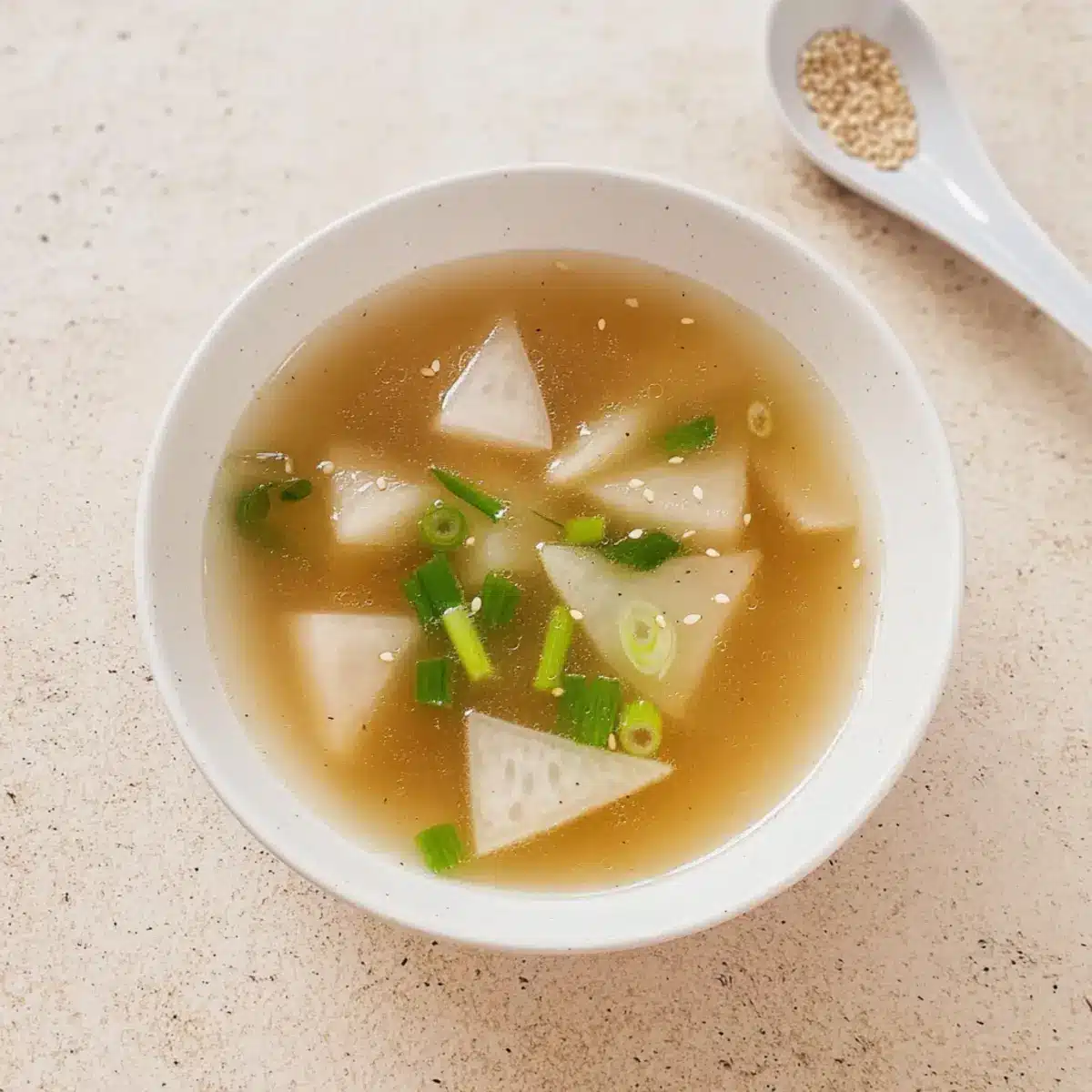
Nourishing Korean Radish Soup for Cozy Comfort Food
Ingredients
Equipment
Method
- Peel the Korean radish (daikon) and slice it into triangle shapes, about half an inch thick.
- Heat 2 tablespoons of sesame oil in a large pot over medium-high heat.
- Add the radish slices and sauté for 2–3 minutes until slightly translucent.
- Add sliced green onions to the pot with the radish.
- Cook for an additional 2–3 minutes until the onions soften.
- Pour in 6 cups of water or vegetable broth, add kombu, shiitake mushrooms, and garlic.
- Bring the mixture to a boil over high heat.
- Reduce heat to low and let the soup simmer uncovered for 12–15 minutes.
- Stir in 3–4 tablespoons of gluten-free soy sauce and a pinch of salt to taste.
- Simmer for an additional 3 minutes before serving.
- Ladle into bowls and garnish with sesame seeds and green onions.
Leave a Reply