
In the heart of bustling Seoul, I stumbled upon a small eatery tucked between vibrant market stalls, where the air was infused with savory aromas. That’s where I first tasted Japchae—a spectacular Korean stir-fried noodle dish that immediately captivated my senses. This comforting bowl of sweet potato glass noodles, sautéed with colorful vegetables and your choice of protein, comes together with a deliciously savory soy and sesame sauce. What makes Japchae an absolute win for home cooks is not just its heartwarming flavors, but also its incredible versatility. Whether you’re looking to impress guests at a potluck or simply whip up a quick dinner, this customizable dish fits the bill. With options for chicken, tofu, and seasonal veggies, it’s a vibrant masterpiece that’s as delightful to create as it is to savor. Are you ready to bring a taste of Korea into your kitchen? Let’s dive into this delicious journey together!
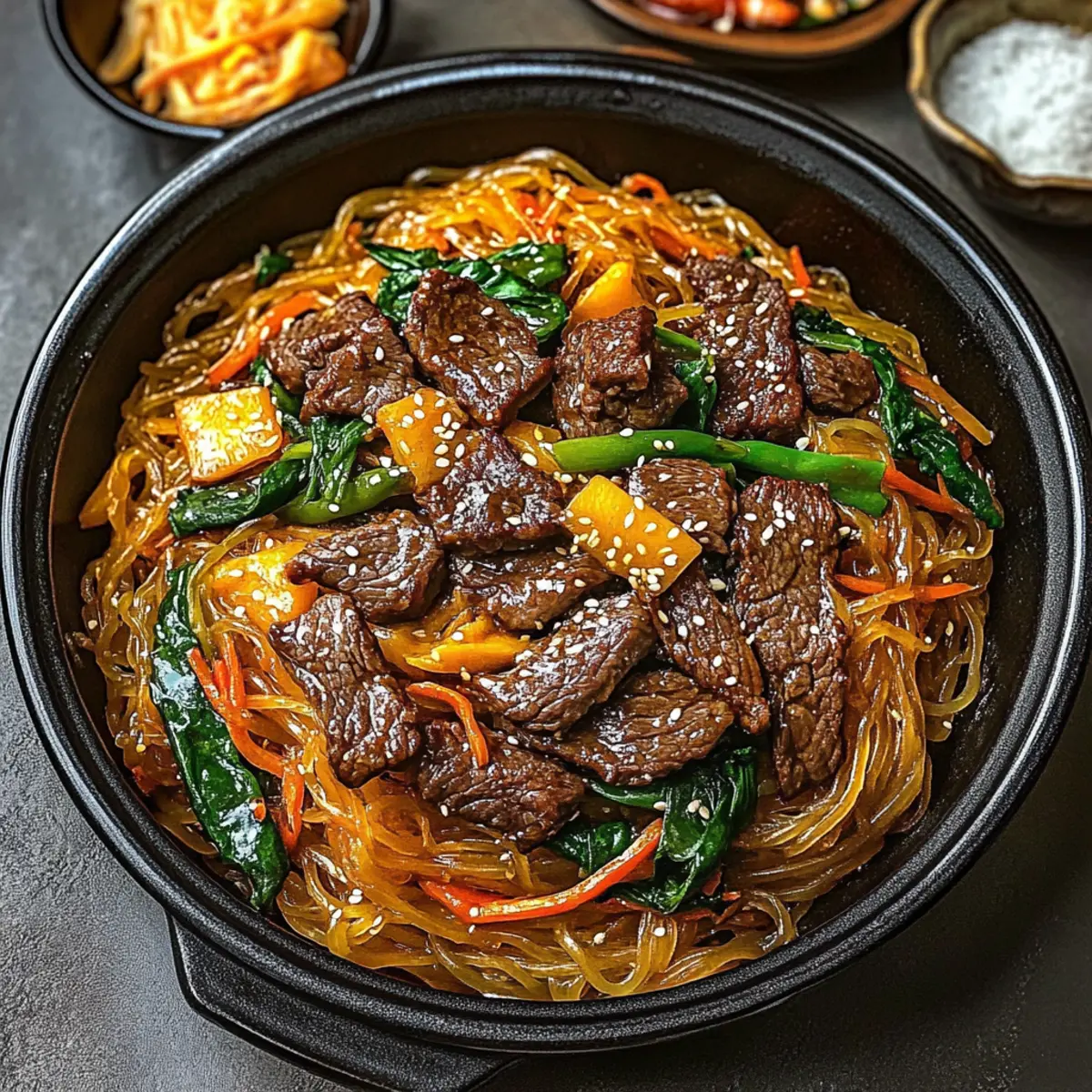
Why is Japchae a Must-Try?
Deliciously Versatile: Japchae can be tailored to suit any palate—swap out beef for chicken or tofu for a vegetarian delight.
Easy Prep: With only a few steps, you’ll have a stunning dish ready in no time, perfect for weeknight dinners or special occasions.
Chewy Comfort: The unique sweet potato noodles offer a delightful, chewy texture that sets this dish apart from regular stir-fries.
Nutrient-Packed: Load up on colorful vegetables to enhance both flavor and health benefits, making every bite satisfying.
Crowd-Pleaser: Whether you’re serving it at a potluck or a family meal, you can bet everyone will ask for seconds!
Experience the magic of homemade flavors with this quick guide to perfecting stir-fry techniques that’ll elevate your cooking skills!
Japchae Ingredients
For the Noodles
• Sweet Potato Noodles (Dangmyeon) – These gluten-free noodles are the star of the dish, lending a chewy texture you won’t find in other noodles.
For the Protein
• Beef – Adds rich flavor and protein; easily swap with chicken or tofu for a vegetarian or vegan option.
For the Vegetables
• Carrots – Their natural sweetness complements the dish; julienne for quicker cooking.
• Spinach – Offers color and nutrients; use fresh for the best texture.
• Bell Peppers – Add crunch and vibrant hues; any color works beautifully.
For the Sauce
• Soy Sauce – Essential for umami; low-sodium varieties keep it heart-healthy.
• Sesame Oil – Introduces a fragrant nuttiness; optional for lighter dishes.
For Garnish
• Green Onions – Freshly chopped, they brighten the dish; can be replaced with chives if needed.
Dive into the art of making delicious Japchae at home and discover how customizable and delightful this traditional Korean dish can be!
Step‑by‑Step Instructions for Japchae
Step 1: Prep the Noodles
Begin by soaking sweet potato noodles (dangmyeon) in hot water for about 30 minutes until they become soft and pliable. You’ll know they’re ready when they are translucent and tender to the bite. Drain the noodles thoroughly, then set them aside while you prepare the rest of the ingredients.
Step 2: Sauté Protein
In a large skillet or wok, heat 1-2 tablespoons of oil over medium-high heat. Add your chosen protein—beef, chicken, or tofu—and stir-fry for about 5-7 minutes until browned and cooked through. Make sure to remove the protein from the skillet and set it aside, leaving the delicious drippings for flavor in the next steps.
Step 3: Cook Vegetables
In the same skillet, add an additional splash of oil if needed. Toss in your sliced vegetables, such as carrots, bell peppers, and spinach, and stir-fry for 5-7 minutes until they are vibrant and slightly tender. The colors should pop, creating a beautifully colorful mix. Adjust the heat as necessary to prevent burning.
Step 4: Combine Ingredients
Now, add the drained sweet potato noodles back into the skillet along with the cooked protein. Pour in 2-3 tablespoons of soy sauce and a drizzle of sesame oil. Stir everything gently but thoroughly for about 2-3 minutes, allowing the noodles to soak up the savory flavors and heat evenly throughout.
Step 5: Finish & Serve
Once everything is well-combined and heated through, remove the skillet from heat. Sprinkle the Japchae with freshly chopped green onions for an extra burst of flavor and color. Serve warm in bowls, letting the comforting aroma of this traditional Korean dish embrace your kitchen.
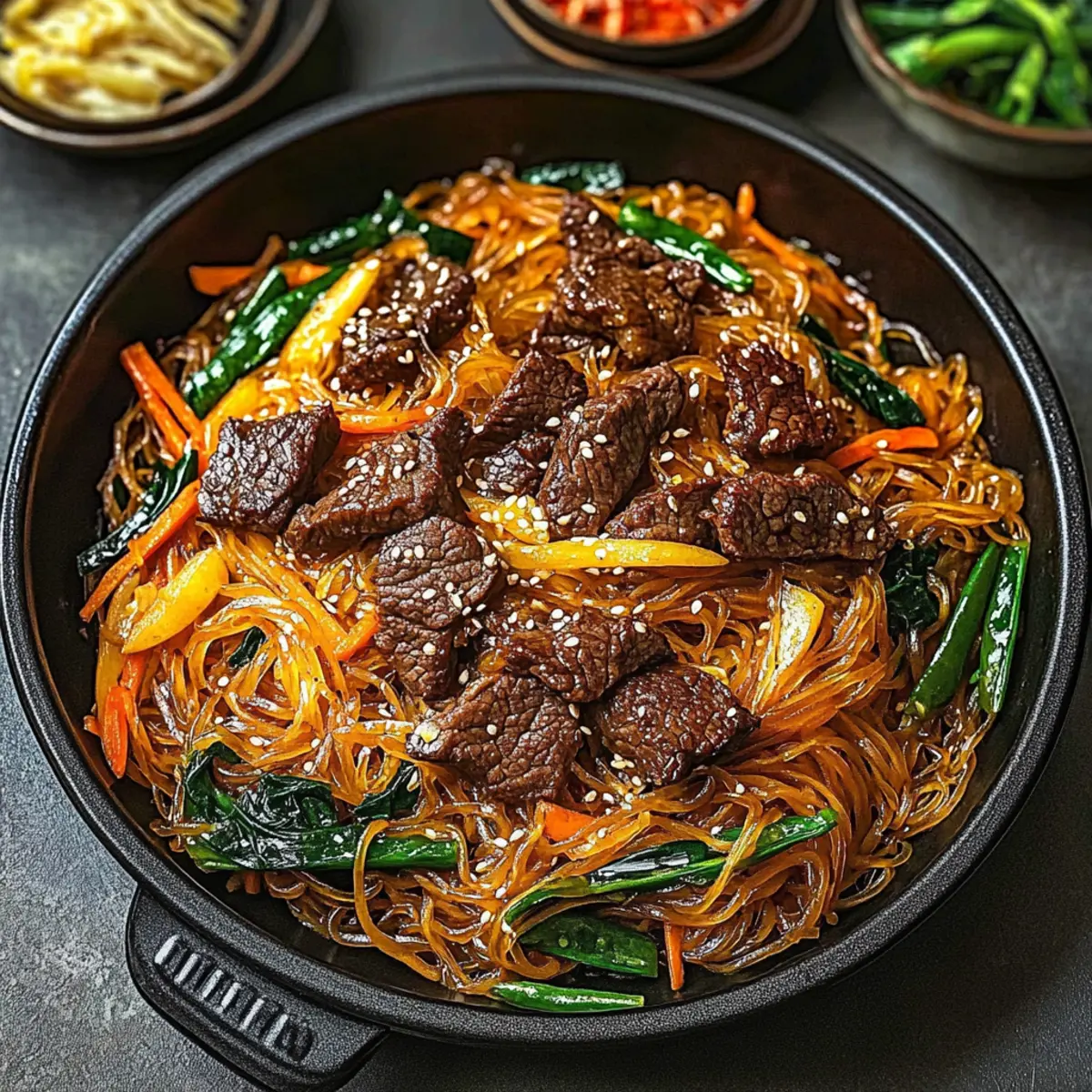
Make Ahead Options
Japchae is a fantastic choice for busy home cooks looking to save time! You can prep the sweet potato noodles and vegetables up to 24 hours in advance. Soak the sweet potato noodles and store them in an airtight container in the fridge, allowing them to maintain their chewy texture. Similarly, slice your vegetables and refrigerate them to keep them fresh. When you’re ready to enjoy your Japchae, simply sauté the protein and cooked vegetables together, then add the prepped noodles along with soy sauce and sesame oil. Heat through for 2-3 minutes, and you’ll have a delicious, homemade meal ready with minimal effort.
Expert Tips for Perfecting Japchae
-
Soak Thoughtfully: Make sure to soak your sweet potato noodles in hot water long enough; under-soaked noodles may turn tough, ruining the dish.
-
High Heat Cooking: Stir-fry your ingredients quickly over high heat to keep vegetables vibrant and crunchy, avoiding sogginess.
-
Don’t Overcook: Be mindful when combining ingredients—overcooking the noodles can lead to a mushy texture. Aim for a gentle toss just until everything is warm.
-
Customize Wisely: Feel free to substitute proteins or vegetables, but keep in mind that cooking times may vary, so adjust accordingly to keep the dish balanced.
-
Taste as You Go: Always taste your Japchae before serving; this allows you to adjust flavors, ensuring a deliciously savory experience tailored to your palate.
Enjoy the heartwarming flavors of Japchae and make it your own masterpiece!
What to Serve with Authentic Japchae?
Enhance your Japchae experience by pairing it with delicious sides and drinks that perfectly complement its rich flavors.
-
Korean Barbecue: A classic pairing that adds smoky, tender meats to your meal, elevating the dining experience to new heights.
-
Kimchi: The tangy, spicy crunch of kimchi contrasts beautifully with Japchae’s soft texture, providing a refreshing bite with every forkful.
-
Cucumber Salad: This cool, crisp salad offers a refreshing balance to the savory noodles, and its light dressing enhances the overall meal.
-
Steamed Rice: Simple yet delightful, a bowl of fluffy steamed rice allows you to savor every last drop of the flavorful sauce.
-
Sesame Spinach Salad: Nutritious and vibrant, this salad adds a delightful earthy flavor that complements the sweetness of the noodles.
-
Miso Soup: A warm and comforting addition, the umami notes of miso soup enhance the savory profile of the Japchae, creating a cozy meal.
Pairing Japchae with any of these options transforms your dinner into a delightful culinary journey, embracing the essence of Korean cuisine!
How to Store and Freeze Japchae
Fridge: Store leftover Japchae in an airtight container for up to 3 days. This allows the flavors to meld beautifully, making it even tastier when reheated.
Freezer: You can freeze Japchae for up to 1 month. Portion it into airtight containers or freezer bags, ensuring to remove excess air to prevent freezer burn.
Reheating: When ready to enjoy, reheat the frozen Japchae in a skillet over medium heat, adding a splash of water or soy sauce for moisture. Stir occasionally until warmed through.
Room Temperature: Avoid leaving Japchae out at room temperature for over 2 hours to maintain food safety. Enjoy this delightful dish warm for the best experience!
Japchae: Endless Variations Await
Feel free to play with this recipe and make it your own! The possibilities are wide and delicious.
-
Chicken Swap: Use diced chicken breast in place of beef for a lighter option without losing flavor. It’s tender and juicy!
-
Tofu Delight: For a vegetarian-friendly twist, substitute beef with firm tofu. It absorbs flavors beautifully and adds a nice texture.
-
Spicy Kick: Add gochujang or a dash of chili oil for an exciting heat that will awaken your taste buds. Spice lovers, rejoice!
-
Veggie Boost: Incorporate seasonal vegetables like mushrooms or zucchini for added nutrition and a rainbow of colors, elevating the dish even more.
-
Gluten-Free Version: Ensure soy sauce is gluten-free or opt for tamari to keep it suitable for gluten-sensitive diners, while maintaining that savory flavor.
-
Noodle Variety: Try rice noodles or zucchini noodles (zoodles) for a lower-carb alternative while keeping the meal satisfying and delicious.
-
Herb Infusion: Add fresh herbs like cilantro or basil before serving to give your Japchae an aromatic twist that’s sure to impress!
-
Nutty Surprise: Sprinkle roasted sesame seeds or chopped nuts on top for an added crunch and a delightful nutty flavor that complements the dish perfectly.
If you’re enjoying this recipe, don’t forget to check out our other delightful options like Korean Banchan, which are perfect for enhancing your meal experience!
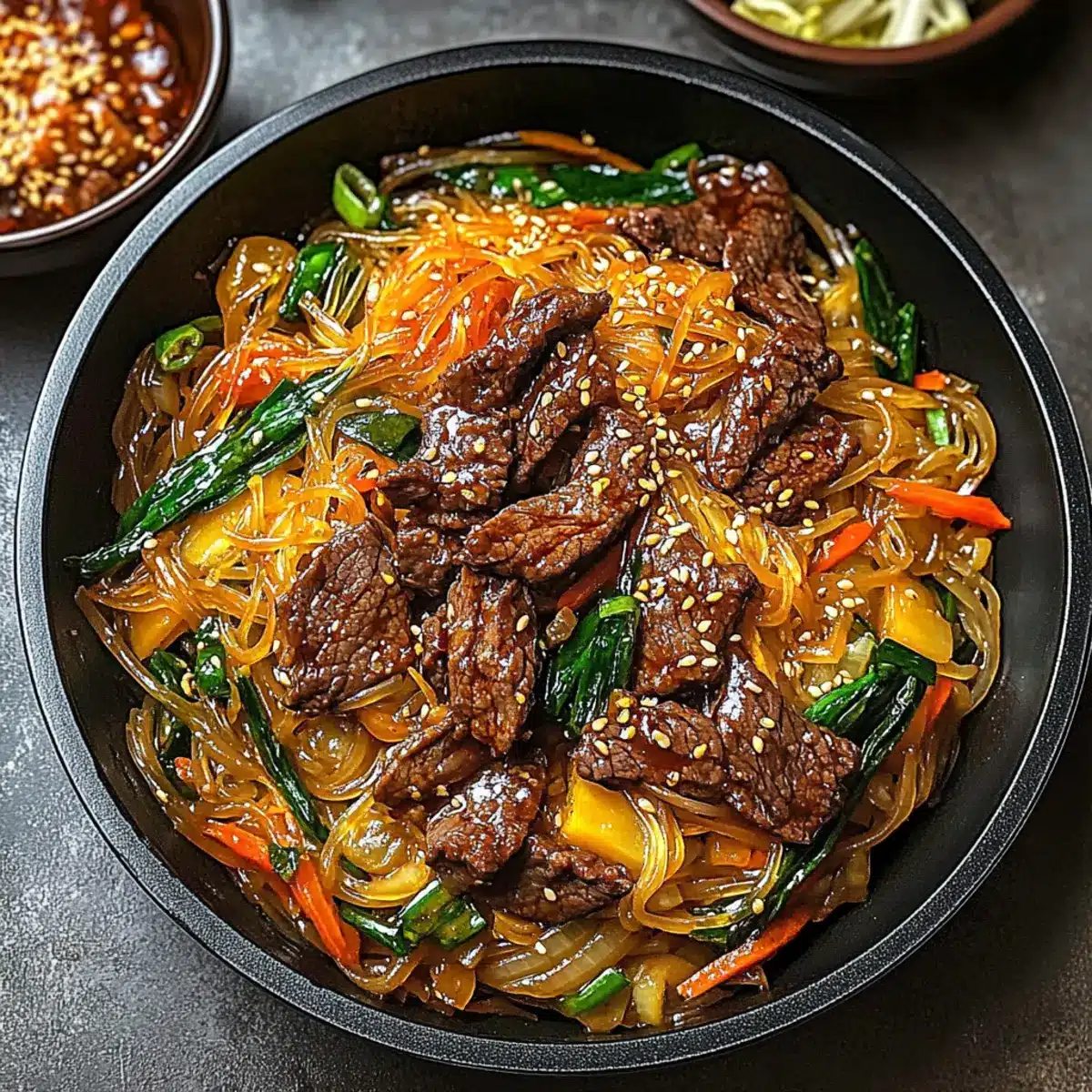
Japchae Recipe FAQs
What type of sweet potato noodles should I use for Japchae?
You should use sweet potato noodles, also known as Dangmyeon. These noodles are gluten-free and provide the characteristic chewy texture of Japchae. If you can’t find them, you can substitute with other gluten-free noodles like rice noodles, but the texture will differ slightly.
How do I store leftover Japchae?
Store leftover Japchae in an airtight container in the fridge for up to 3 days. It’s best enjoyed the next day as the flavors deepen and blend beautifully. For longer storage, freeze in a freezer-safe container for up to 2 months. Make sure to thaw it in the fridge overnight before reheating.
Can I freeze Japchae? If so, how?
Absolutely! To freeze Japchae, allow it to cool completely, then place it in a freezer-safe container, making sure to remove as much air as possible. For best results, use it within 2 months. When you’re ready to enjoy it, simply thaw it in the refrigerator overnight and reheat gently in a skillet over low heat, adding a splash of water to prevent drying out.
Why are my sweet potato noodles tough?
If your sweet potato noodles turn out tough, it’s likely because they weren’t soaked long enough. Ensure you soak them in hot water for 30 minutes until fully tender and pliable. Stirring occasionally can help prevent them from sticking together during soaking.
Can I make Japchae vegan?
Yes, you can! Simply replace the beef with tofu or a variety of seasonal vegetables. Ensure to use a vegan soy sauce or tamari for gluten-free options. This customization not only caters to dietary needs but also makes for a delicious plant-based meal that everyone can enjoy.
Is Japchae safe for my pets?
While the ingredients in Japchae are generally safe, it’s best to avoid feeding it to pets. Ingredients like soy sauce and onions can be harmful to dogs and cats. Always consult with your veterinarian before introducing new foods to their diet to ensure their safety.
Japchae Recipe FAQs
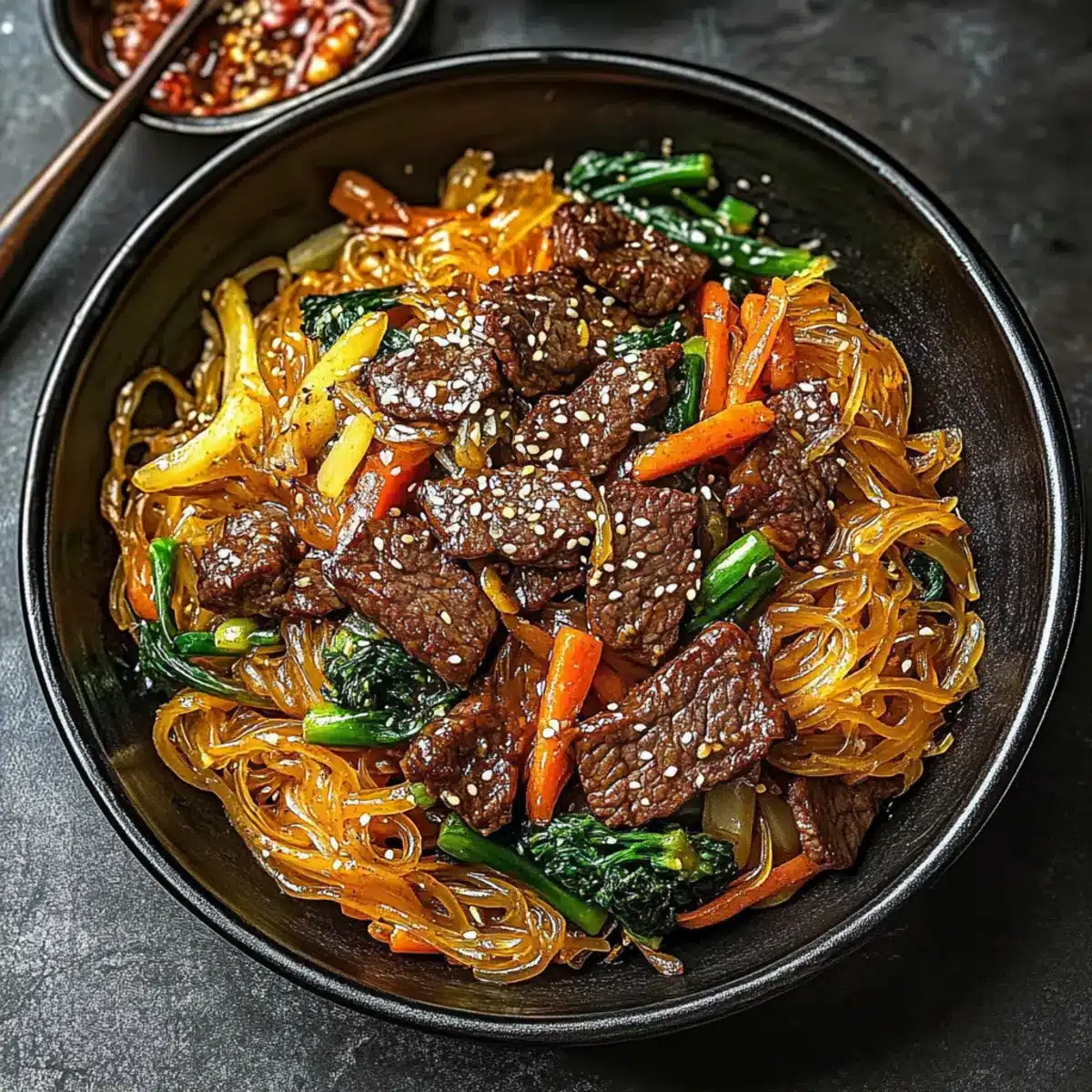
Delicious Japchae: Customizable Korean Noodles You’ll Love
Ingredients
Equipment
Method
- Soak the sweet potato noodles (Dangmyeon) in hot water for about 30 minutes until tender.
- Heat a tablespoon of oil in a large skillet, add sliced beef, and stir for 4-5 minutes until browned. Remove and set aside.
- In the same skillet, add carrots and bell peppers, sautéing for 5-7 minutes. Add spinach, cooking until wilted.
- Return the cooked protein to the skillet, add soaked noodles, soy sauce, and sesame oil. Toss everything for 2-3 minutes over medium heat.
- Remove from heat, toss with green onions, and serve warm.
Leave a Reply