
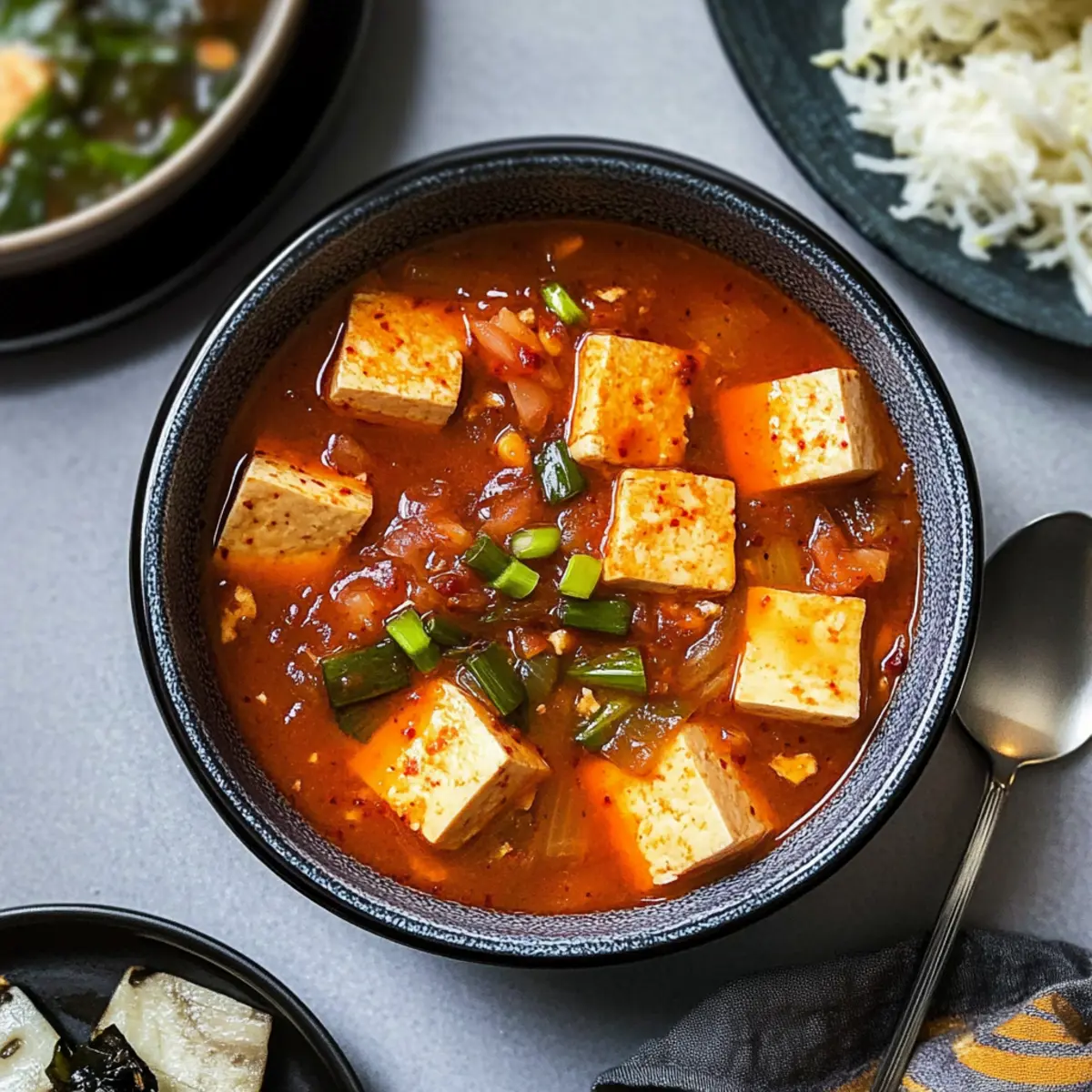
As I sat watching the rain tap against my window, a sudden craving for something hearty and comforting hit me—enter Kimchi Jjigae. This vibrant Korean stew is not just a meal; it’s a warm embrace on a plate, perfect for those cozy nights in. My vegetarian version showcases spicy kimchi and firm tofu, making it an ideal choice for anyone seeking a nourishing yet quick dish, ready in just 35 minutes. With its rich, smoky flavors, this Kimchi Jjigae is not only a crowd-pleaser but also adaptable for meat lovers who may wish to add their favorite protein. Whether served steaming hot with rice or enjoyed family-style, this savory delight is sure to satisfy your cravings. Curious to know how to whip up this delightful dish? Let’s dive into the recipe!
What makes Kimchi Jjigae so special?
Nourishing Comfort: This Kimchi Jjigae offers a warm, hearty experience, perfect for chilly evenings. Bold Flavors: The spicy kimchi and tofu create a unique flavor profile that enchants the palate. Quick & Easy: Ready in just 35 minutes, it’s a time-saver for busy cooks. Versatile Options: Enjoy it vegetarian or adapt it for meat lovers by adding pork belly or seitan. Healthy Choice: Packed with protein and probiotics, this dish supports wellness while satisfying hunger. Dive into this delightful stew to experience true Korean comfort food!
Kimchi Jjigae Ingredients
For the Stew
- Vegetable Oil – Adds fat for sautéing the vegetables; substitute with any neutral oil like grapeseed.
- Kimchi (2 cups) – The star ingredient, providing savory, spicy, and tangy flavors; ensure it’s vegan-friendly if desired.
- Onion (1 small, finely sliced) – Adds sweetness and depth; no specific substitutions required.
- Garlic (2 cloves, minced) – Enhances flavor; consider using garlic powder if fresh is unavailable.
- Water (4 cups) – The base of the stew; substitute with vegetable broth for added flavor.
- Kimchi Juice (1/4 cup) – Intensifies the kimchi flavor; use straight from the jar of kimchi.
- Gochugaru (2 teaspoons) – Korean red pepper flakes that provide heat and color; paprika can be a milder substitute.
- Gochujang (1 teaspoon) – Korean chili paste that adds complexity and umami; this can be omitted if unavailable but will alter the flavor.
- Soy Sauce (1/2 tablespoon) – Adds a salty flavor; for a gluten-free option, substitute with tamari or liquid aminos.
- Firm Tofu (12-14 ounces) – Serves as the main protein source; can be substituted with seitan or omitted for a lighter dish.
- Green Onions (3, finely chopped) – Provides garnish and a touch of freshness; optional addition.
- Salt – For seasoning; adjust to taste.
This collection of ingredients is perfect for whipping up a delicious Kimchi Jjigae that warms the heart and soul!
Step‑by‑Step Instructions for Vegetarian Kimchi Jjigae
Step 1: Heat the Oil
In a medium pot over medium-high heat, pour in a tablespoon of vegetable oil. Allow the oil to shimmer for about 1 minute, indicating it’s hot enough for sautéing. This step forms the foundation of your Kimchi Jjigae, enhancing flavors throughout the cooking process.
Step 2: Sauté the Aromatics
Add 2 cups of sliced kimchi, 1 small finely sliced onion, and 2 cloves of minced garlic to the hot oil. Stir-fry the mixture for 5 to 7 minutes, until the onions are translucent and fragrant, and the kimchi is slightly caramelized. This creates a flavorful base full of rich aromas for your hearty stew.
Step 3: Add the Liquid Ingredients
Pour in 4 cups of water and 1/4 cup of kimchi juice, enhancing the stew’s authenticity. Then, add 2 teaspoons of gochugaru and 1 teaspoon of gochujang for that signature Korean heat and depth. Stir well to combine the ingredients, bringing the mixture to a gentle boil over medium-high heat; this should take about 5 minutes.
Step 4: Incorporate the Tofu
Gently fold in 12–14 ounces of well-drained firm tofu, ensuring it’s evenly distributed throughout the stew. Once added, bring the Kimchi Jjigae back to a boil before reducing the heat to low. Cover the pot and let it simmer for 15 minutes, allowing the flavors to meld beautifully while the tofu absorbs the spicy broth.
Step 5: Final Seasoning and Serve
After simmering, remove the pot from heat and sprinkle in finely chopped green onions for freshness. Season the Kimchi Jjigae with salt to taste, adjusting the flavors to your preference. Serve the stew hot alongside steamed rice, allowing everyone to enjoy the vibrant and warming tastes of this Korean comfort food.
How to Store and Freeze Kimchi Jjigae
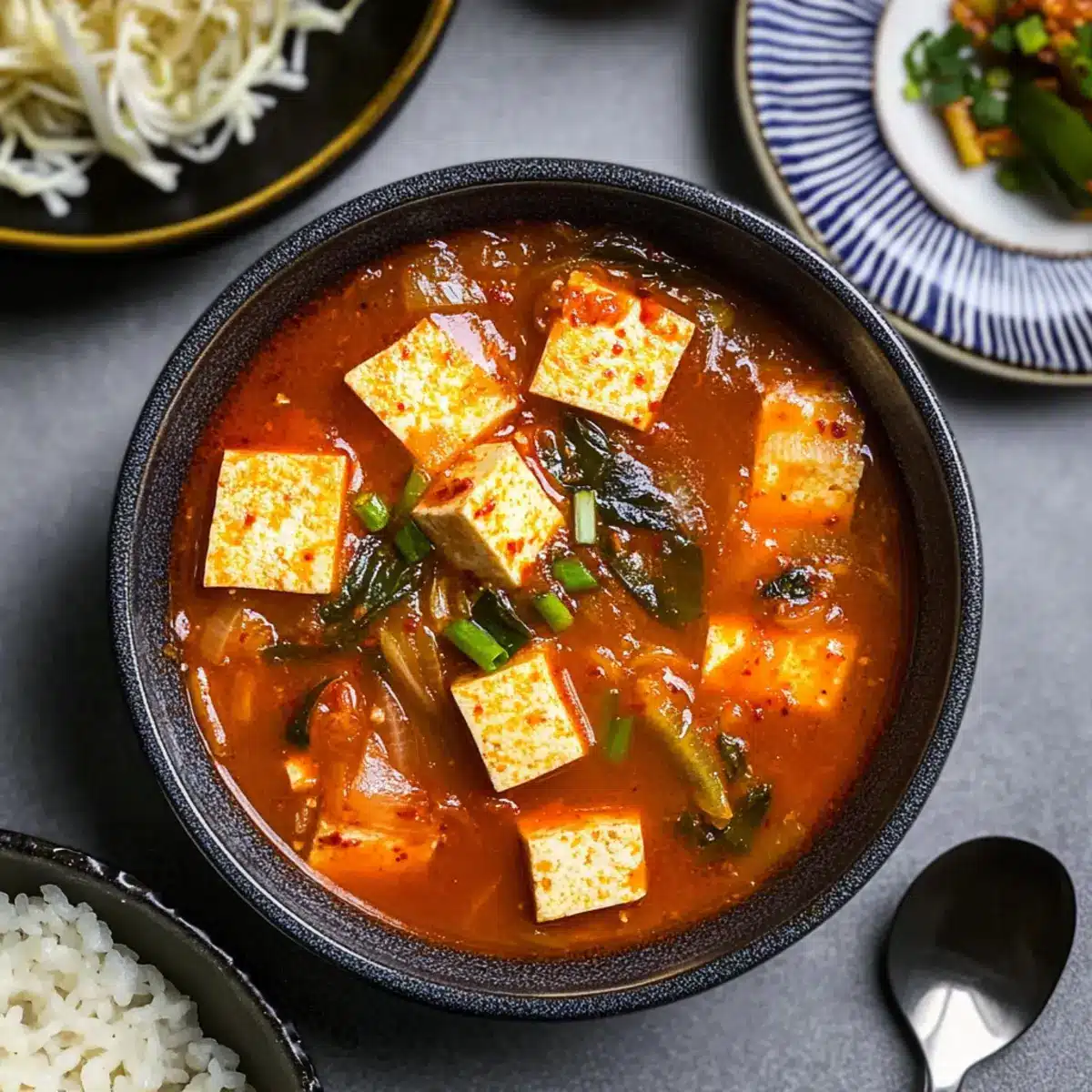
Fridge: Store leftover Kimchi Jjigae in an airtight container for up to 4 days. The flavors deepen over time, making it great for meal prep!
Freezer: For longer storage, freeze the stew without tofu in an airtight container for up to 2 months. When ready to enjoy, reheat on the stove, adding fresh tofu for the best texture.
Reheating: Reheat gently on the stove over low heat, adding a splash of water or vegetable broth if needed to restore creaminess. Stir occasionally to prevent sticking.
Serving Warm: Serve your reheated Kimchi Jjigae hot with a garnish of green onions and a side of rice, bringing back that comforting warmth!
Variations & Substitutions for Kimchi Jjigae
Explore the endless possibilities for customizing your Kimchi Jjigae to suit your cravings and dietary needs!
- Meat Lovers: For a heartier stew, add diced pork belly or shoulder for richness. The succulent meat pairs perfectly with the tangy kimchi!
- Extra Veggies: Toss in sliced zucchini or mushrooms for an added boost of nutrition and texture. Adding a medley of vegetables can make the dish even more vibrant.
- Spice It Up: If you love heat, increase the gochugaru or gochujang to jazz up the flavors. Adjusting the spice level can transform the stew into a fiery delight!
- Dairy-Free: Swap out any broth with coconut milk for a creamy and rich flavor, perfect for those avoiding dairy. A hint of sweetness complements the kimchi beautifully.
- Gluten-Free: Use tamari or liquid aminos in place of soy sauce for a gluten-free option that maintains all the savory goodness of the original recipe.
- High-Protein: Substitute firm tofu with seitan for a protein-packed vegan variation. It has a meat-like texture that can enhance the heartiness of your dish.
- Sour Twist: Add a tablespoon of rice vinegar before serving for extra tanginess and depth. This little trick can elevate the overall flavor profile beautifully!
- Mushroom Flavor: Experiment with dried shiitake mushrooms for an umami boost; simply rehydrate them in warm water and add to your stew for a delightful earthiness.
Whichever variation you choose, your Kimchi Jjigae will continue to delight and nourish, just as it has for generations in Korean culture. Enjoy making it your own, and don’t hesitate to explore the link for serving suggestions to enhance your dining experience!
Expert Tips for Kimchi Jjigae
- Use Quality Kimchi: Choose well-fermented kimchi for robust flavor; its tanginess enhances the overall taste of your Kimchi Jjigae.
- Adjust Texture: Ensure the tofu is well-drained and pressed to prevent it from becoming too mushy during cooking.
- Vegan Variation: For a fully vegan dish, opt for plant-based kimchi made without fish sauce or any animal products.
- Customize Spice Level: Feel free to adjust the amount of gochugaru and gochujang based on your heat preference; start mild and add more as needed.
- Experiment with Vegetables: Incorporate other vegetables like zucchini or mushrooms for added nutrition and texture, enhancing your stew even more.
- Storage Considerations: Store any leftovers in an airtight container; this dish keeps well in the fridge for about four days.
What to Serve with Vegetarian Kimchi Jjigae?
Warm the heart and elevate your meal experience by complementing this vibrant stew with delightful sides and beverages.
- Steamed Rice: A classic pairing, soft and fluffy rice balances the spice of the kimchi stew, creating a harmonious bite.
- Korean Pancakes: Crispy, savory pancakes add a wonderful texture contrast, making every meal feel special and more indulgent.
- Pickled Radishes: Crunchy and tangy, these pickles help cleanse the palate between bites, enhancing the layered flavors of the jjigae.
- Stir-Fried Vegetables: Vibrant seasonal veggies provide a fresh crunch and a healthy side, enriching the overall meal with color and nutrition.
- Soybean Sprout Salad: This light, refreshing salad offers a bright crunch, serving as a perfect complement to the comforting stew.
- Chilled Cucumber Soup: Clean and cooling, a refreshing cucumber soup balances the richness of the kimchi jjigae, making it an excellent appetizer.
- Korean Iced Tea: Refreshing and lightly sweetened, this drink is the ideal counterpoint to the warm, spicy notes of the stew, ensuring every sip is delightful.
- Fruit Sorbet: Ending the meal with a light fruit sorbet cleanses the palate and provides a sweet, fruity contrast to the savory dish.
Make Ahead Options
These Vegetarian Kimchi Jjigae are perfect for busy home cooks looking to save time! You can prepare the kimchi and tofu mixture up to 24 hours in advance by sautéing the kimchi, onion, and garlic, then letting it cool before storing it in an airtight container in the refrigerator. The broth can be prepped by combining water, kimchi juice, gochugaru, and gochujang, which can also be kept in the fridge for up to 3 days. When you’re ready to enjoy your Kimchi Jjigae, simply reheat the mixture and add the tofu, bringing it to a gentle boil before simmering for 15 minutes. This not only saves time but ensures a delicious meal with all the flavors intact!
Kimchi Jjigae Recipe FAQs
What kimchi should I use for Kimchi Jjigae?
Absolutely! For the best flavor, I recommend using well-fermented kimchi. Look for varieties with a vibrant color and a tangy aroma. If you’re opting for a vegetarian version, ensure your kimchi is free from fish sauce or any animal products.
How should I store leftover Kimchi Jjigae?
Store any leftover Kimchi Jjigae in an airtight container in your fridge for up to 4 days. The flavors will deepen, making it even more delicious the next day! Just give it a good stir before serving.
Can I freeze Kimchi Jjigae, and if so, how?
Very! To freeze, ladle the prepared Kimchi Jjigae into an airtight container, leaving some space for expansion, and freeze without the tofu for up to 2 months. When you’re ready to enjoy it, simply reheat on the stove and add fresh tofu at that time for the best texture!
What should I do if my Kimchi Jjigae is too spicy?
If your stew turns out spicier than expected, fear not! You can balance it out by adding a bit of sugar or a splash of coconut milk. Alternatively, stir in more vegetable broth or water to dilute the heat. Taste and adjust until it reaches your preferred spice level.
Is there a gluten-free option for Kimchi Jjigae?
Absolutely! To make your Kimchi Jjigae gluten-free, simply substitute regular soy sauce with tamari or liquid aminos. Both options will keep the savory essence of the dish without the gluten!
Can my dog eat Kimchi Jjigae?
It’s best to avoid giving your furry friend Kimchi Jjigae. The spicy ingredients and garlic may not sit well with dogs. Stick to dog-friendly foods to keep your pet happy and healthy.
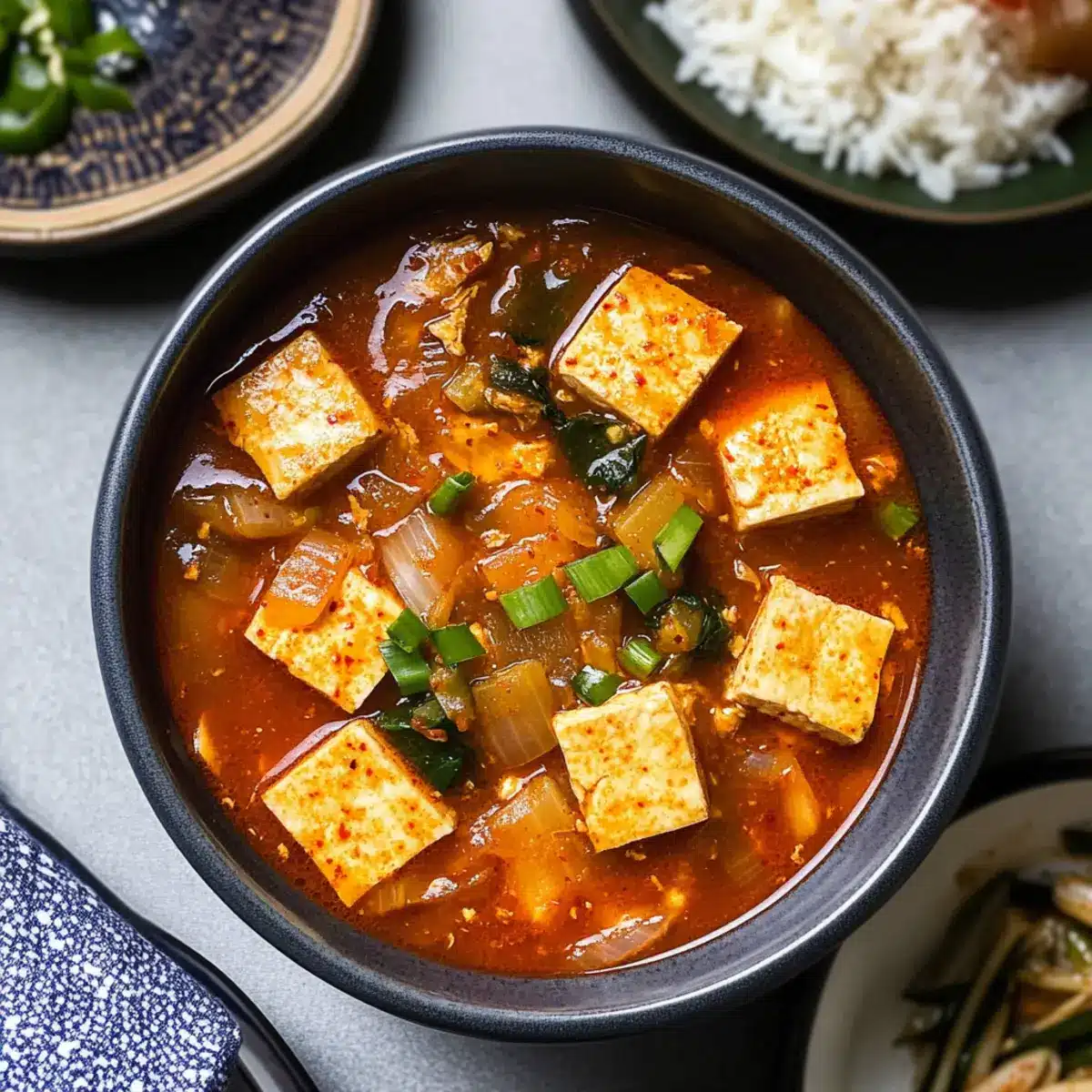
Delicious Vegan Kimchi Jjigae: Cozy Korean Comfort Food
Ingredients
Equipment
Method
- Heat the oil in a medium pot over medium-high heat until shimmering.
- Sauté the kimchi, onion, and garlic for 5-7 minutes until onions are translucent.
- Add water and kimchi juice, then stir in gochugaru and gochujang. Bring to a gentle boil.
- Fold in the tofu and bring back to a boil, then reduce heat and simmer for 15 minutes.
- Remove from heat, add green onions, and season with salt to taste before serving.
Leave a Reply